
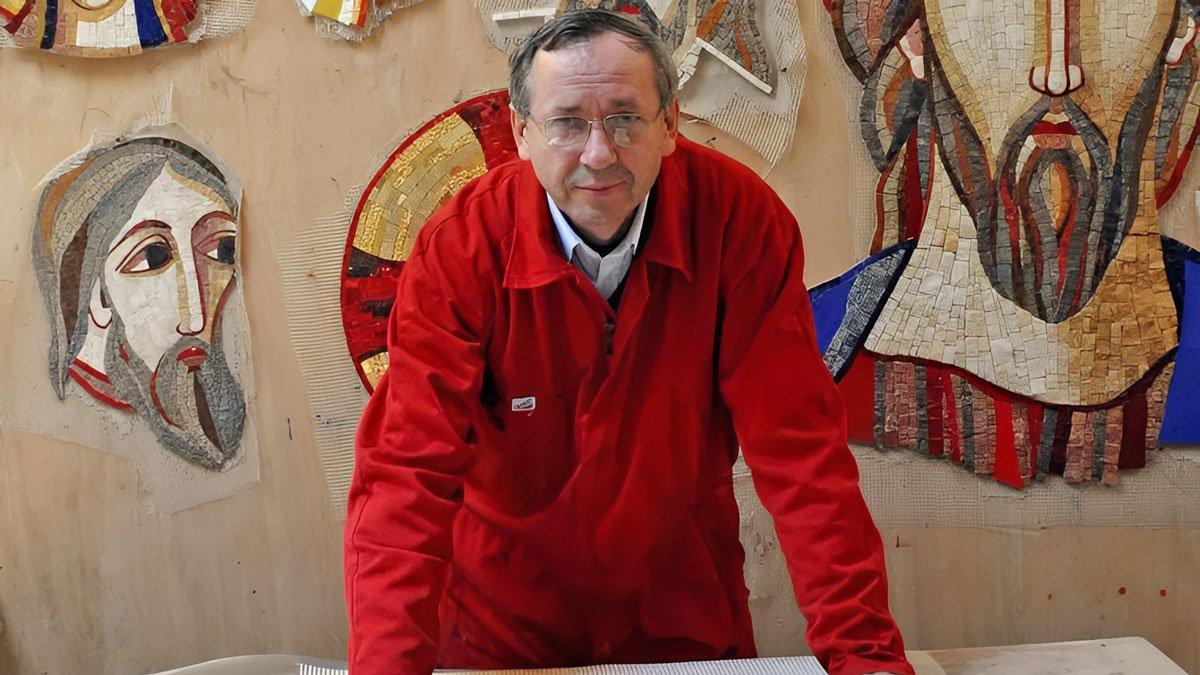
The news this past week put the opacity of canonical criminal proceedings squarely in the spotlight, when the Vatican was forced to deny rumors a disgraced former Jesuit and one-time celebrity artist had been acquitted in his secret Church trial.
The case of Father Marko Rupnik – who somehow remains a priest apparently in good standing, though he now serves a diocese in his native Slovenia – doesn’t only highlight the problems of secrecy in criminal proceedings at Church law.
The Rupnik affair also illustrates how the abuse of adults – usually women – isn’t being addressed properly.
The Rupnik case in brief
Rupnik has been investigated several times, by different Church authorities, and each investigation has uncovered and confirmed gruesome evidence of the priest’s crimes against dozens of women over a period of thirty years.
Some of Rupnik’s accusers have told Crux Now the Jesuits had heard from them of Rupnik’s depredations as early as the mid-1990s, but the priest continued to earn art commissions and accolades, and to enjoy the favor of his Jesuit superiors and the Vatican.
The Slovenian priest is also accused of using his “creative process” to manipulate his victims spiritually, psychologically, and sexually.
The Jesuits now believe he is guilty, and they have said so. Vatican investigators looked into the matter for the Dicastery for the Doctrine of the Faith, which found a case to answer against Rupnik in 2022 but ruled his crimes beyond the statute of limitations.
Rupnik was expelled from the Jesuits in 2023 – for disobedience, not for his crimes – and a friendly diocese in the priest’s native Slovenia accepted him as a member of the diocesan clergy in good standing later that same year.
Sustained media scrutiny, public and private pressure from the pope’s own inner circle, and incandescent global outrage at the news Rupnik would be allowed to continue as a priest, led Pope Francis to waive the statute of limitations and order a review of the case.
That was nearly three years ago.
It would be almost exactly two full years before the Vatican would announce it had empaneled a college of judges to try the case against Rupnik, but Church authorities haven’t said who the judges are or even announced what specific charges he is facing.
Even with the priest facing serious charges, Francis continued to display his artwork in his residence in his personal quarters inside the Domus Sanctae Marthae guesthouse where he lived while he reigned.
Lots more has happened in the Rupnik case besides those broad strokes, but there you have the quick-and-tidy version of what is a really macabre story, labyrinthine in its complexity and horrific in its details.
Lessons (un)learned
In an important sense, however, the Rupnik case comes down to two related points.
First, the secrecy surrounding the business has hurt the victims – who have waited too long to see too little justice – and the Church, whose faithful are scandalized and whose leaders have lost moral credibility.
Second, what we have learned regarding the case shows how Church leaders continue to follow the same playbook they used throughout the dark decades of the child sexual abuse crisis.
The playbook includes therapy, clergy moves, and payoffs. It also includes turning the blind eye, victim-blaming and intimidation, minimization, obfuscation, and even out-and-out denial.
All of it is designed to keep the bad behavior under wraps and the stories away from the papers.
It is nearly a quarter century since the Catholic Church faced the impact of the allegations of clerical abuse against children in the “Spotlight” series published by The Boston Globe in 2002.
Continue reading at Crux