
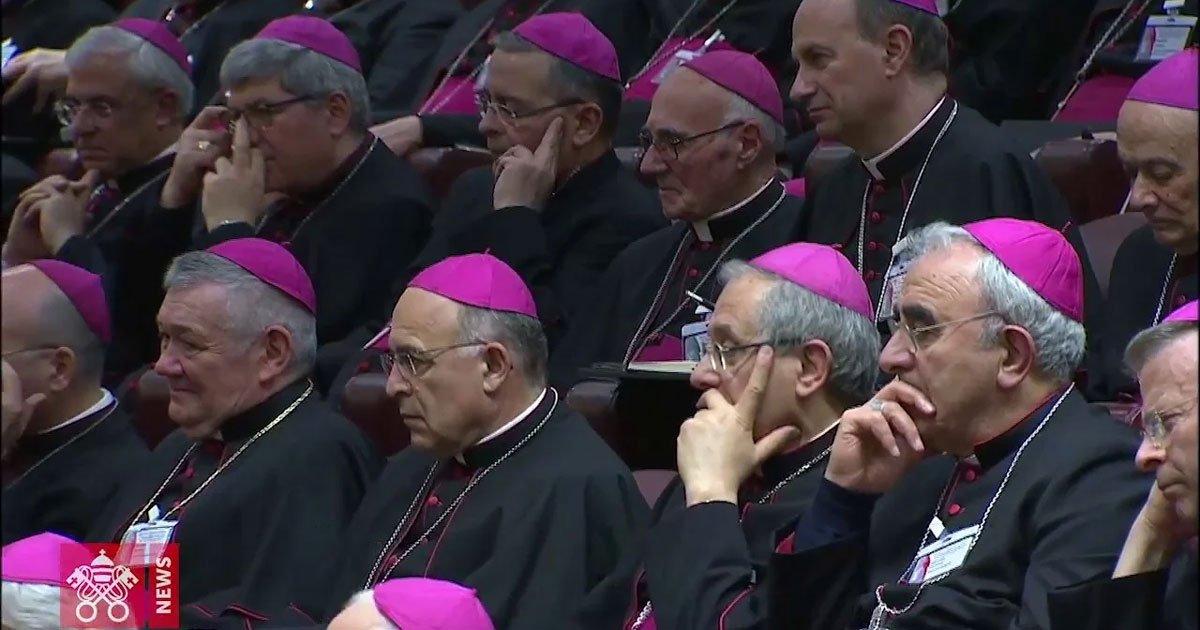
In the spirit of “openness,” the Italian Bishops’ Conference recently approved, with the apparent blessing of the Roman authorities, new guidelines that stipulate that an applicant for the seminary cannot be rejected simply because he identifies as a homosexual.
The term “openness” is one of those flexible notions which, like those of “public order,” “good faith,” or “proportionality,” evade the exercise of definition.
We know the important function of “standards” in legal technique. Legislators and judges deliberately use these words taken from ordinary language, the meaning of which varies according to the context and dominant ideas. They serve to establish rules of law and to identify jurisprudential solutions that escape the requirements of logical reasoning using legal concepts. They authorize them to establish and interpret the law according to a certain common sense, with a margin of flexibility that allows them to resolve the tension that a lawyer, for example, necessarily encounters when confronted with the complexity and mobility of social life.
In the spirit of openness, the Italian Bishops’ Conference recently approved, with the apparent blessing of the Roman authorities, new guidelines that stipulate that an applicant for the seminary cannot be rejected simply because he identifies as a homosexual.
RELATED: Does Vatican-Approved Document Allow Italian Homosexual Men to Become Priests?
The document “La formazione dei presbiteri nelle chiese in Italia. Orientamenti e norme per i seminari” (“The formation of priests in churches in Italy. Guidelines and norms for seminaries”), states that seminary directors should consider sexual orientation as only one aspect of a candidate’s personality. While this does not change the Roman Catholic Church’s teaching that “homosexual tendencies” are “intrinsically disordered,” it nevertheless departs from its constant position that such men should not become priests:
…persons with homosexual tendencies who seek admission to Seminary, or discover such a situation in the course of formation, consistent with her own Magisterium, “the Church, while profoundly respecting the persons in question, cannot admit to the seminary or to holy orders those who practice homosexuality, present deep-seated homosexual tendencies or support the so-called ‘gay culture.’ Such persons, in fact, find themselves in a situation that gravely hinders them from relating correctly to men and women.
The new norm says that so long as a candidate remains chaste, his sexual orientation should not disqualify him from seeking the priesthood. The dilemma in this is that, as taught by the Church, only heterosexual men can become priests since only they are objectively capable of sacrificing a family, that is to say, marrying a woman and having children for the service of God’s Church. Those with homosexual tendencies, while they can equally achieve holiness, are objectively incapable of making the same sacrificial act. In other words, the vocation to Holy Orders is a call, not an open invitation to anyone and everyone who desires to become a priest.
Continue reading at Crisis Magazine