
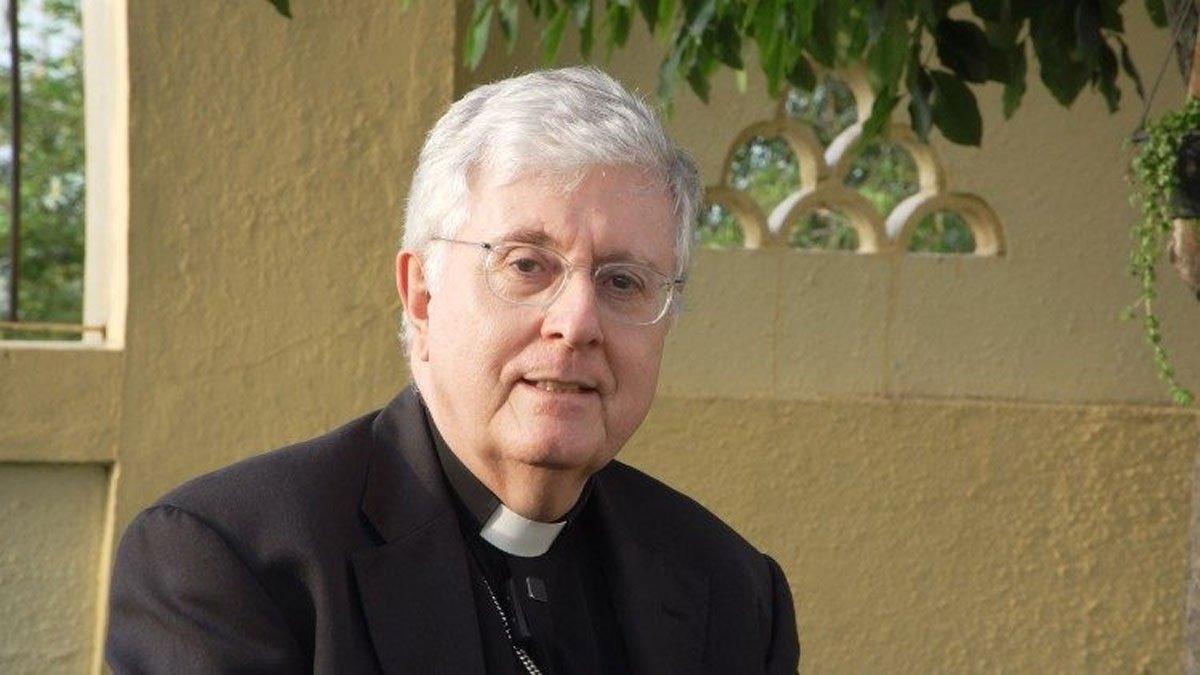
Below is the full transcript of the interview with Archbishop Giambattista Diquattro, Apostolic Nunzio in Brazil and Deputy Head of the Holy See Delegation at COP30:
Q: Your Excellency, the Holy See is present at COP30 in Belém with an official Delegation of 10 people. We have already had the presence of the Cardinal Secretary of State, Pietro Parolin, who brought a strong message from the Holy Father and then addressed the Conference, launching an appeal for us to commit, without hesitation, to confronting the challenge of climate change. How is the participation of the Holy See Delegation at this COP30 unfolding?
A: First of all, it is significant to note that the Delegation of the Holy See, led by the Cardinal Secretary of State Pietro Parolin, is enriched by the presence of members coming from various institutions of the Holy See and Vatican City State: the Secretariat of State, the Dicastery for Culture and Education, the Dicastery for Promoting Integral Human Development, the Dicastery for Communication, the Governorate, the Apostolic Nunciature, together with a local expert. The collaboration of the various members of our Delegation takes concrete form also in the meetings that the Delegation holds not only with the States gathered here, but also with other non-governmental actors, including some from the Catholic Church, among them the 9 Cardinals and 36 Bishops who in Belém bear witness to a broad communion.
What contributions has the Holy See offered to the debates so far?
The Holy See offers to the climate debate, above all, an ethical contribution and a message of human solidarity, founded on the Church’s Magisterium, since the climate crisis is not solely a technical problem but also a moral one. We are called to be guardians of our brothers and sisters, and within that context a moral responsibility is born also toward creation.
For this reason, the Holy See is contributing to the negotiations by recalling the centrality of the dignity of the human person, bestowed by God. At every negotiating table, this approach is manifested through a respectful, constant, and firm invitation to give priority to the “human face of the climate crisis,” as the Holy Father said in his Message for the recent Summit. The Message reminds us that behind the technical dynamics, the acronyms and initials typical of UN negotiations, there are human beings and, above all, innocent communities suffering the effects of the environmental crisis.
In these times marked by tragic conflicts, the Holy See also highlights that care for creation and the pursuit of peace are inseparable, and that war and the destruction of nature mutually fuel one another. I again quote the Message of Pope Leo XIV: “If you want to cultivate peace, protect creation. There is a clear link between peacebuilding and the stewardship of creation: ‘The pursuit of peace by all men and women of good will will certainly be facilitated by a common acknowledgement of the inseparable relationship that exists between God, human beings, and the whole of creation.’”
With this reflection – and in reference to the negotiations on a “Just Transition” – the Holy See has intervened to reaffirm that the progress achieved at COP28 must not be weakened, including the fundamental commitment to transition away from fossil fuels, but must coexist with particular attention to those who are most affected by climate change and by the responses to it.
The Holy See also underlines the importance of fairer financial mechanisms, because the poorest populations are the most vulnerable to climate change, becoming its first victims. Genuine solidarity must animate those financing mechanisms based on fraternity. In this perspective, and particularly in this Jubilee year, the Holy See recalls that the cancellation – and not simply the easing – of sovereign debt, connected with ecological debt, represents a necessary measure to support the most affected countries. This is not only an ethical proposal but a concrete strengthening of the policies indispensable for achieving an authentic “just transition.”
Continue reading at Vatican News