
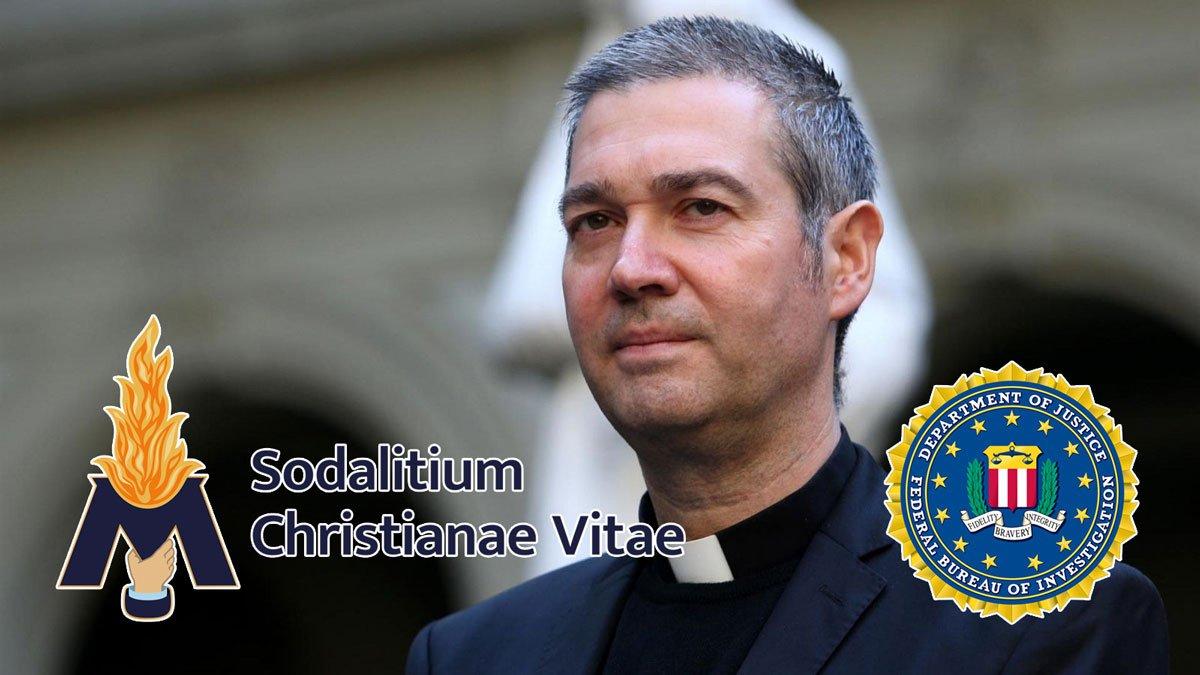
The Vatican is facing mounting questions after the publication of a leaked audio recording in which Monsignor Jordi Bertomeu, an official of the Dicastery for the Doctrine of the Faith and the Vatican’s commissioner overseeing the suppression of Sodalitium Christianae Vitae, acknowledges that the Holy See was aware of an ongoing FBI investigation into suspected money laundering tied to the group.
The recording, released on 25 November by InfoVaticana, appears to show Mons Bertomeu discussing the case with a Sodalicio representative and outlining ways to “avoid scandal” as the legal pressures surrounding the movement intensified. Sodalitium Christianae Vitae (SCV) – also known as the Sodalitium of Christian Life – was, until its suppression by the Vatican, a Society of Apostolic Life of Pontifical Right within the Catholic Church, which was founded in Lima, Peru, by Luis Fernando Figari on 8 December 1971.
In the audio, Bertomeu acknowledges that the Holy See had interacted with US authorities. “The FBI delegate was here in Lima, who also wanted to know,” he says, recounting a meeting at the US Embassy in the Peruvian capital.
He adds that Vatican officials were in possession of documents indicating possible irregularities: “The Vatican has already informed the US authorities … that the investigation has uncovered documentation that suggests money laundering.”
The monsignor is also heard proposing a course of action aimed at presenting the situation to the FBI as effectively resolved through internal Church measures. “This solution would work … because what they profited from would be returned to non-profit purposes,” he says, suggesting that the approach could be accompanied by “a benevolent accompanying letter, where the Vatican acts as guarantor of the solution that has been reached”.
At several points, Bertomeu stresses the need to offer financial restitution, saying, “The first thing is to satisfy these victims … but you can’t satisfy them with a few bucks,” and proposing that some social works be “returned to the dioceses where missions theoretically profited”. He also acknowledges the delicate implications for Church leadership, remarking, “The last thing we want is to have to initiate canonical proceedings against bishops … Please reverse this.”
The problem here for the Church is not simply the possibility that a Vatican official proposed a strategy that could be interpreted as the Holy See conditioning cooperation with a FBI investigation. The deeper question is whether the Church has fully internalised a truth it proclaims but sometimes struggles to practise: that transparency is not a threat to the Gospel, but a servant of it.
Why does this matter for the Church and Catholic culture? Because a Church that hesitates before the truth risks becoming unintelligible to a world already suspicious of institutions and allergic to ambiguity. This incident cannot be understood merely as a diplomatic misstep or a personal lapse; it reveals a recurring pattern within modern ecclesial governance, the instinct to manage scandal rather than confront it.
The core idea, then, is that the incident involving Bertomeu matters because it reflects a broader and long-standing tension within the Church: the tendency to fear reputational harm more than moral compromise.
Continue reading at the Catholic Herald