
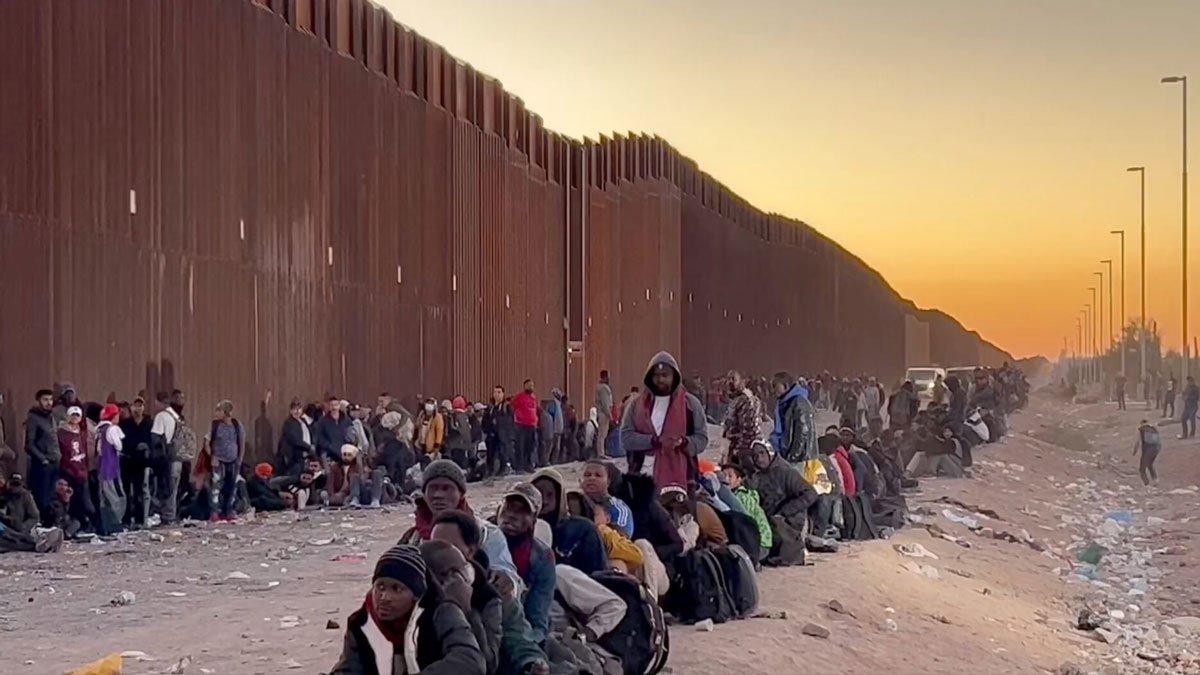
The Apostolic Exhortation Dilexi Te limits its discussion of “migrants” to three paragraphs: 73–75. Paragraph 73 claims that “The experience of migration accompanies the history of the People of God,” citing Abraham, Moses, and the Flight into Egypt. Paragraph 74 focuses on two 19th-century Church figures involved in the care of migrants in the Americas: St. Frances Xavier Cabrini and Bishop Giovanni Battista Scalabrini. Paragraph 75 cites contemporary examples of work with “migrants,” quoting Pope Francis’ line that “our response to the challenges posed by contemporary migration can be summed up in four verbs: welcome, protect, promote, and integrate.” It further reminds us that every person is a child of God, made in the divine image and likeness, and insists that “proclamation of the Gospel is credible only when it is translated into gestures of closeness and welcome,” concluding that “in every rejected migrant, it is Christ himself who knocks at the door of the community.”
Before these claims even reach the level of theology, standard logic would challenge them. The first question arises from what Dilexi Te does not ask: the legal status of a “migrant.” The Exhortation simply ignores the issue. There are only “migrants.”
What are we to conclude from that omission? That the legal status of a migrant is irrelevant? That would surprise nearly every state in the world, each of which not only distinguishes between legal and illegal immigrants but among legal categories themselves: temporary workers on nonimmigrant visas, refugees, asylum seekers, parolees, or permanent residents. The legal status of a migrant determines that person’s rights, obligations, and future in the host country. Would the Holy See tell states to abandon such distinctions? If not, why does Dilexi Te fail even to acknowledge them?
Continue reading at Crisis Magazine