
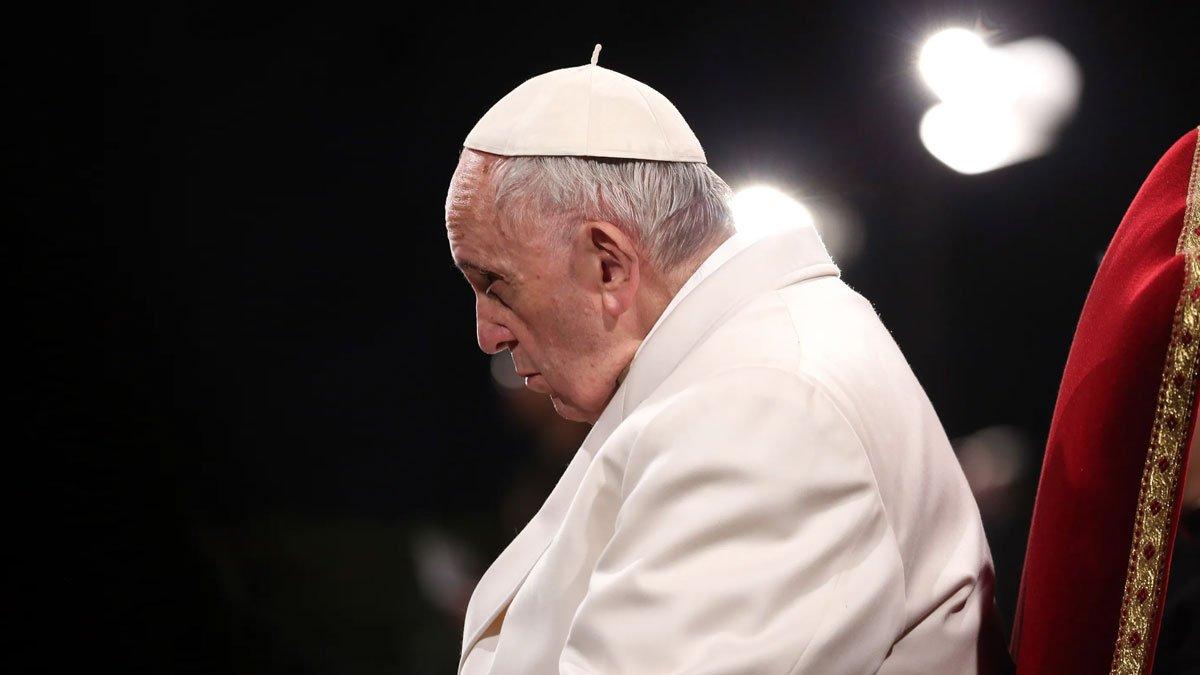
The outpouring of grief following the death of Pope Francis was like a wall of noise, a practically uninterrupted blanket of praise, a seamless garment of tribute. Even his enemies fought to temper their public comments, undoubtedly conscious of the enduring Latin injunction de mortuis nil nisi bonum, that one must not speak ill of the dead.
It was only in private conversations that one could truly gauge the true sentiments of rank-and-file Catholics. One devout woman, orthodox but very much in the mainstream of the Church, confided to me that when she heard of the death of Francis on Easter Monday, ‘I couldn’t help but weep with immense relief – thanking the Lord that it was finally over’.
The ‘it’ in this context is not the awful suffering Francis had endured over 38 days in hospital, but his pontificate. This pope was one of the most divisive leaders the Catholic Church has seen for centuries, and he constantly exasperated good Catholics.
Catholics believe the Petrine ministry is endowed with a specific charism, or spiritual gifts, so a pope may serve as a focus of unity by teaching with clarity and encouraging Christians to persevere in faith. ‘Strengthen your brothers,’ Jesus told St Peter in the Gospel of St Luke (22: 32). Francis, however, was a serial heresiarch, who deliberately resorted to ambiguity to sow confusion among the faithful and subvert the teachings and traditions of the Church.
He undermined the teaching of Jesus on the indissolubility of marriage, for example, and introduced blessings for same-sex couples. He allowed a pagan earth goddess called a Pachamama to be honoured in a Roman church (it was subsequently stolen and thrown in the River Tiber by a man convinced that idolatry was still a sin forbidden by the first of the Ten Commandments). He elevated climate change ideology to religious dogma and handed over control of the Catholic Church in China to the Communists. Francis effectively did away with Hell by promoting the belief that it was empty and that only a ‘cult’ believed otherwise. Consequently, one did not have to be sorry for one’s sins to receive absolution under this pope or to be in a state of grace to receive Holy Communion.
Continue reading at TCW