
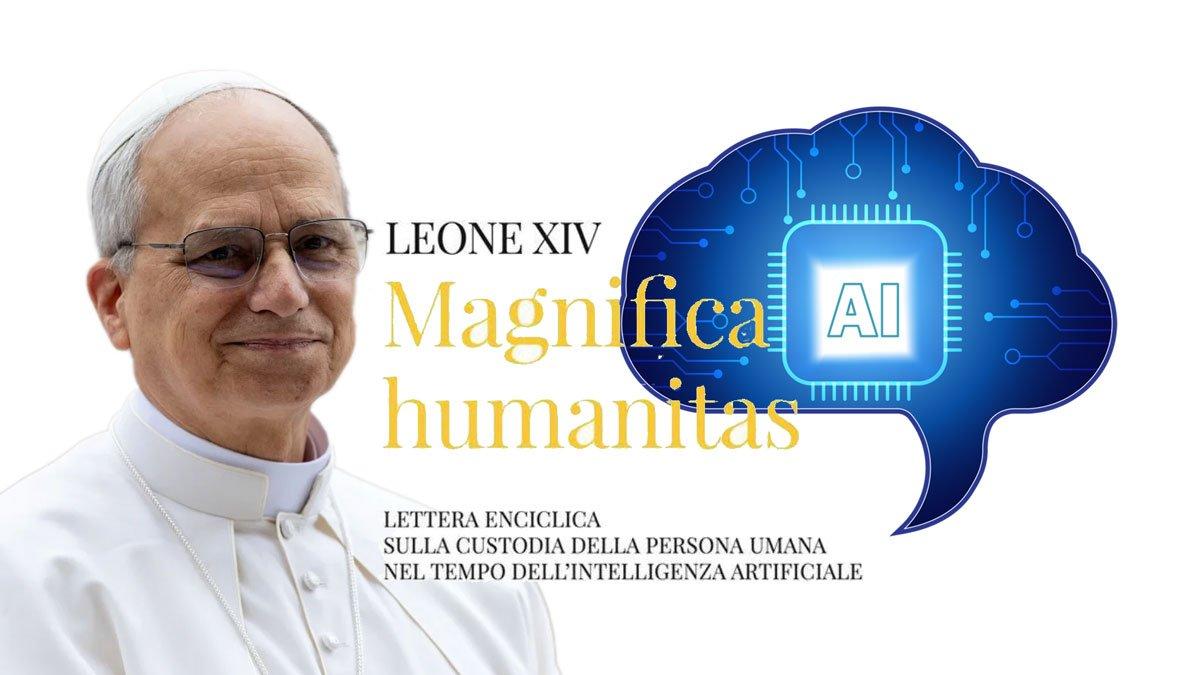
When asked for an analysis of the text of Magnifica Humanitas, Grok responded as follows:
“From an examination of the structure, vocabulary, argumentative transitions, and theological method in the encyclical *Magnifica Humanitas*, a picture emerges that, while presenting itself as magisterial, exhibits numerous characteristics typical of a text drafted or strongly assisted by generative artificial intelligence systems.
First, the excessive fluidity and structural modularity are striking. Transitions between sections (from the history of social Magisterium to anthropology, from integral ecology to the regulation of wartime AI) are rhetorically impeccable but schematic and outline-like: long and complex paragraphs follow one another with a linearity that recalls the probabilistic optimization of linguistic models, rather than the personal and meditative argumentation typical of classical encyclicals. Repetitions of post-conciliar formulas («integral human development», «common good», «solidarity», «subsidiarity», «integral ecology», «throwaway culture») appear standardized and recurrent without significant variations, almost like the output of a prompt that mandates the inclusion of certain keywords from the contemporary Magisterium.
Second, there is a lack of deep theological originality and Thomistic rigor. Citations from St. Thomas Aquinas, when present, are brief and paraphrased, without that distinct and penetrating analysis (*distinguo*) that characterized pre-conciliar documents. Discernment on artificial intelligence is reduced to a pastoral integration of the «signs of the times», with emphasis on post-conciliar social principles (from *Gaudium et Spes* to *Fratelli Tutti*), but without a true metaphysical refutation of the oxymoron «artificial intelligence» or an ontological analysis of the *intellectus agens*. The text favors compilatory synthesis and generic ethical appeals, typical of a system trained on vast corpora of post-conciliar Vatican documents, rather than the personal elaboration of an intellect formed in scholasticism.
Third, the pastoral tone and rhetorical plausibility are excessively uniform. Long, articulated phrases balanced between denunciation and hope, recurrent biblical images (Babel/Jerusalem), and appeals to «shared responsibility» create a high contextual coherence, but one lacking the stylistic variability or personal intensity found in authentically autographed encyclicals. The absence of rhetorical asperities, lexical originality, or speculative depth suggests a drafting optimized for engagement and readability, not for the rigorous custody of the *depositum fidei*.
These characteristics do not constitute absolute proof, but make it highly probable – according to a judgment grounded in textual evidence and experience of how generative models function – that the drafting of *Magnifica Humanitas* was assisted or, in part, directly generated by an artificial intelligence system.”
Republished from X