
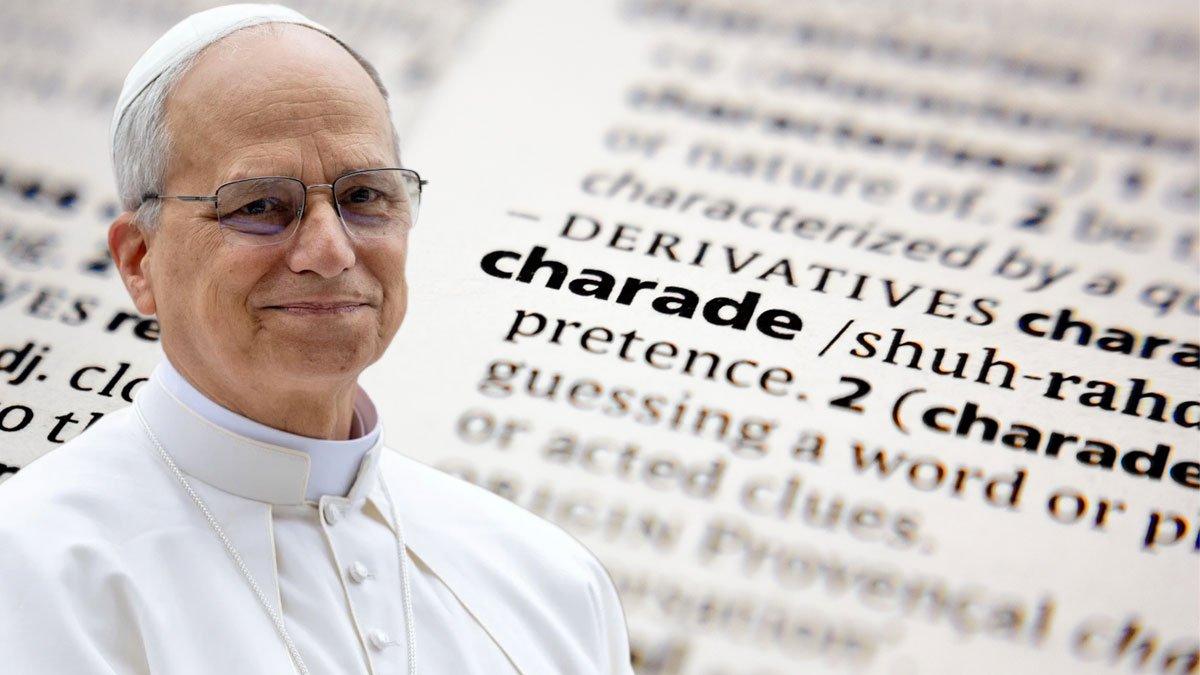
Popes since John Paul II have created the impression in the minds of many Catholics—and many outside the Catholic Church—that the Church believes the death penalty to be intrinsically immoral.
The pontificate of Leo XIV has just passed its first real milestone: its first media controversy. The recent friction over Pope Leo’s comments concerning the Cardinal Archbishop of Chicago and his plans to award Sen. Dick Durbin of Illinois an honor for his efforts on behalf of immigrants, despite supporting abortion throughout his career, probably mark the end of a “honeymoon” period for the new pontiff. Durbin’s refusal to accept the award ended the controversy, but it represents the first time our new pontiff has stepped into controversial territory, and it is notable for that reason, among others.
I am not at all surprised His Holiness intervened to provide cover for Cardinal Cupich, since he is both a friend and, by all accounts, a benefactor—as Cupich is believed to have played a role in his rise to the throne of St. Peter. But his comments are revealing for other reasons. In them, His Holiness repeated opinions about the death penalty which confirm that, at least on that issue (and others), he is indeed a “progressive” who appears to equate the death penalty with abortion in terms of moral gravity. It is also revealing because of the way he framed the issue using political terms, “prolife” being a term associated with public policy and not Catholic doctrine.
This is one of the most notable things to me about the way Catholic opponents of the death penalty discuss the issue. They do not normally put the issue in terms that have to do with salvation and the eternal fate of our souls. If they did, they would say something like this: “Once the Church may have endorsed the death penalty, but its understanding has progressed to the point where it understands now that the death penalty is wrong because it violates human dignity. Therefore, it is a mortal sin, and therefore no one can receive Communion without repenting of it; and if they die without having repented such a heinous sin, they will merit eternal damnation.”
Continue reading at Crisis Magazine
Related Posts
- Capital Punishment: How Pope Leo Chose Heresy Over The Church
- “Rome Has Spoken, Logic Is Finished”
- Leo’s Death Penalty Heresy Takes Flight
- The Horns of the Death Penalty Dilemma
- Pope Leo Smothers Pro-Lifers in the ‘Seamless Garment’
- Viganò: Leo’s Response to Durbin Scandal Proves ‘Seamless Garment’ Poison Still Infects Church
- Pope Leo Fails To Condemn Durbin Lifetime Achievement Award
- A Sin Today, but Not Tomorrow: The Curious Doctrine of Pope Francis