
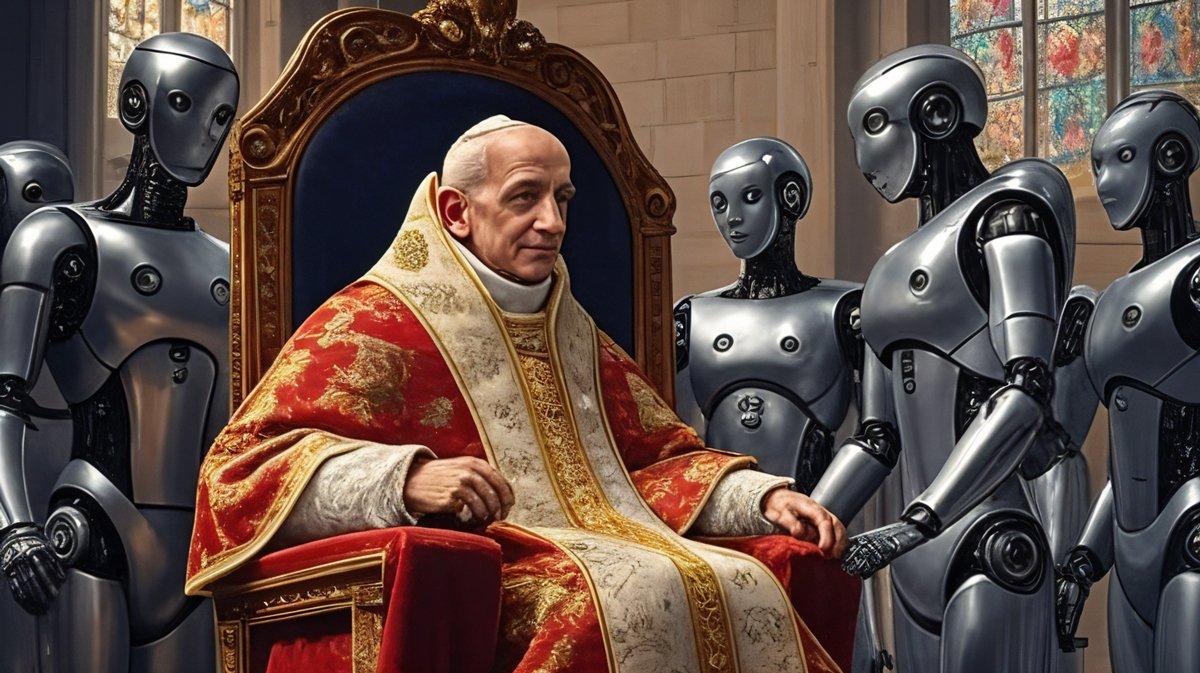
Some say the new pope, Leo XIV, is a liberal. Others say he’s a conservative. Yet Vice President JD Vance put it best: “It’s very hard to fit a 2,000-year-old institution into the politics of 2025 America.”
Yes, the Vicar of Christ transcends the red-blue partisan rumble. This is true even for the man who is the Church’s first American pope. Still, popes are often called upon to pass judgements on matters that spill into politics.
Such judgments start with the pontifical name the new Keeper of the Keys takes on; the name signals the papal predecessor he most wishes to emulate. In first address to the College of Cardinals, the man born as Robert Prevost explained: “I chose to take the name Leo XIV . . . mainly because Pope Leo XIII in his historic Encyclical Rerum Novarum addressed the social question in the context of the first great industrial revolution.”
That 14,000-word encyclical Rerum Novarum—the title is Latin for “Of New Things”—was published almost exactly 134 years ago, on May 15, 1891, when the earlier Leo could see that industrializing societies risked cracking up amidst the collisions of labor vs. capital. Fear of worker immiseration on the one hand and fear of worker revolution on the other loomed large.
In fact, even before his ascension to the Throne of St. Peter, Leo XIII had been applying his churchly powers to the cause of social harmony when he was the Bishop of Perugia. In the words of one biographer:
When Bishop of Perugia [from 1846 to 1877,] he advocated the establishment in his diocese of societies which tended to elevate and benefit the material condition of artisans and laborers. He urged the banding together in organizations of both employers and employees for the purpose of arranging satisfactorily conditions beneficial to both, and the enactment of laws conducive to their mental, moral and physical development.
Such efforts—a part of what’s known as Catholic Social Teaching— sought a middle ground on economic matters that firmly rejected socialism and communism but also opposed laissez-faire libertarianism. As this author has recalled for Breitbart News, Leo XIII wanted both business and labor to have rights and to be treated justly.
Inspired by Leo XIII’s encyclical, lay Catholics formed political parties around the world, often styled as Christian Democrats, seeking to harmonize divergent and conflicting forces into a centrist program.
Continue reading at Breitbart