
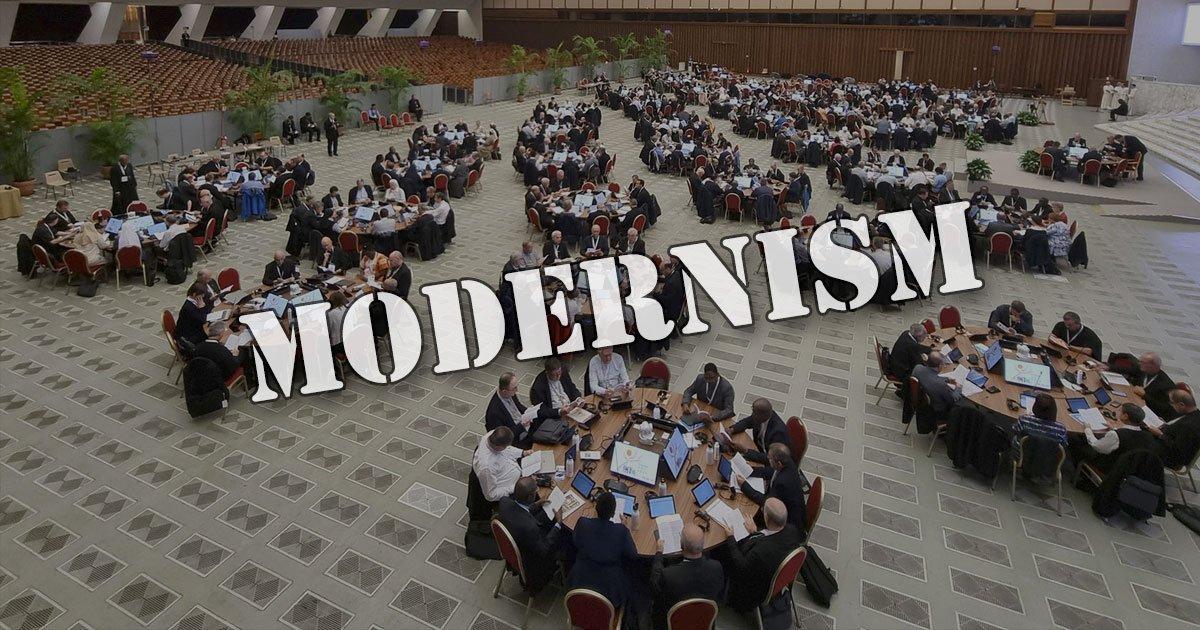
One of the things I have learned in my 65 years of being a Catholic is that the meaning of the term “Church reform” in the post-Vatican II era is almost always a cognate for “liberalization”. Why this is so and how it came to be this way is a story too complex to rehearse here. But it is sufficient to simply note this fact with an eye toward its ongoing significance for our “new way of being Church” in our brave new era of “synodal listening”.
Nor do we need to spend time here analyzing the typical laundry list of issues that the so-called reformers wish to address. From women’s ordination to contraception to LGBTQ everything, the central intellectual impulses are all the same: what the Church has taught for centuries has been wrong, or at least wrong now for our “times”, and needs to be changed in deeply constitutive ways to fit into our “new cultural paradigm”.
Left unarticulated and largely ignored in this avalanche of Newspeak verbiage is just how expressive the Catholic iteration of liberal modernity is to the central thesis that animates all of the variegated versions of modernity. This is what I call the “teleology of transgression,” wherein all that came before via the pathways of culture and tradition are recast as oppressive restrictions on our freedom from which we now need to liberate ourselves. Thus, all that came before, especially in the moral, spiritual and religious domain, must be erased entirely if one is a pure secularist, or must be simply redefined and reshaped, if one wishes to retain some religious identity, in order to conform to the new ordo of liberative transgression.
The late Italian philosopher Augusto del Noce (1910-1989) recognized this aspect of liberal modernity long ago and noted that the central dogma of this new regime of corrosion can be encapsulated in the phrase, so often heard in the halls of the liberal academy, “Today one can no longer believe … (fill in the blank with whatever is to be erased)”. What is being expressed by modernity in such forms of thinking is not so much a well thought out program for the future so much as a mere assertion that we must never “go back” to a society rooted in the sense of the sacred. In this sense we are all, once again, Marxists—insofar as culture and reason are now viewed as subsets of politics, and not as things given to us by God and are thus metaphysically prior to the State and thus have an independent status from the State.
Continue reading at Catholic World Report