
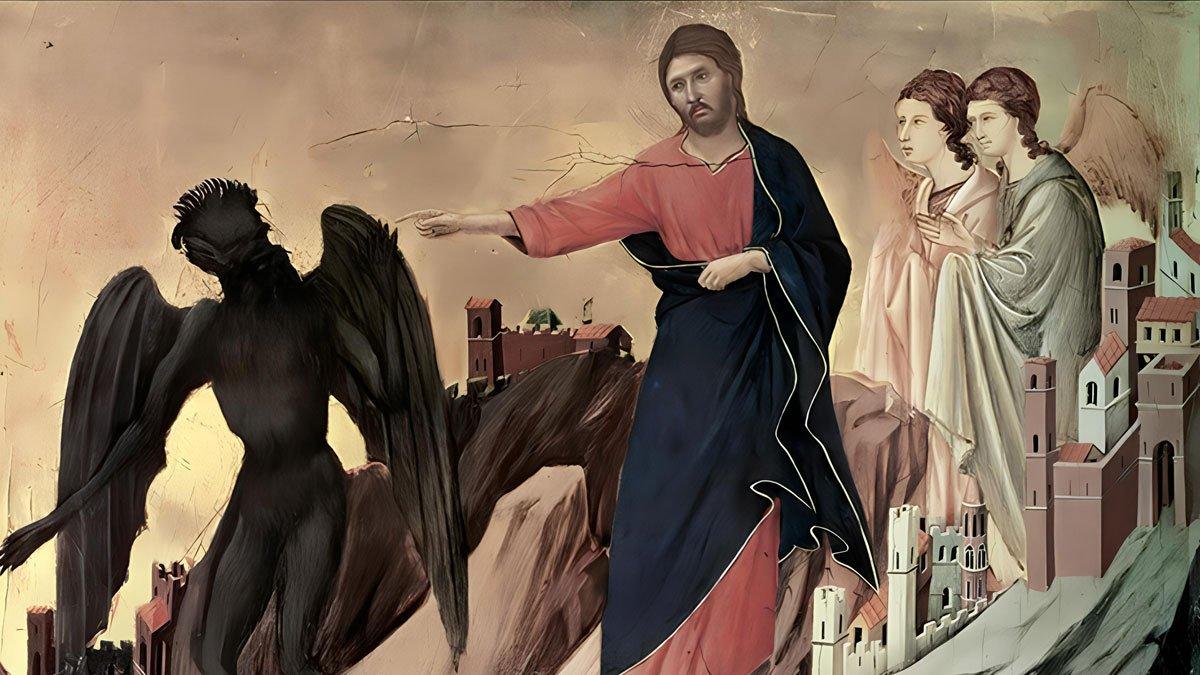
Cardinal Fernández’s note against the FSSPX opens a more serious question than that of selective schism: if Satan tempted Christ and asked to sift Peter, why would he stay away from the dicasteries, the seminaries, and the offices where the faith is guarded, or disfigured?
Yesterday, Cardinal Fernández issued his note again. In it, he “formally” reminded that the episcopal ordinations of the FSSPX constitute a schismatic act, and that schism entails excommunication.
The first thing that catches the eye is seeing such heavy words coming from such a fine pen. Schism! That ancient word, with the metallic sound of Roman warnings, in the mouth of such a youthful cardinal; that grave concept, which retains the ancient weight of ultimate and sacred things, in the mind of a lighthearted cardinal, a lover of modernity and all its trappings.
The brief note must be taken seriously. Apostolic succession is certainly not a private inheritance, and consecrating bishops without a pontifical mandate wounds the visible unity of the Church. But one must ask why Rome pronounces the word «schism» with such solemnity when looking toward Écône and keeps it inside when witnessing the entire colorful and painterly panoply of doctrinal, liturgical, moral, and sacramental ruptures that for decades have entered through the grand door of the official Church.
From that showy procession of chromaticism turned into a program, we have just had a snapshot that is hard to surpass with the recent visit of Sarah Mullally. The Archbishop of Canterbury was received in the Vatican with the forms proper to an ecclesiastical dignity and introduced into a common prayer under the apostolic roof. No brief note has bothered to recall that Leo XIII declared in Apostolicae curae the nullity of Anglican ordinations, and that to this nullity is now added, in a kind of theatrical challenge, the fact that it is a woman. With the utmost naturalness, to a figure that Catholic doctrine cannot consider a bishop under any concept, Rome treats her publicly as if she were, and the amiable choreography of the scene transmits urbi et orbe as much approval as disapproval the dry brief note of Fernández.
It is a “selective” schism: for Pachamama there was inculturation; for Luther, reconciled memory; for equivocal blessings, pastoral discernment; for episcopal appointments under the shadow of the Chinese Communist Party, diplomatic realism; for the cooling of Mariology, ecumenical sensitivity; for fairground liturgies, community creativity. For Tradition, on the other hand, the Code miraculously returns. Suddenly, from the cheerful face of the synodal, liquid, dialoguing, ecumenical Church, hospitable to all oddities and understanding to exhaustion with any deviation, emerges the severe grimace of condemnation: the Dicastery for the Doctrine of the Faith led by the ineffable cardinal recovers the solemnity of the old Holy Office to warn of schism those who preserve the Roman liturgy, Catholic morality, and the doctrine that entire generations of the faithful learned.
Continue reading at Infovaticana