
The perspective of a retired military chaplain
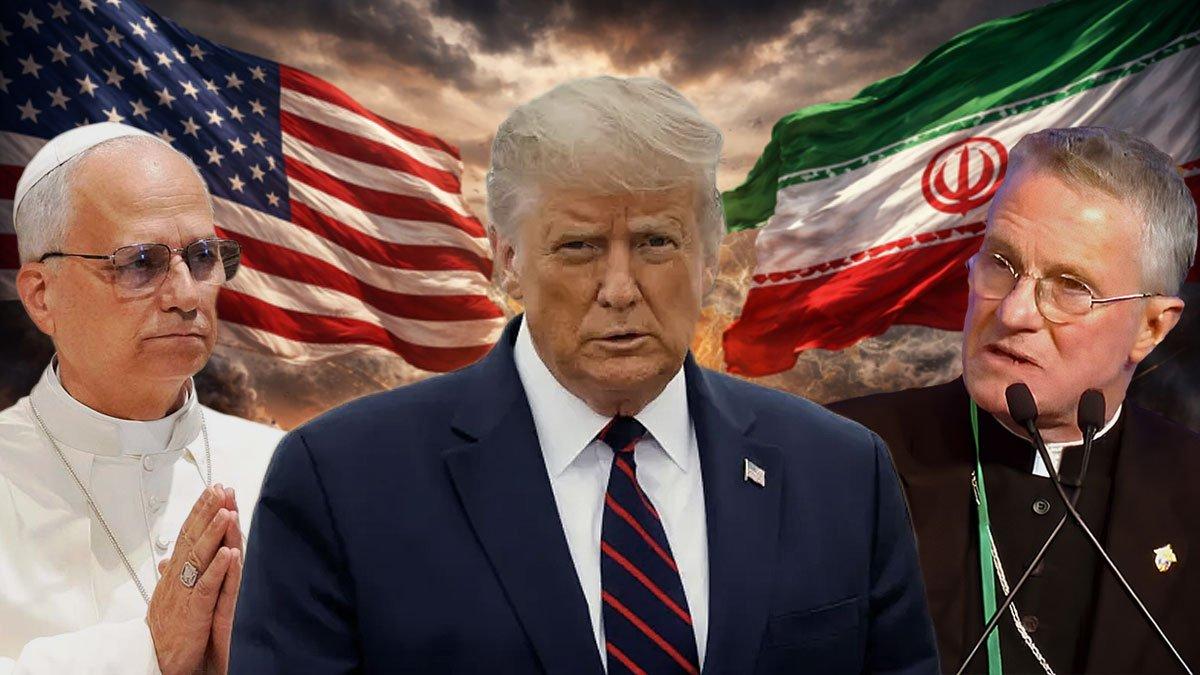
Let’s pretend the Israelis and the Americans did not attack Iran in 2026, and it’s now 2029. A very somber, newly elected, Democratic U.S. President appears on TV after Iran, perceiving the new Commander-in-Chief to be a weak leader, detonated a nuclear bomb in New York City, killing and wounding millions of people. After years of blaming President Donald Trump and Republicans for all the problems in the country and the world, will the new President and Pope Leo XIV now blame Trump and his Party for failing to prevent Iran from developing nuclear weapons?
Different people have weighed in on whether the current war in Iran meets the conditions of a just war according to teachings formulated by theologians like St. Augustine (354-430) and St. Thomas Aquinas (1225-1274).
The Just War Theory can be divided into two parts: jus ad bellum, which concerns the ethics of declaring war; and jus in bello, which addresses how combatants must act during armed conflict.
The jus ad bellum criteria include:
- The cause must be just (e.g., Military action is undertaken to resist aggression, protect the innocent, or to support the rights of some oppressed group).
- Wars must be fought only on legitimate authority (e.g., U.S. presidents and Congress have historically sanctioned the use of military force).
- The war must have the right intention (e.g., It must advance the good; avoid evil; have clear aims; and be open to negotiation).
- Last resort (e.g., It is waged after other attempts to secure peace have failed).
- Probability of success and justice (e.g., There should be a good chance of overthrowing a tyrannical dictator).
The rules of jus in bello aim to confine the destructiveness of war, rule out certain kinds of weapons, protect civilians, and limit the area and range of fighting.
When I was a chaplain on staff at the U.S. Naval Academy (1982-84), I taught midshipmen of my regiment a course in ethics that addressed, among a number of topics, the just war theory, and the duty of an officer to disobey an unlawful order. While this was theoretical to me at that time, it was at my next tour of duty that I gained combat experience when I served on the U.S. Sixth Fleet staff in the Mediterranean during our two attacks on Libya in March 1986 and April 1986. I shared a stateroom aboard the aircraft carrier, USS AMERICA (CV-66), with a U.S. Air Force liaison officer who lost two friends who were crewmembers aboard an F-111 that was shot down over the Gulf of Sidra during Operation El Dorado Canyon. That operation was undertaken in retaliation for the West Berlin discotheque bombing which U.S. intelligence sources traced to Libyan leader Muammar Gaddafi.
Continue reading at John Eighteen Thirty-Seven