
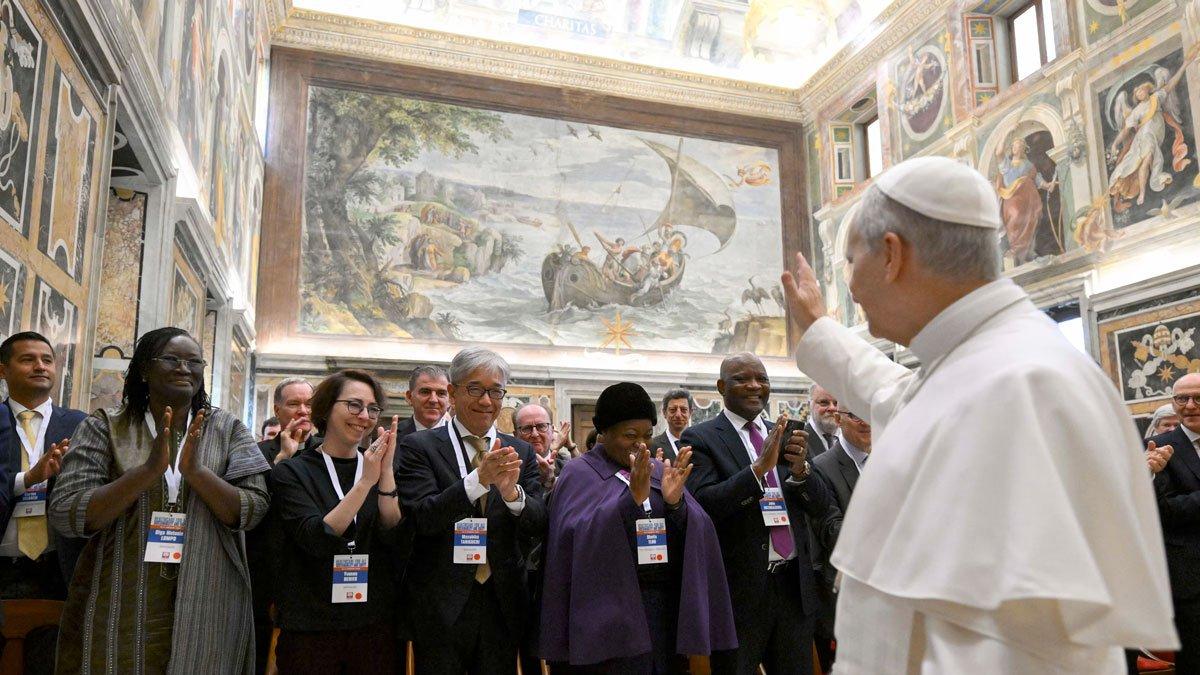
This week Pope Leo addressed the Pontifical Academy for Life, the now-controversial Vatican organization founded by Pope John Paul II with the purpose to advise the Holy See on subjects related to human life, medicine, and healthcare. In Leo’s address, he quoted his predecessor Pope Francis in arguing that health is “not a consumer good, but a universal right.”
I respectfully disagree. In fact, the idea that health is a “right” leads to a whole host of problems, as well as less healthy people. It’s also not a truly Catholic way of looking at our rights and obligations as members of the human family.
In modern times, claims of rights have proliferated more than the offspring of the most fertile rabbit. Whereas in ancient and even medieval times, few people were claiming rights, now it seems that every day a new purported right is invented. Strictly speaking, “rights,” at least as they are commonly understood in modern political philosophy, are not even a category in historic Catholic moral thinking. Rights today focus almost exclusively on what privileges someone has, whereas in Catholic thought, the primary focus is on our obligations to God and to others. That being said, the concept of rights does find a foundation in Catholic philosophy in that rights can be considered entitlements that individuals or entities hold which impose corresponding duties or obligations on others. Thus, if someone has a right, then others have a corresponding duty.
If someone, for example, has a right to liberty, then that person cannot be arbitrarily detained or imprisoned. The authorities (and everyone else for that matter) therefore have an obligation not to detain someone without cause. Yet note that this right is not absolute; if a person commits a crime, it is not a violation of his rights to then detain him. In fact, the authorities are obligated to imprison him for the sake of the common good. Even something as fundamental as the right to life can be set aside, if for example a person violently attacks someone and is killed in self-defense. Rights presume obligations on the holder of those rights as well as on everyone else.
Continue reading at Crisis Magazine