
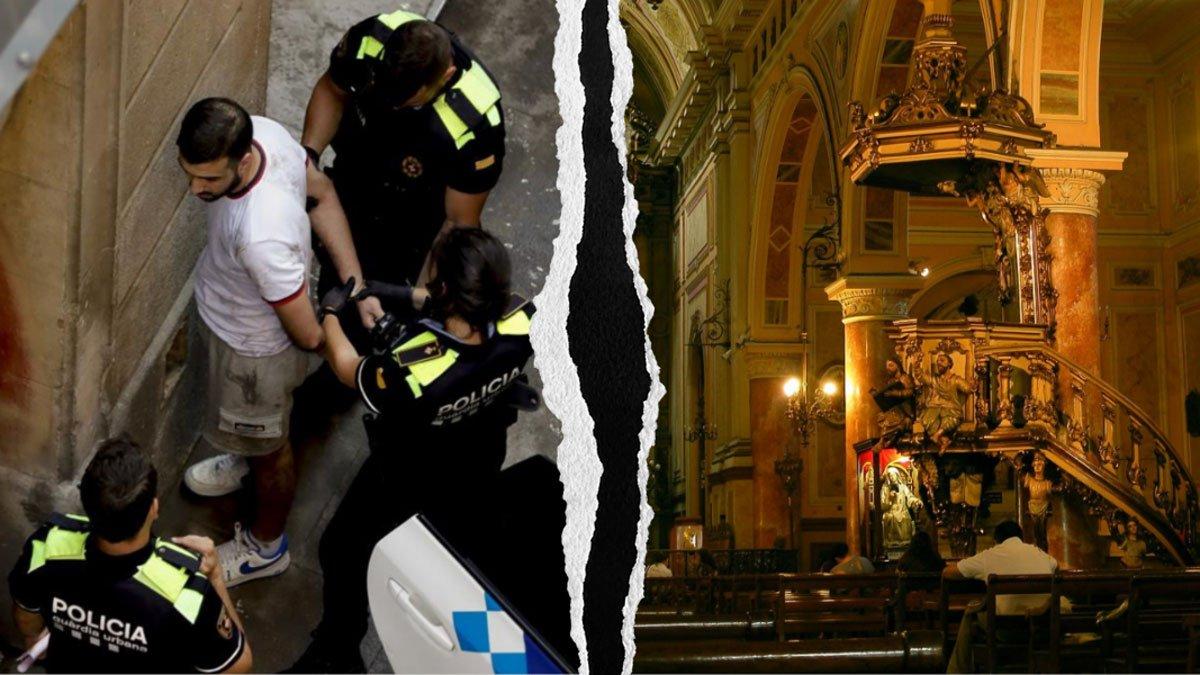
Between the comfortable restaurant, where bishops eat until they are stuffed, and the robbed perfumery of the victim of the unaccompanied foreign minors, there are increasingly more meters.
A friend tells me that yesterday they robbed his mother’s perfumery. The aggressors, unaccompanied foreign minors. It’s not a statistic. It’s not an argument. It’s a specific woman, a small business, the fright, the fear that doesn’t fade when she lowers the shutter.
And meanwhile, from ecclesiastical podiums, it is repeated that talking about borders, limits, or social consequences is «denial of the Gospel,» a lack of mercy, almost a sacrilege.
This is where the discourse crashes against reality.
Because the robbed mother is also a neighbor. She is also worthy. She is also vulnerable. She also has the right to security. And her fear is not ideology: it is experience.
Mercy cannot be selective. It cannot look only in one direction. It cannot be infinitely moved by the newcomer and show itself cold—or worse, morally accusatory—toward those who suffer the consequences of poorly thought-out policies.
And an uncomfortable question arises. I wish those who preach so lightly about non-existent borders and unconditional welcomes had to personally face the disorder that their words legitimize. Not so that they suffer violence—no one wishes that—but so that the debate would stop being abstract. It’s not the same to write about «the poor» from a comfortable restaurant, with a leisurely after-dinner and guaranteed security, as it is to close a store with a racing heart after a robbery.
The distance between the pulpit and reality is starting to be obscene.
Continue reading at Infovaticana