
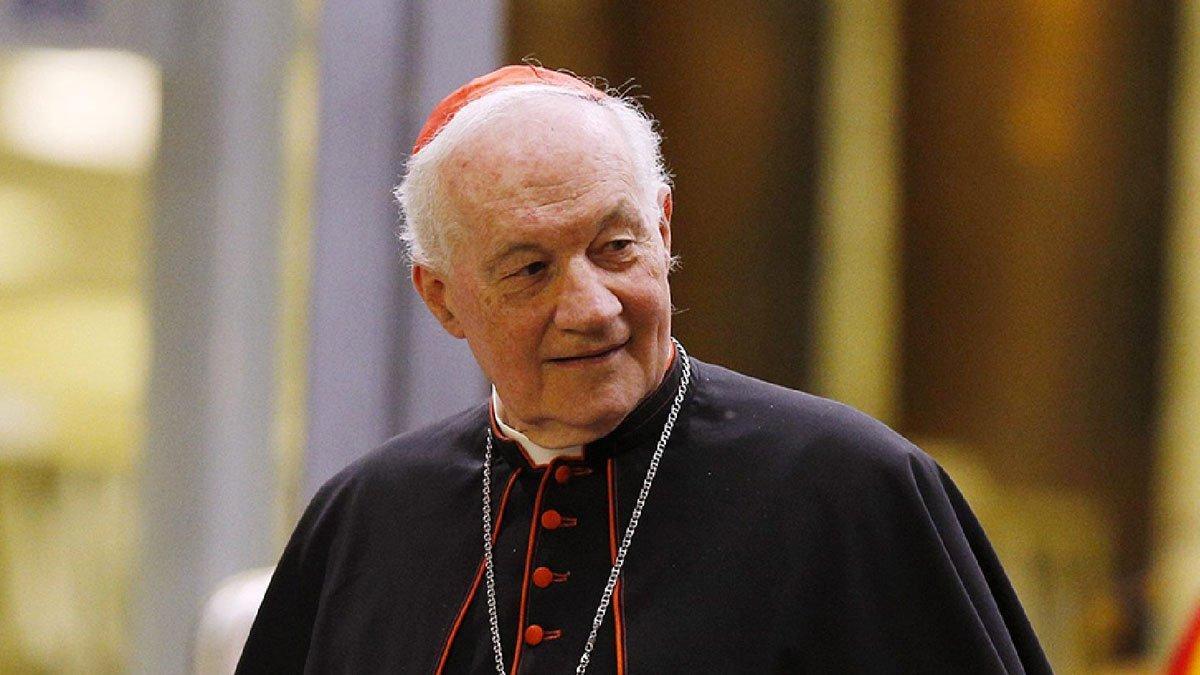
According to “Praedicate Evangelium,” a layperson—man or woman—could appoint a bishop to a diocese. Do you really want to justify “Praedicate Evangelium” with the devastating consequences this document has for the sacramentality of the Church?
Your Eminence:
In an article published on vaticannews.va, you have attempted to legitimize the fact that Popes Francis and Leo XIV have de facto annulled the Second Vatican Council with regard to the relationship between the sacrament of orders and the potestas sacra (LG 21). These popes have appointed laypeople to ecclesiastical offices that involve the exercise of the potestas sacra, for which these laypeople, however, lack the capacity due to the absence of the sacrament of orders.
You try to justify this approach with the charisms generated by the Holy Spirit. At the same time, in three points of your text, you emphasize that it is necessary to deepen the study of the importance of charisms in the Church and their relationship with the office of governance, as well as the work of the Holy Spirit in the sacraments and in the Church. Of course, everything contained in the Sacred Tradition and in Sacred Scripture can and must be continually deepened. But if it were true that there are significant ambiguities regarding the relationship between charisms and the ministry of governance—which I doubt—with your argumentation you unmask the work of the popes cited as arbitrary acts. In fact, if important matters are not sufficiently clear from a doctrinal and theological point of view, faits accomplis cannot be created, as has happened. This is not prophetic, but irresponsible and creates divisions.
Although there can always be nuances and deepenings of the Church’s doctrine, one thing is certain, based on the Sacred Tradition and Sacred Scripture: charisms have always been subject to the offices of teaching and governing instituted by Jesus Christ: Test everything; hold fast to what is good (cf. 1 Thess 5:21). The Second Vatican Council confirmed this when it said of charisms: “The judgment of their authenticity and of their orderly exercise belongs to those who have authority in the Church” (LG 12).
There has never been a Church of Jesus Christ and, alongside it, a Church of the Holy Spirit. There is a single office of teaching and governing in the Church, in which charisms also exist, but these must be recognized and ordered by the successors of the apostles. The sacrament of orders is, therefore, contrary to what you claim, the only source of the power to govern that exists in the Church. And it is not, as you claim, a mere “custom,” but an essential part of the Church’s doctrine. Charisms, on the other hand, are by no means a prerogative of the laity with which they could presumably assert themselves before the clergy: the Holy Spirit “distributes special graces among the faithful of every condition,” as the Second Vatican Council teaches with regard to charisms (LG 12).
Revelation concluded with the last apostle (DV 4). Therefore, the Holy Spirit cannot, after 2000 years, become a competitor to the Son of God. It cannot arouse charisms that, alongside the hierarchical-sacramental nature of the Church created by the sacrament of orders, create a second para-sacramental basis on which the capacity to obtain offices linked to the potestas sacra could exist. But that is precisely what you suggest. We would then have a conflict of competencies in the Trinity: the Spirit as a competitor to the Son. Who should mediate? The Father? Or would a sustainable compromise be considered worthy and suitable, in the sense of a synodal discernment, to restore intratrinitarian peace?
Continue reading at Infovaticana