
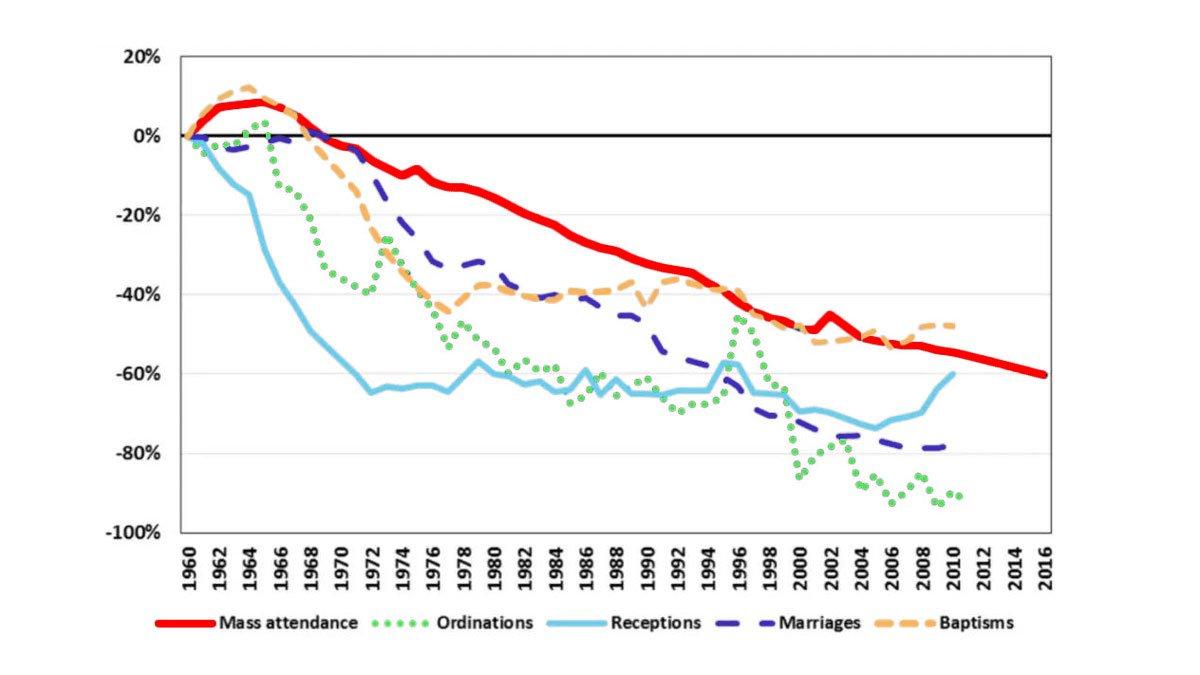
Among the reasons for the corporatization of the Church, the infiltration by managerialist methods and motives that prioritize process over product and organization charts over the faith, is that handing over de facto power and administration in the Church to lay administrators, turning the bishops into middle managers, and cozying up to governments was actually a rational response to the problems faced by the Church after the Council.
With a massive decline in the religious orders, an increasing shortage of priests, and many of the most faithful participants and members of the Church having been filtered out after the revolution, a turn to increased managerialism and secularism was the solution that beckoned, even for those who weren’t modernist ideologues.
If you don’t have enough nuns to run the Catholic schools, nor enough lay involvement to keep the local parish running, nor enough priests to minister in every parish, you move the goalposts by closing Catholic institutions and parishes, or prop up those that remain by allying with governments, and subtly—or not so subtly—changing their mission.
Continue reading at Grain of Wheat