
Silence in the face of confusion is not humility. It is negligence.
Brothers and Sisters in Christ,
There is a question in the Gospel that is not asked gently. It is not asked in safety. It is asked when truth demands a decision.
Our Lord has just taught the truth about His Body and His Blood. He has spoken plainly. He has not softened His words. He has not explained them away. And many who had followed Him decide they can no longer stay. They walk away.
And then Jesus turns to the Twelve – not to rebuke them, not to reassure them – but to ask a question that every generation of the Church must answer again for itself. “Will you also go away?” And Peter responds with words that are a confession of absolute necessity: “Lord, to whom shall we go? Thou hast the words of eternal life.”
This question is not symbolic. It is not rhetorical. It assumes something that our age finds deeply uncomfortable. It assumes that there is only one place to go.
And that is precisely why this question must be asked again today – because we are living in a time when that assumption is being quietly, and sometimes openly, undermined.
We live in a moment when Catholics hear, over and over again, language that suggests that all religions are fundamentally the same, that all paths are valid, that differences do not really matter, and that unity is the highest good – even if truth must be blurred to achieve it.
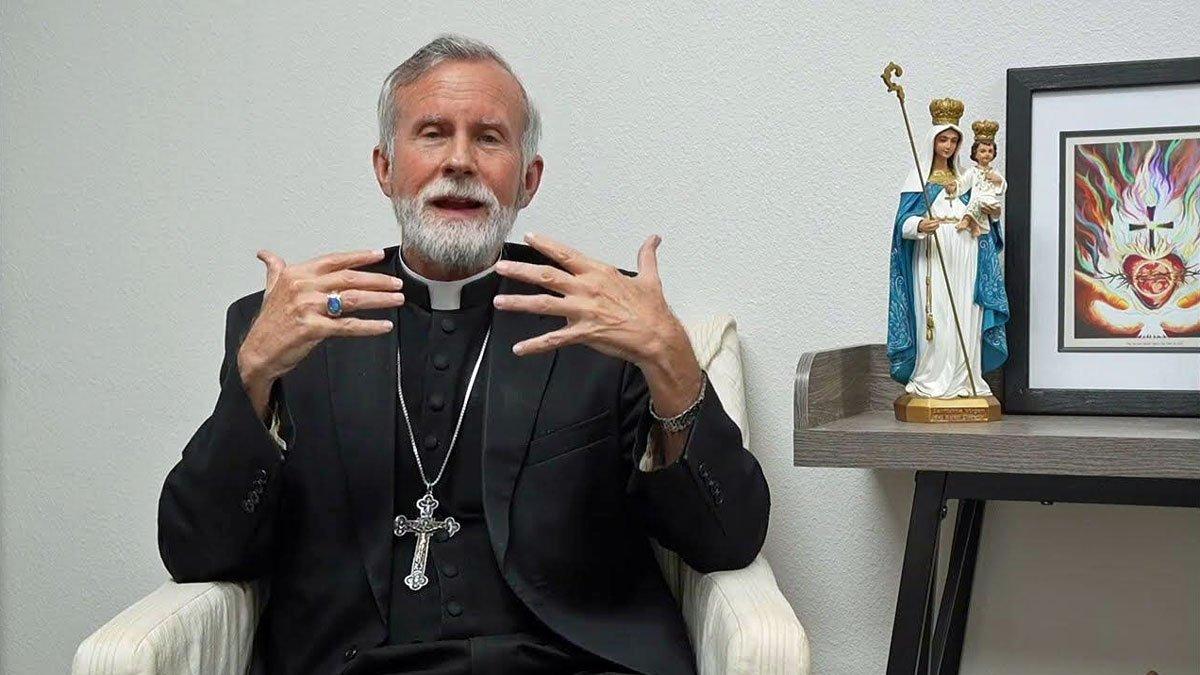
This language is often presented as mercy. It is presented as openness. It is presented as pastoral sensitivity. But I want to say this clearly, as a bishop charged with the care of souls: Unity detached from truth is not unity. It is a fragile illusion – and it cannot save anyone.
Continue reading at Pillars of Faith