
What is at stake is the very constitution of the Church as a divinely instituted reality.
December 31, 2025, marked the third anniversary of the death of Pope Benedict XVI. Perhaps, therefore, now is as good a time as any to look back and reflect on his legacy.
But why yet another retrospective of Pope Benedict? I think it is because his legacy is more important now than ever—especially in one important area, which I will explore here.
The legacy of Joseph Ratzinger/Benedict XVI includes his undeniable importance as an influential theological peritus at Vatican II. He was one of the most important periti at the Council. There is also the brilliance of all of his theological writings, texts which have enriched the Church beyond measure. As a young seminarian, I was deeply influenced by his groundbreaking book Introduction to Christianity. And I am not alone in my lofty assessment of that text.
His legacy as the Supreme Pontiff included three encyclicals, numerous speeches, and other writings. He issued the motu proprio Summorum Pontificum and established the Anglican Ordinariate, both of which created enormous ripple effects in the Church. He is also now famous for being the first pope in centuries to resign the papacy.
Nevertheless, and perhaps strangely, it seems to me that as consequential as his papacy was, it can be argued that the most important event of his post-conciliar career took place when he was still a cardinal and the head of the CDF under Pope John Paul II. This event may not have seemed quite as important in its original setting, but the passage of ecclesial time and further events have sharpened its significance.
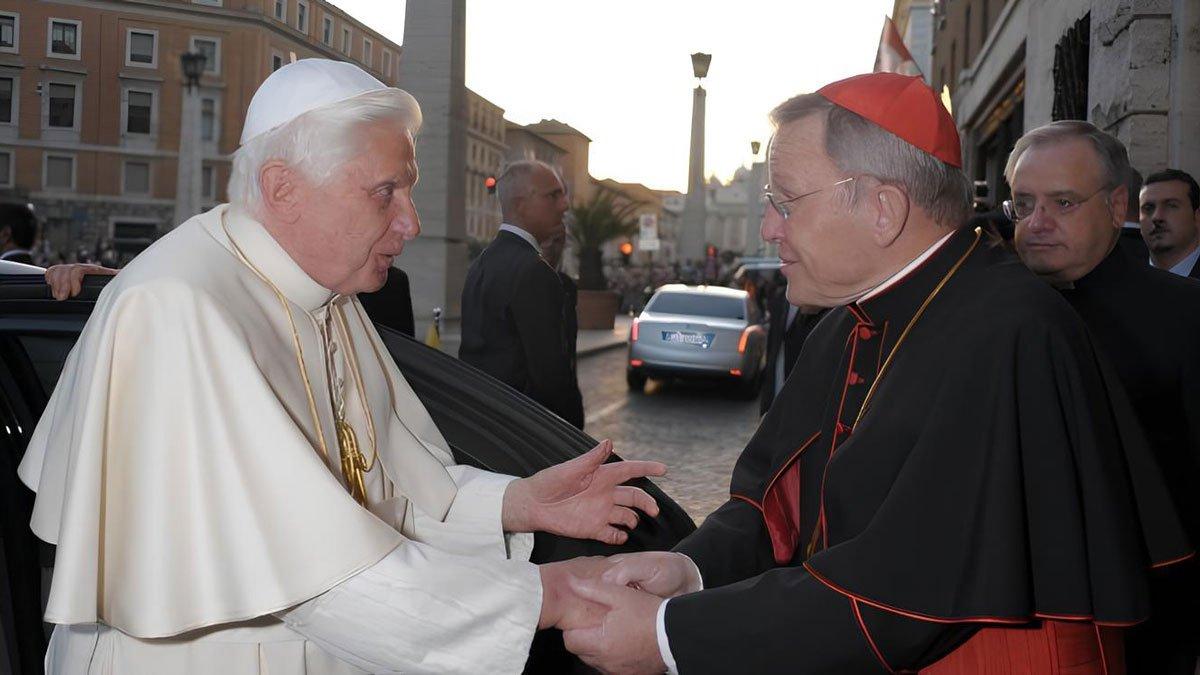
I am speaking of the famous theological debate he had with Cardinal Walter Kasper in 2001 in the pages of America magazine concerning the proper relationship between the local and the universal Church.
The details of this debate are deftly recounted by James T. Keane in an article posted a few days after the death of Benedict, and it also contains links to the original articles of Cardinal Kasper and the subsequent response of Cardinal Ratzinger.
Continue reading at Catholic World Report