
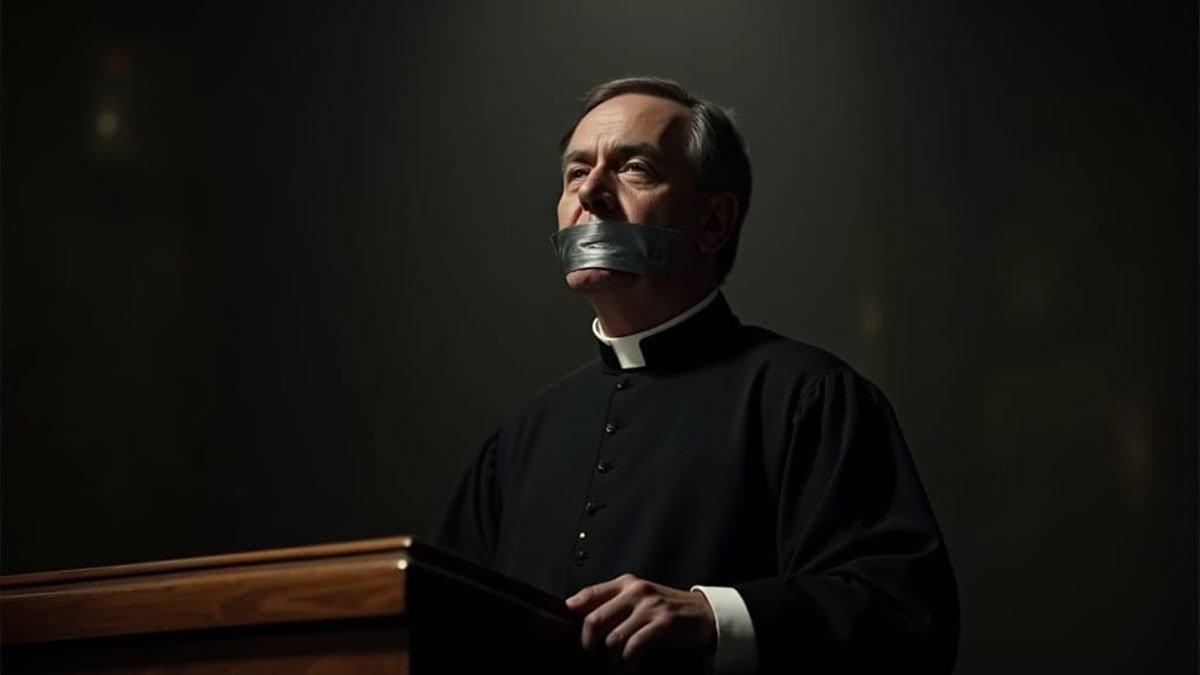
In every generation, the Church faces a defining question: will it speak truth boldly, or will it whisper in fear? Today, in the heart of a democratic republic built on liberty and moral clarity, the Church finds itself at a crossroads, not of theology, but of courage. The question is not whether the Church knows the truth, but whether it dares to proclaim it in the public square.
For too long, churches have been told to stay silent on politics. Pastors are warned not to endorse candidates. Parishioners are discouraged from discussing elections in the pews. The fear of losing tax-exempt status has become a muzzle, and the fear of offending culture has become a leash. But this silence is not neutrality; it is surrender. And surrender, in the face of moral decay, is disobedience.
Scripture is not ambiguous on this matter. Christ did not command His disciples to be cautious ambassadors. He said, “Go into all the world and preach the gospel to every creature” (Mark 16:15). That gospel is not confined to salvation alone; it is a call to righteousness, justice, and truth in every sphere of life, including governance.
The prophets of old did not shy away from confronting kings. Nathan rebuked David. Elijah challenged Ahab. John the Baptist lost his life for calling out Herod’s sin. These men were not political operatives; they were moral voices. And their courage was not optional; it was obedience.
In Romans 13, Paul reminds us that governing authorities are instituted by God. But he also warns that rulers are to be “a terror to bad conduct.” When rulers reward evil and punish good, the Church must speak. Silence in such moments is not prudence; it is betrayal.
Continue reading at the American Thinker