
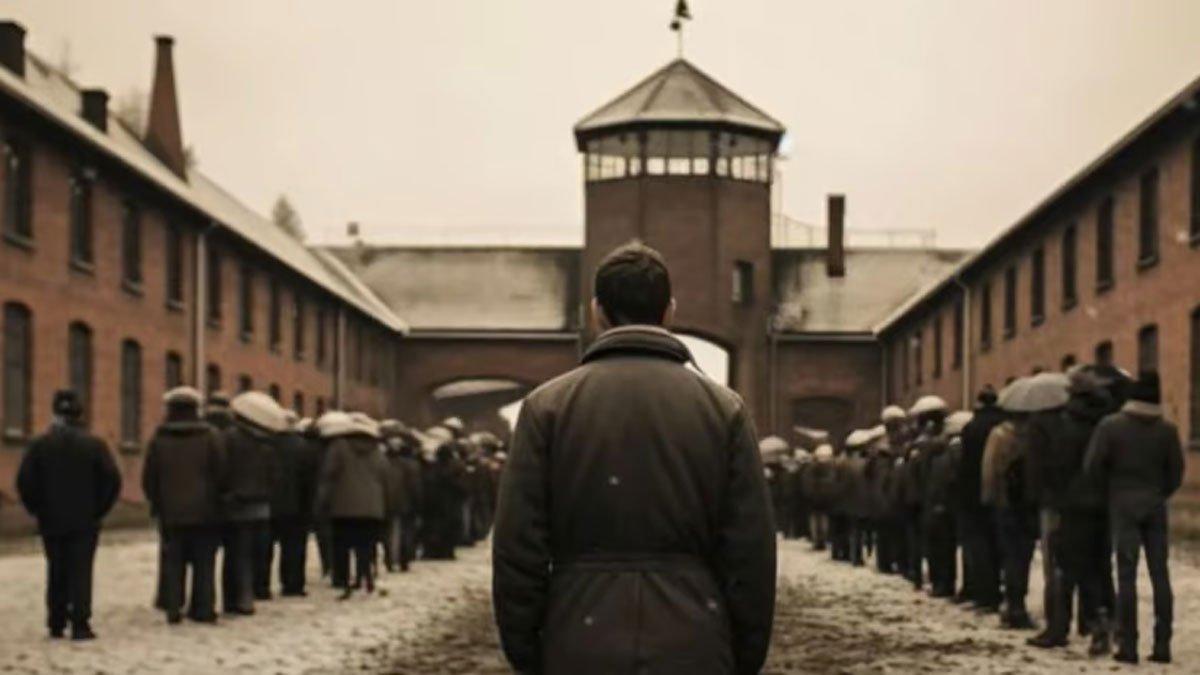
just finished teaching Viktor Frankl’s masterpiece, Man’s Search for Meaning. A day later, Charlie Kirk was assassinated on a college campus, much like the one that I teach at. Charlie Kirk and those like him have been repeatedly portrayed as fascists and Neo-Nazis, though they are neither. However, since this premise has been used to justify and celebrate his assassination, I offer the lessons of a man who survived Nazism and the death camps as therepeia — a healing — for my damaged country.
In the final pages of Man’s Search for Meaning, Frankl recounts the story of walking with a friend of his after they were liberated from Auschwitz. Walking arm in arm, his friend pulled him through a field of green crops. Frankl, for his part, managed to stammer something about not crushing the crops, which sent his friend flying into a rage. “You don’t say!,” raged the friend, “And hasn’t enough been taken from us? My wife and child have been gassed … and you would forbid me to tread on a few stalks of oats.”
The words strike at the heart, for being wrongly imprisoned, tortured, and losing a spouse and child are all horrible things that can befall a human being. I imagine they struck Frankl in such a way, which makes what he said next almost unbelievable.
Only slowly could these men be guided to the commonplace truth that no one has the right to do wrong, not even if wrong has been done to them. We had to strive to lead them back to this truth, or the consequences would have been worse than the loss of a few thousand stalks of oats.
Let that sink in. Frankl claimed the idea that no one has the right to do wrong, even those who have had wrong done to them, was commonplace. Yet as I watch the videos of people celebrating Kirk’s murder and listen to people calling him horrible names, I cannot help but conclude that what was once commonplace is no longer common. To watch and read these reactions is to glimpse the face of the lost and morally destitute man from Frankl’s story.
Continue reading at the American Spectator