
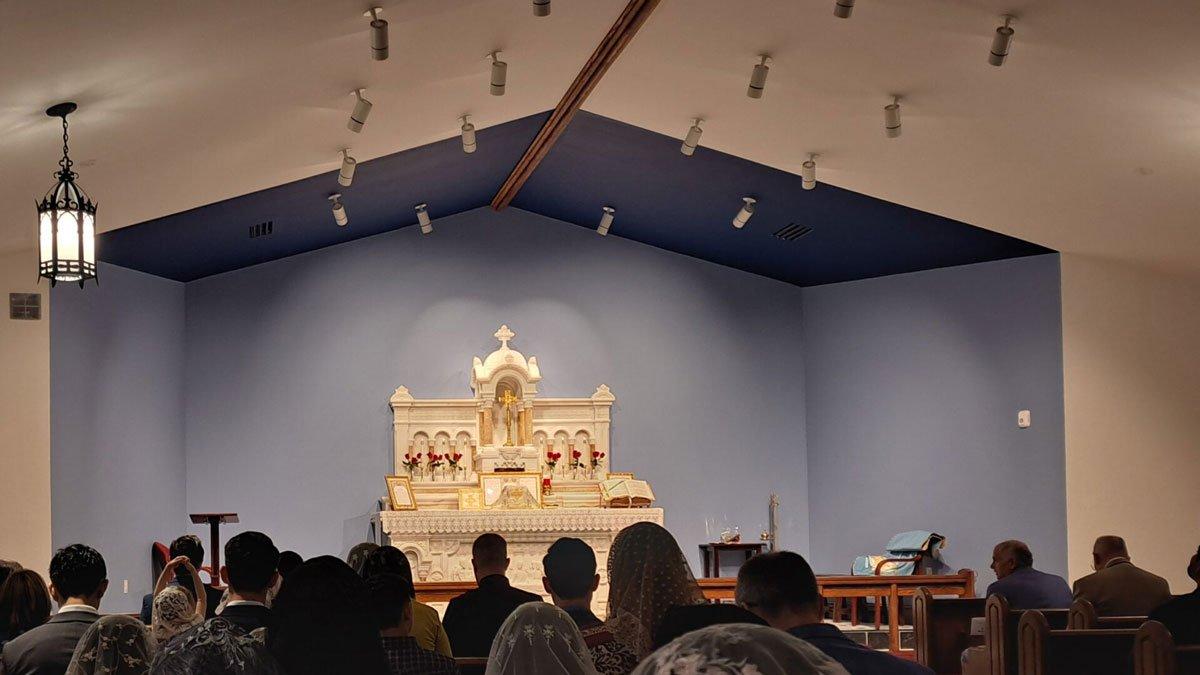
I’ve long been an occasional visitor to the Traditional Latin Mass. Although it’s a form of the Mass that I have grown to love, the drive to the TLM was much longer than the drive to my local parish, which itself leans more traditional than the typical Novus Ordo parish. So, I would only make the trek once a month, usually on a Thursday evening, to Our Lady of Grace in Greensboro or St. Thomas Aquinas in Charlotte. I would likewise attend on major Holy Days—like Ascension Thursday, which is not celebrated on Thursday locally, being transferred to the next Sunday by an ordinary who seemed to believe that you would have more Catholics if Catholics didn’t have to act and worship like Catholics.
But when Bishop Martin shut down the Traditional Latin Mass in all parishes and forced those communities to disband, I felt compelled to join those who were banished to a remote chapel, miles away from the highway, at the end of a series of two-lane roads surrounded by cornfields. If we are supposed to be with those who grieve, then this was the place to find them. In order to express true compassion—from the Latin cum passio—one must suffer with. It requires presence. Despite Bishop Martin’s claim to his sheep that he would “commit to walk with” them, he was noticeably absent.
The holy water font was a simple, wide basin placed on a small circular wooden table just through the main entrance. For those who traveled from ornate churches like St. Ann’s in Charlotte or Our Lady of Grace in Greensboro, this must have felt like being in exile. The overhead lighting was tacky and more appropriate for a stage than a sanctuary. One could easily envision a band in place of the altar.
Continue reading at Crisis Magazine