
The Church has never and will never change her teaching on the unworthy reception of Holy Communion—she can’t. But our Bishops must change their 60’s-rooted praxis of allowing it to happen.
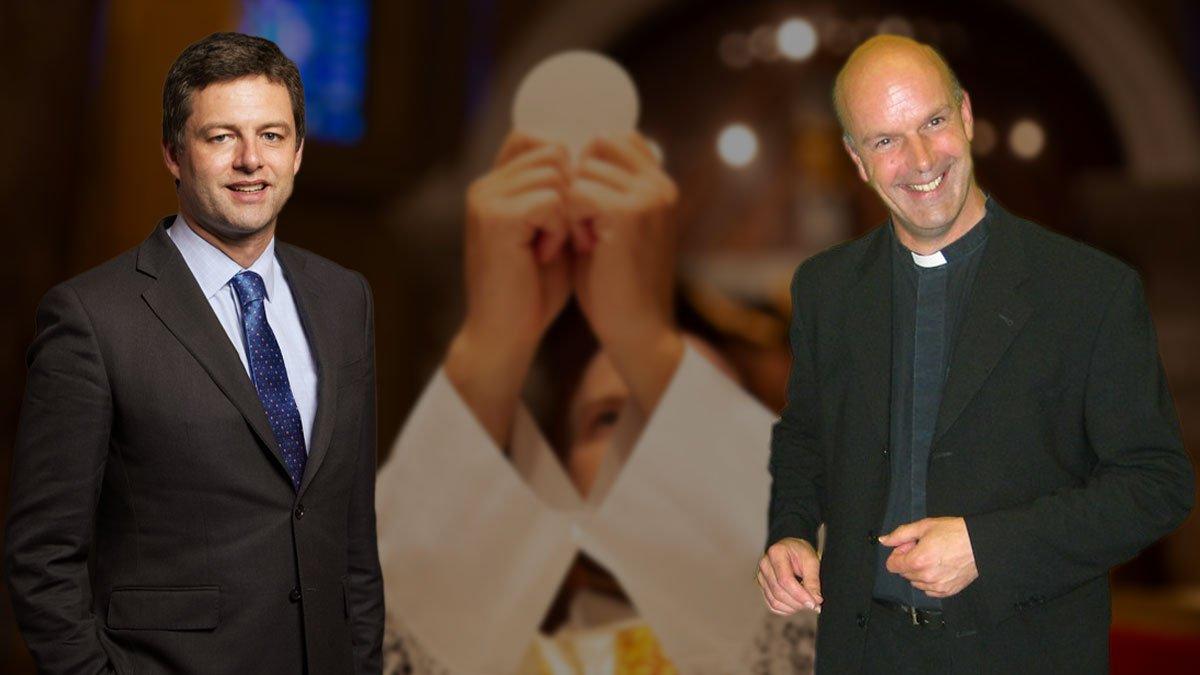
It is a strange feature of our times that when a priest fulfills his sacred duty it becomes news. Such is the case with Fr. Ian Vane, who rightly refused Holy Communion to British MP Chris Coghlan after Coghlan’s public support for assisted suicide. Such an action by a priest should be common—as common as “Catholics” who promote evils while maintaining a public platform are today.
Receiving the Eucharist while in a state of mortal sin is a sacrilege because it profanes the sacredness of the sacrament by placing Him in a marred vessel. Instead of receiving the graces normally associated with reception of the Eucharist, one who receives Communion in a state of mortal sin causes further spiritual harm and compounds the sin. This teaching is not ambiguous, and it never has been. It can be found in Scripture itself: “And therefore, if anyone eats this bread or drinks this cup of the Lord unworthily, he will be held to account for the Lord’s body and blood” (1 Corinthians 11:27, Knox). Thus, a priest who denies Communion in such cases is attempting both to assist the parishioner and prevent an act of sacrilege.
RELATED: The Hortman Tragedy Exposes the Failure of Our Shepherds
There is a profound injustice in the all-too-common cases wherein pastors remain silent when a parishioner ignores the teachings of the Church, publicly encourages serious sins, and then presents himself for Communion. Such is the case with so many nominally Catholic members of Congress who have voted in favor of abortion or even against the Born-Alive Abortion Survivors Protection Act. In these scenarios, there are really only two possibilities:
- The priest does not care enough about the soul of the communicant to act.
- The priest does not believe that the teachings of the Church have merit, or that they matter in any transcendent way.
That’s all there is. The complex interplay of Church politics, the onslaught of media criticism, and irate or offended parishioners all fall under the umbrella of the first option. The priest must choose if he cares more about the soul of the parishioner than the trial that he will have to endure for doing what he was called to do. Fr. Ian Vane said yes, which is refreshing to the point of being remarkable.
Continue reading at Crisis Magazine