
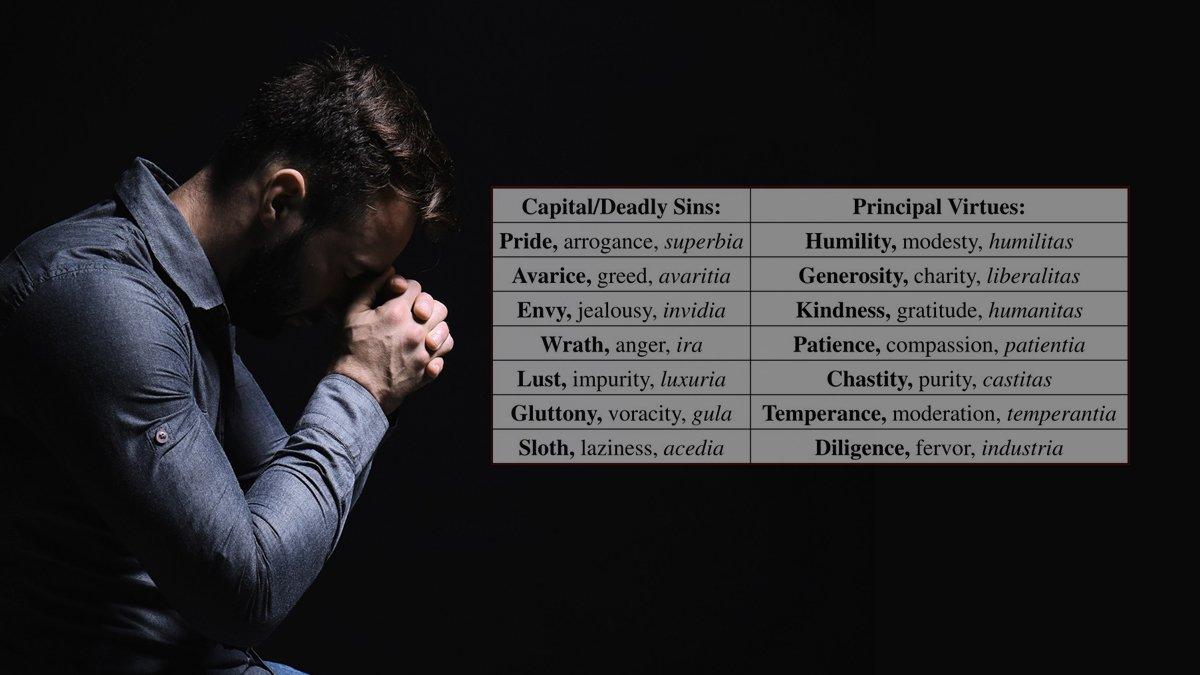
In a recent ethics lesson, I introduced a class to the concept of Virtue Ethics. Not all of my pupils were entirely convinced, something which shouldn’t have surprised me given the zeitgeist in which these young students are steeped.
Virtue Ethics, in brief, is an Aristotelian ethical theory that seeks to find the “golden mean” between the vices of excess and deficiency. This “golden mean” is a virtuous characteristic.
Such virtuous acts, Aristotle says, should then be repeated until they become habit. And then, by becoming habit, they become embodied as character.
For example, the excess of the golden mean “courage” is “recklessness”, and the deficiency is “cowardice”. By practising “courage” it becomes habitual and thus the individual becomes a courageous person.
Virtue ethics is not purely Aristotelian, however; Catholicism borrows heavily from this thought-world and frames a lot of its moral language in terms of virtues and habits.
By embodying the virtue as our character, we move closer to eudaimonia, or “the highest good”, and therefore we flourish as people. In Christian terms, this may be seen as Theosis or “transforming into the divine likeness”.
At the end of the lesson, I addressed the applications of the ethic, asking students to consider how, unlike other normative ethics, Virtue Ethics offers the opportunity for character transformation through habitual development.
One child then asked an innocent question, but one that defines our current culture.
“But what about my individuality?”
This question raised two immediate problems from my perspective.
The first: what if that “individuality” is monstruous or evil? Should we promote individuality to the detriment of society?
The second: why did it matter to me or worry me that the pupils had asked this?
The question the pupil asked was a result of no fault of his own. We live in a society that screams individualism – “you do you”, and “whatever makes you happy” – at the top of its lungs.
Continue reading at the Catholic Herald