
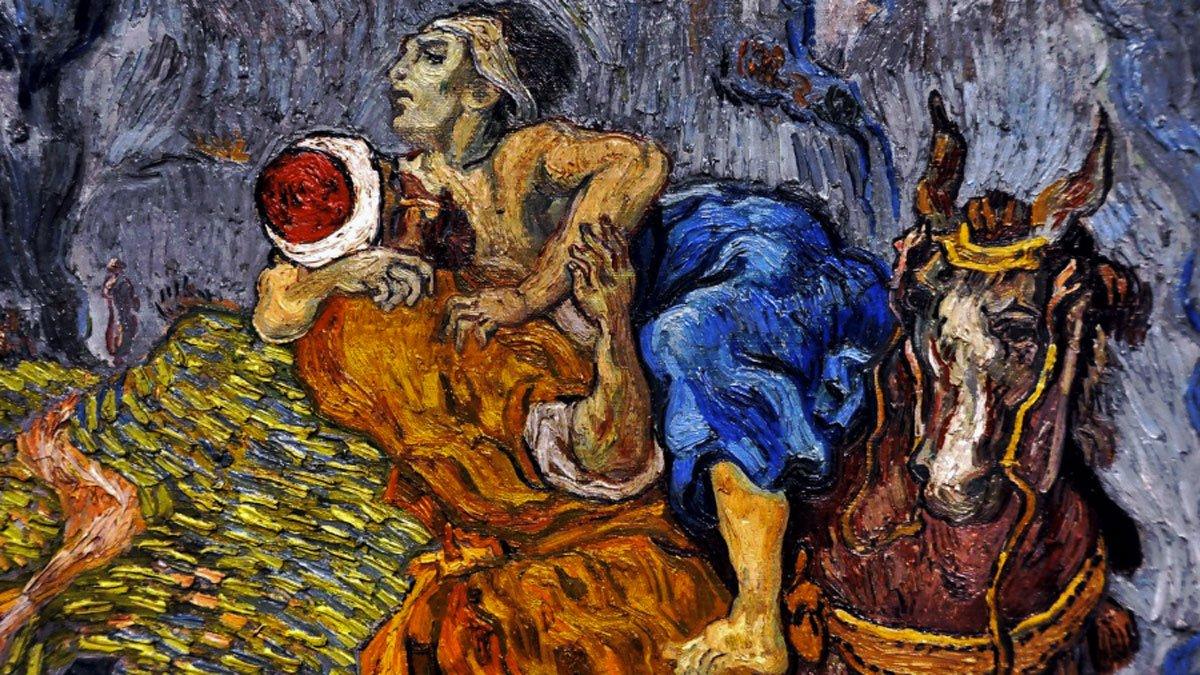
The parable of the Good Samaritan is one of the best-known biblical stories. Regrettably, this parable of parables is also one of the most misused, misunderstood, and misinterpreted of all biblical narratives.
A Good Samaritan is someone who helps at soup kitchens, delivers food baskets to the hungry, or gives up weekends to work with the homeless. The Good Samaritan has become the patron saint of secular society, the Santa Claus of aid organizations, and the Boy Scout of benevolent associations.
The Samaritans in Britain provide a hotline for people contemplating suicide. Good Samaritan Laws in America limit liability for folks voluntarily helping in emergencies. Activist Rolson St. Louis even proposes a Good Samaritan Act to provide illegal aliens a “pathway to citizenship.”
Now, as the Trump administration has begun deporting foreign criminals alongside “collaterals” (illegal aliens present during Immigration and Customs Enforcement raids), Catholic and Protestant progressives are canonizing the Good Samaritan as the patron saint of illegal immigration.
‘Samaritan’ Trending on Social Media
Jesuit pro-LGBT crusader Fr. James Martin is firing a barrage of Samaritan shells on X, claiming that “our ultimate salvation depends, as it did for that man, upon those whom we often consider to be the ‘stranger.’”
Meghan Basham, who opened a can of worms with her recent bestseller Shepherds for Sale: How Evangelical Leaders Traded the Truth for a Leftist Agenda, has stirred up a hornets nest by interpreting the parable as “a story pointing you to your need for a perfect Savior” since “every single person on the planet fails to meet that standard” displayed by the Samaritan.
Social media warriors with no exegetical expertise who are fighting Trump’s “revolution of common sense” respond by noting that “the Good Samaritan takes care of the neighbor victimized by crime, not the criminals who robbed and almost beat him to death” and “that the Good Samaritan showed compassion — not for the lawbreakers — but for the victim.”
Needless to say, neither the traveler nor the Samaritan is an immigrant. The Jews (from Judea) hated the Samaritans (from Samaria) because they were schismatics. The Samaritans were not Gentiles. They, too, had to obey the Torah. The rivalry between the two groups was sectarian, akin to the hostility between Shia and Sunni or Protestants and Catholics in Northern Ireland.
Continue reading at The Stream