
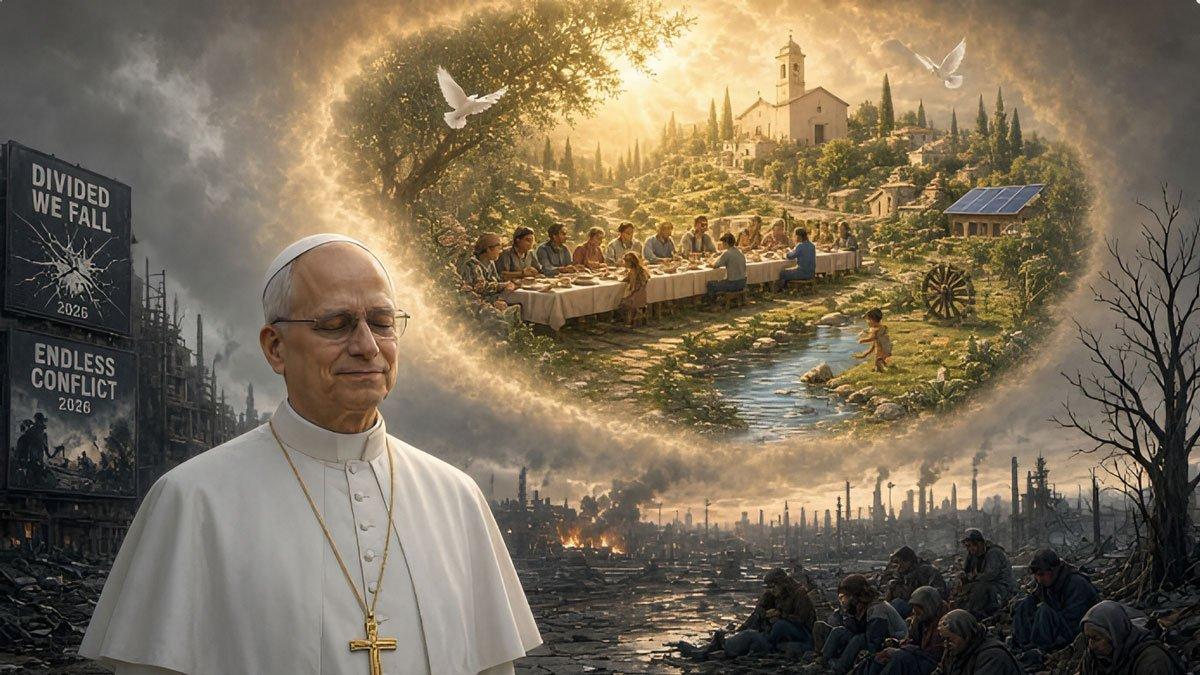
I’m not sure how the post-conciliar church has managed to fool so many people for so long by changing the meaning of words. It’s like they’re changing socks on the tentacles of the trained octopus named Postmodernism.
I’m sick of sitting around and watching, so I’m going to call them out on a couple of important terms that are bandied about today as if they might define a new age.
Ecumenism
Before Vatican II, “ecumenism” did not mean having dialogue with other Christians under the guise that they were all on equal footing, let alone having talks with other religions to search for the lowest common denominator.
Ecumenism meant—and still means (unless you’re a Protestant)—convincing separated Christians to come back to the one true Church of Christ, the Catholic Church.
This means unity requires Protestants and Eastern Orthodox Christians to return to Catholic communion by accepting papal primacy and defined doctrine.
Early attempts with the East, the Second Council of Lyons 1274 and the Council of Florence 1438–1445, followed that logic.
Pius XI’s Mortalium Animos (1928) condemned “pan-Christian” gatherings that treated divided communities as branches of one Church. It also called out the contradiction of so-called “unity” that came with agreeing on a few shared doctrines while ignoring glaring differences.
Pius XII’s Mystici Corporis (1943) identified the Mystical Body of Christ with the Catholic Church, not the Jewish synagogue, the Muslim mosque, or the Kingdom Hall of the Jehovah’s Witnesses.
Continue reading at Our Blood and Soil