
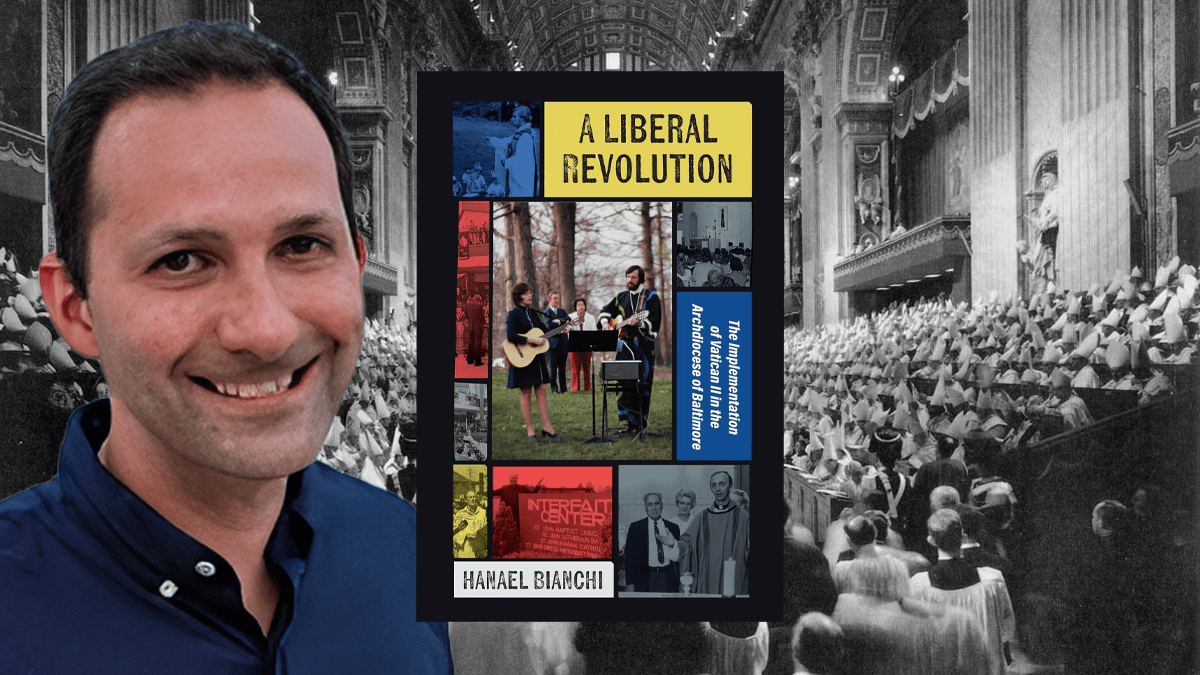
The historian Dr. Hanael Bianchi’s new book on Vatican II, A Liberal Revolution, does something different and, in many ways, better, in its narrow focus on the impact of the reforms on the Archdiocese of Baltimore in particular. In fact, by focusing narrowly, providing more specific examples and a simpler narrative than other books on the same era, he’s actually reached some new insights hidden from those who’ve started with a wider net, about the tumultuous post-Conciliar era of the Church, specifically how the revolutions within the Church cannot be separated from the historical and political context of the era and how the impact of this period on the Church was a brief period of psychological libertinism that congealed into institutional centralization and ossiffication.
The central claim of this book is that the implementation of Vatican II reflected an embrace of liberalism, not merely in the broad progressive sense of openness to new ideas, but more specifically in its affirmation of personal freedom as a central principle of religious life.1
Unlike other accounts of the era, which focus on the ideas in the documents of Vatican II, Bianchi doesn’t solely blame the council directly for liberalism but connects turbulence and troubles in the Church to broader cultural trends of the era, something which maps on to my own research about declines in the Church in the United States beginning before the Council:
The Council did not cause the crisis, but the broader liberal moral framework that took hold in the post-conciliar period, particularly the rejection of external constraints and moral absolutes, created an environment in which grave transgressions could be rationalized or excused. A culture that increasingly emphasized individual freedom over discipline proved incapable of confronting this profound moral disorder.2
Continue reading at Grain of Wheat