
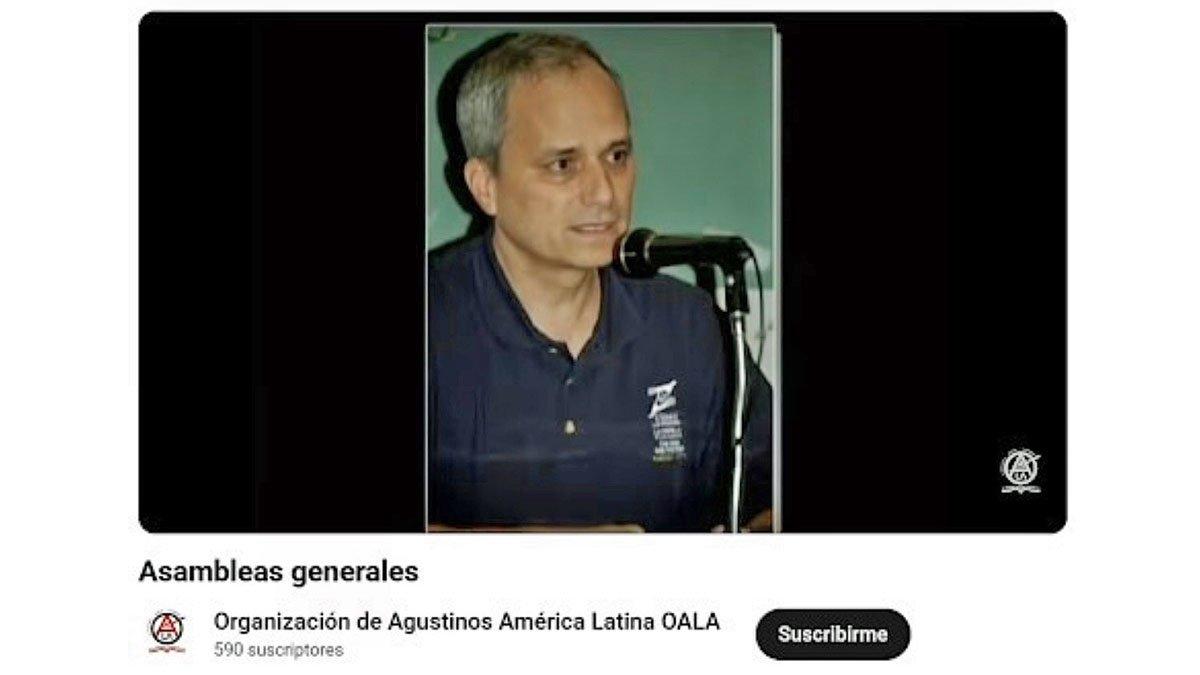
Conocoto was a 1993 gathering of Augustinians in Ecuador under the umbrella of the Organization of Augustinians in Latin America, or OALA. It was presented as a moment of renewal for the order in Latin America and the Caribbean. Its organizers spoke of the “Spirit of Conocoto” as a new model of Augustinian life marked by participation, synodality, liberationist concerns, and social transformation. In plain English, it was one of those postconciliar workshops where Catholic language remained on the surface while the underlying framework shifted toward process, activism, and ideological reconstruction.
The photos from Catholic Conclave show this was not some obscure footnote or one-off experiment. The movement generated texts, slogans, follow-up meetings, and even its own creed.
The first two images match an official OALA anniversary document marking thirty years since Conocoto. That document describes the 1993 meeting as shaped by “Augustinian synodality” and says the “Spirit of Conocoto” was a spirit of reflection, conversion, reconciliation, prophecy, communion, and participation. Then it reproduces the young Augustinians’ creed, including the astonishing line, “We believe in God Father and Mother of Life.”
And the creed does not stop there. It goes on with formulas about Jesus incarnating himself in the liberation-longings of peoples, the Church embodied in the life and world of the poor, active and transformative participation in society, and the priority of human promotion. One does not need much commentary at that point. The text is already doing the work. This is a window into the theological atmosphere in which this network was being formed.
Nor was this some embarrassing leaflet later shoved into a drawer and forgotten. OALA’s current materials still reflect the same ecosystem of themes. Its “Justicia y Paz” page continues to foreground ecotheology, indigenous spirituality, political activism, and Amazonian rhetoric. The vocabulary has aged a little, but the instinct has not. It is still the same postconciliar habit of translating the faith into process, activism, ecology, migration, dialogue, and social accompaniment until dogma itself begins to sound like an intrusive foreign body.
Continue reading at Hiraeth in Exile