
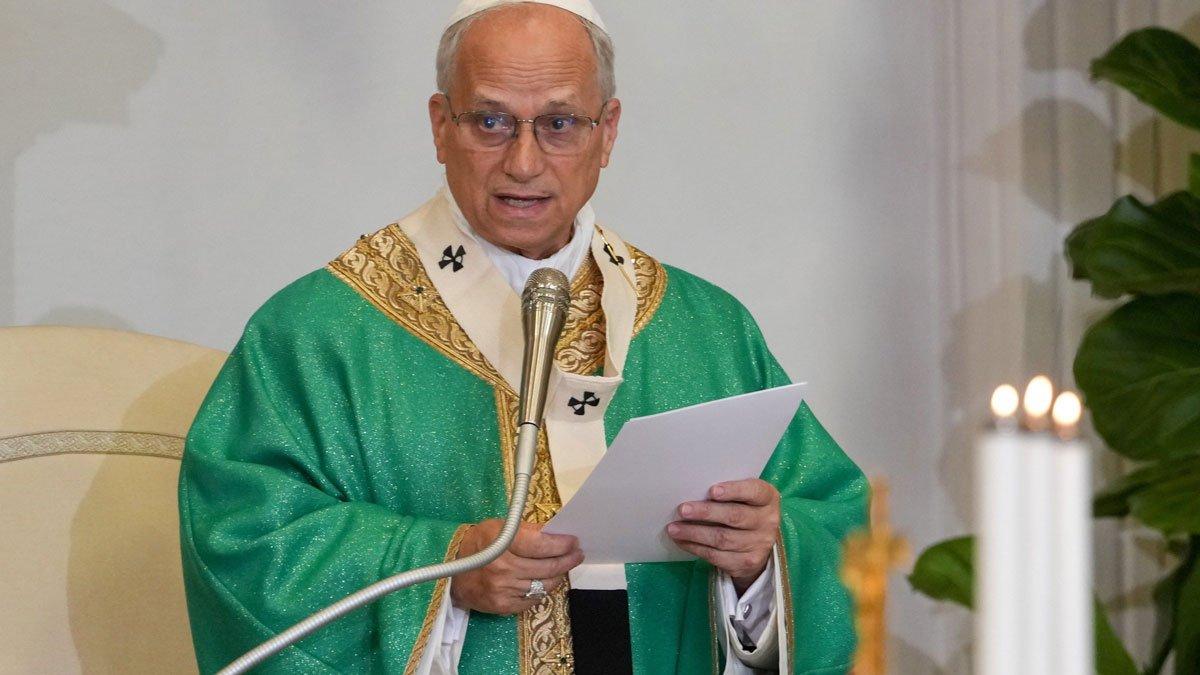
From AI diplomacy to elderly sentimentality, Leo XIV’s Jubilee Church preaches compassion without conversion, accompaniment without repentance, and salvation without the Cross.
As the Vatican rolls out its latest wave of public messaging for Jubilee 2025, the contrast between its professions of compassion and its concrete betrayals of Catholic tradition continues to sharpen. Leo XIV has delivered a flurry of addresses and messages over the past week, ranging from his platitudinous letter for the World Day for Grandparents and the Elderly to diplomatic remarks on AI governance, punctuated by an unremarkable homily and Angelus in Castel Gandolfo. While the themes of mercy, hope, and compassion are omnipresent, what’s striking is what’s absent: doctrine, repentance, conversion, and fidelity to tradition. These omissions are the very hallmark of a modern pontificate that elevates sentiment over substance and presents a therapeutic Church in place of the Church of Christ.
“Blessed Are the Sentimental”: Hope Without Truth
Leo XIV’s message for the elderly might strike a casual reader as moving: biblical references to Abraham, Sarah, Zechariah, and Moses, with warm exhortations not to lose hope in old age. But the underlying theology is radically horizontal. Instead of reminding the aged of their dignity as baptized souls preparing to meet their Judge, Leo centers the message around psychological encouragement: “Everyone, always, can love and pray.” Certainly true, but also glaringly superficial if left at that.
Gone are references to the Four Last Things. Gone is any call to examine one’s conscience, offer one’s sufferings in union with Christ, or make reparations for a world increasingly at war with God. The Jubilee indulgence, offered not for prayer, penance, or pilgrimage, but for “visiting an elderly person,” epitomizes the new spiritual calculus: outward gestures replacing inward contrition.
The Catholic tradition sees aging as a time of preparation for eternity. It’s the secular vision of aging that sees it as gentle decline, uplifted by vague feelings of hope and belonging. The Church’s historic role of preparing souls for death has been displaced by a pastoralism that reassures without convicting and consoles without converting.
Continue reading at Hiraeth In Exile