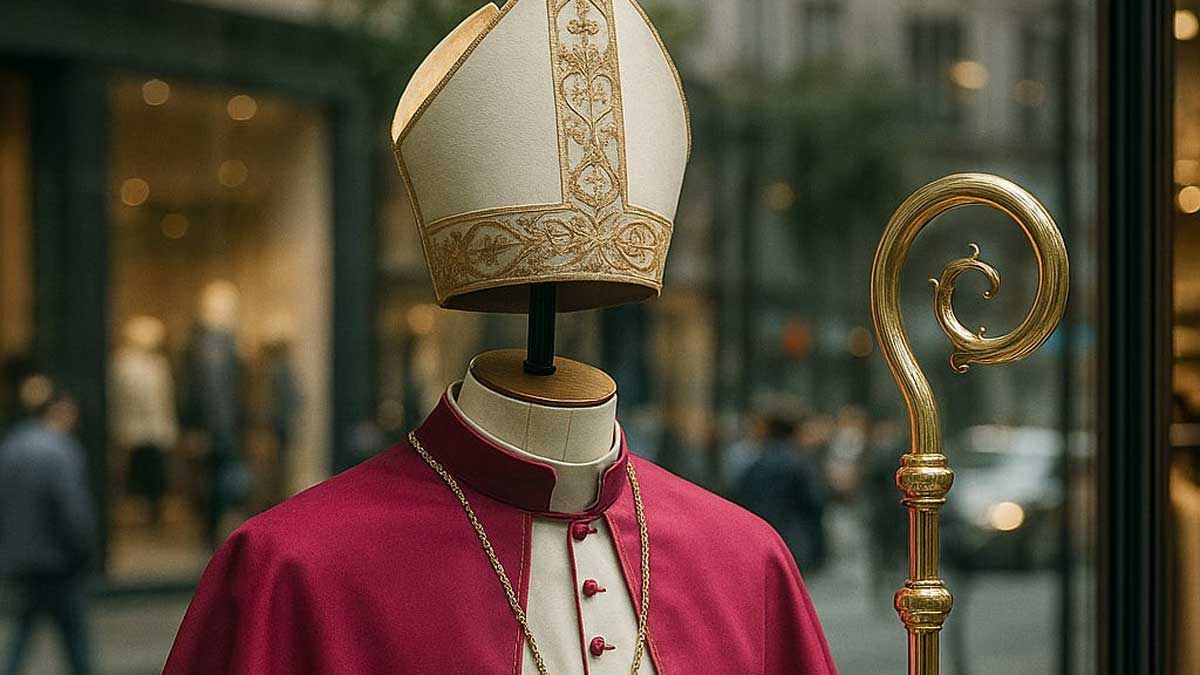
The Shepherd’s Costume: Leo XIV’s Vision of the Church Without Teeth

In a span of forty-eight hours, Leo XIV addressed bishops, seminarians, priests, Eastern Church donors, drug rehab alumni, and synod bureaucrats. If you want to understand the post-conciliar Church’s ideology in full, its spiritual posture, its rhetorical evasions, and its strategic silences, you couldn’t ask for a better window.

On paper, the theme is hope. In practice, it’s accommodation with every force that drains the Church of life.

Leo’s Jubilee of Bishops meditation reaffirms the now-familiar portrait of the bishop not as a successor of the Apostles defending the deposit of faith, but as a “visible principle of unity” tasked with facilitating dialogue, managing “diverse gifts,” and exercising “pastoral prudence” by overseeing synodality.

You might assume “unity” here means doctrinal cohesion. It doesn’t. It means structural harmony: communion without confession. The bishop, we are told, must embrace “dialogue as a style and method.” He must “cherish traditions” while also “promoting new directions and initiatives.” The theological virtues, faith, hope, and charity, are redefined through a pastoral lens, not as supernatural habits ordered to truth and salvation, but as tools for emotional uplift and social healing.

Chastity and continence make a brief cameo: Leo XIV insists they reflect the “authentic image of the Church.” But the real pastoral action comes through “dialogue,” “participatory bodies,” and “fraternal love” extended to every living bishop in sight. The bishop, we are assured, should even be “open and welcoming” in his home. Whatever that means.

The entire vision reduces episcopal governance to a kind of chaplaincy: the bishop as emotional support mammal.

Continue reading at Hiraeth In Exile


Share