
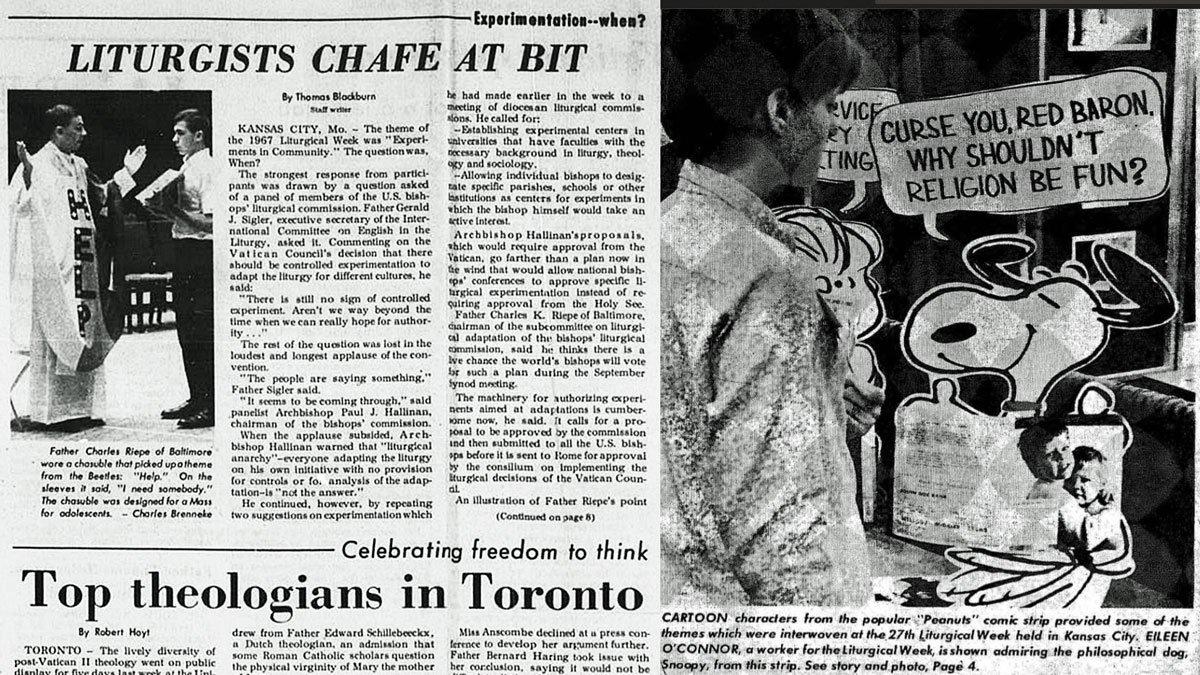
Why keep talking about all of this? Why keep digging, excavating, learning, remembering, reflecting?
Because it’s all still so unsettled.
Because historical narratives shift, change and are theologized, spiritualized and weaponized.
Because on a deeper level, because talking about and trying to understand this post-Conciliar period reflects the greater, deeper challenge of understanding the dynamic between divine and human action in the life of the Church, period.
Incarnation is messy. Incarnation is, in fact a mystery.
Finally, because decisions that impact Catholics today are justified by appealing to the Second Vatican Council, as if that were a simple, straight line and an unambiguous framework.
But as we know, that is just not the case.
And so yes, we must keep learning, discussing and questioning.
Questioning not only narratives and historical events, but questioning the logic that mandates any particular narrative as the infallible foundation of decisions in the present day.
As I’ve written before, I’ve studied Catholic church history for almost fifty years now.
Don’t blink, guys, time passes. It’s going to happen to you, too, so get ready.
Anyway, as a student of history and, more generally, of Catholic ways and means in the late 20th century, I’ve always been intrigued by double standards in discourse and narrative-construction.
That is, quite simply, according to some dominant voices and powers, everything in Catholic history is up for grabs, is appropriate for contextualizing and even relativizing – except a particular narrative about the Second Vatican Council and the post-Conciliar period.
In short, nothing seems to be dogmatic or absolute in Catholic life except that narrative. Even questioning that narrative places you in opposition to the work of the Holy Spirit.
So much for synodality. So much for faith in the most mature, intelligent and capable laity in the history of the Church.
Continue reading at Trust Walk