
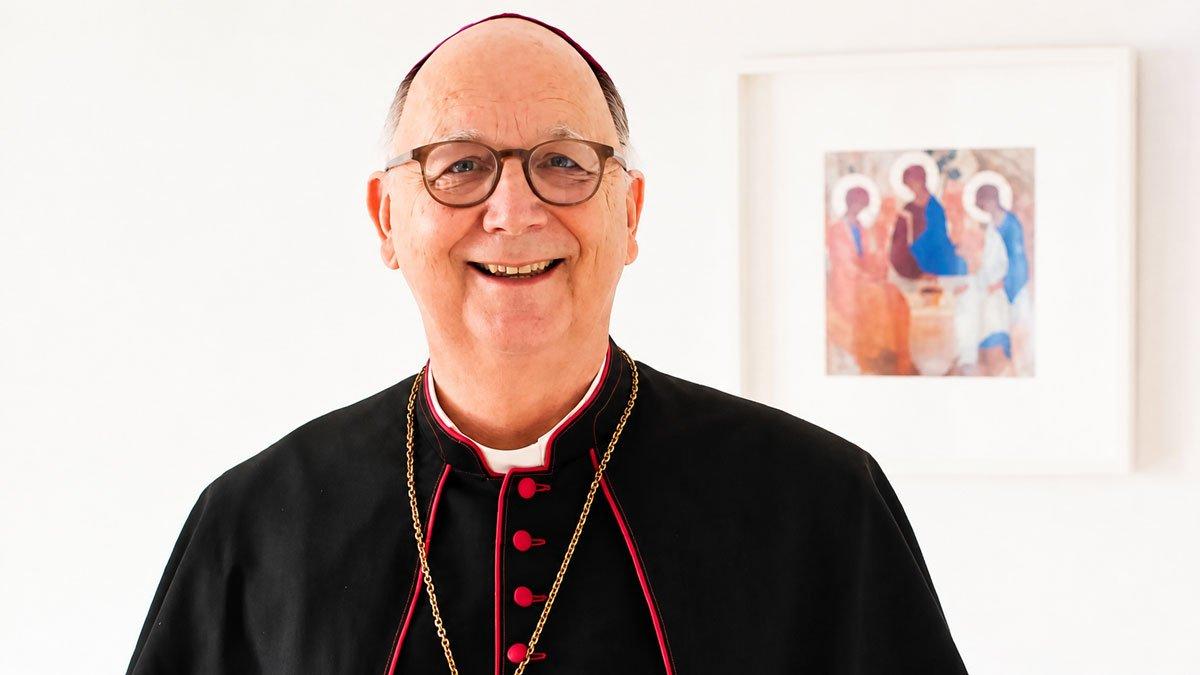
Bishop Marian Eleganti is someone who has exercised his episcopal office fearlessly, ready to speak out and stand by contentious positions, no matter the consequences. He has been vocal on the Islamification of Europe, defended the need for beautiful liturgy and addressed the years that preceded the Second Vatican Council with an honest appraisal devoid of sentimentality.
A friend of AdVaticanum, we previously interviewed His Grace in April. Since then, conversations on the value of synodality have intensified, the Society of Saint Pius X has been declared in schism and Bishop Eleganti has himself warned against the Petrine Office becoming a media-driven personality cult. In this new interview, His Grace discusses the latest developments in the Church with his characteristic clarity.
AV: Your Excellency, in recent years you have repeatedly described the current practice of “synodality” as a subversive act against the hierarchical-sacramental office of bishops and priests — even as a Protestantisation or Anglicanisation of Church governance based on a misapplied universal priesthood of the baptised. What does “synodality” actually mean in the authentic tradition of the Church, and have you communicated your concerns to the Synod Office?
+ME: In patristic times, a synod was a local church assembly consisting mainly of bishops, convened to resolve issues and to guide the Church. Since the last Council, it has served as a means by which bishops from around the world are involved in the governance of the universal Church and advise the Pope on specific topics. These synods took place every three years and were exclusively gatherings of delegated bishops. The synods convened by Pope Francis have never existed in the history of the Catholic Church. They undermine the office of bishop. I have no contact with the Synod Secretariat; it would serve no purpose anyway.
AV: You have said that the synodal process has produced an overkill of documents, commissions and intermediate steps while yielding no supernatural life in souls, and that it aims at restructuring settled doctrine on marriage, homosexuality, women’s roles and ecclesial authority. Looking at the ongoing implementation phase towards the 2028 Ecclesial Assembly, do you see any correction under the present pontificate, or is the trajectory confirmed?
+ME: No, unfortunately I do not. Nor do I see any benefit for the Church in this process — rather, I see more harm. In my view, the process contributes nothing to a genuine spiritual renewal of the Church. In this regard, it is a mirage. But while a mirage vanishes into thin air — and that is where the comparison ends — the synodal process undermines the sacramental leadership of the Church. It is not about consulting the bishops, but about laypeople co-leading alongside the bishops. This is being sold as a new revelation, even though discerning the Spirit is nothing new; it has been practised since time immemorial.
Continue reading at Ad Vaticanum