
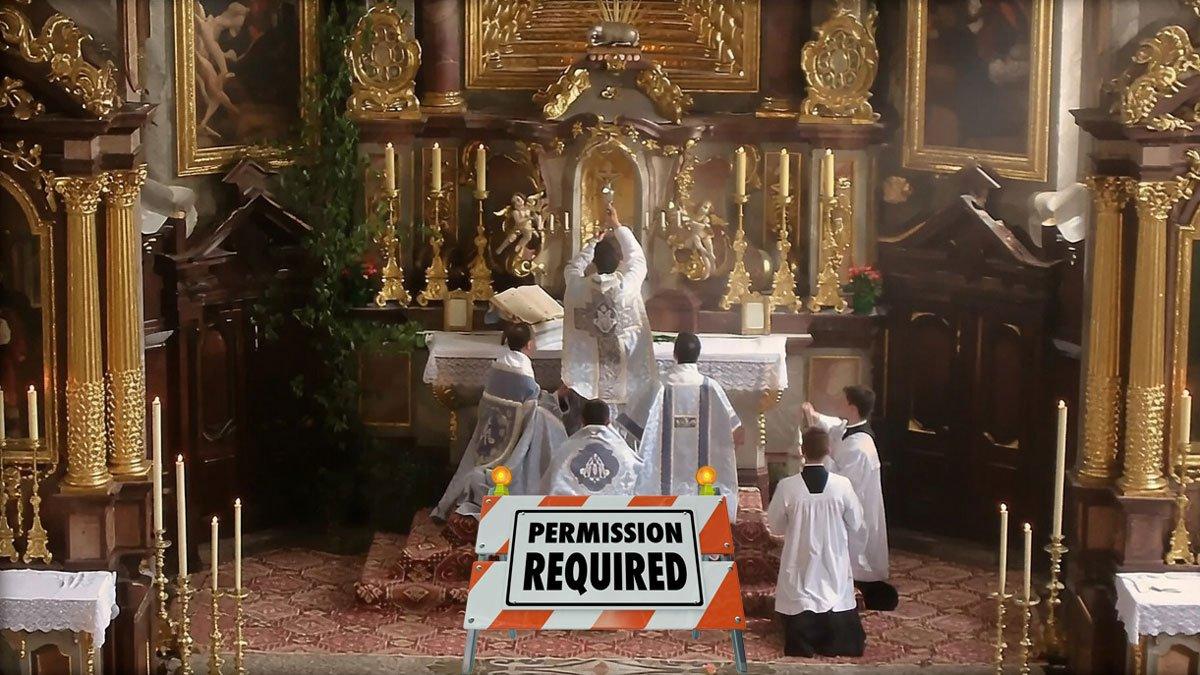
How Rome turned the ancient Mass into a revocable favor, branded the SSPX schismatic for refusing the cage, and enlisted Trad Inc. to keep Catholics waiting inside it.
A Catholic father walks into a chancery with a petition.
He has gathered signatures from thirty-seven families. They are willing to drive. They will raise money. They have found a priest who knows the rite. They ask for an early Sunday Mass in a church that otherwise sits empty until eleven.
The diocesan official receives them politely.
Their request requires study.
The bishop must consider parish unity. The priest’s suitability must be confirmed. Rome may need to be consulted. The group must demonstrate acceptance of Vatican II and the legitimacy of the reformed liturgy. The Mass may have to be celebrated outside a parish church. New groups are discouraged. Existing permissions remain subject to review.
The families leave with no answer.
Across town, another parish advertises a Pride Mass. A woman delivers a “reflection” after the Gospel. Liturgical dancers circle the altar. Extraordinary ministers crowd the sanctuary. The bulletin carries an invitation to an interreligious prayer service.
Nobody asks whether these people accept the Council of Trent. Nobody demands written proof that they recognize the traditional doctrine of the Eucharistic sacrifice. Nobody sends a questionnaire to Rome.
The old Mass requires permission. Everything that replaced it requires patience. That is the ecclesiastical order created after the Council: Catholic tradition survives as an exception administered by the men committed to superseding it.
The permit can be granted. The permit can be narrowed. The permit can be transferred to a gymnasium. The permit can expire.
Rome then condemns the Society of Saint Pius X because Archbishop Marcel Lefebvre refused to entrust the survival of Catholic worship and priesthood to that permit.
Continue reading at Hiraeth in Exile