
World Cup screens in San Antón, pasta in Innsbruck Cathedral, a managed consistory, and the FSSP turned away.
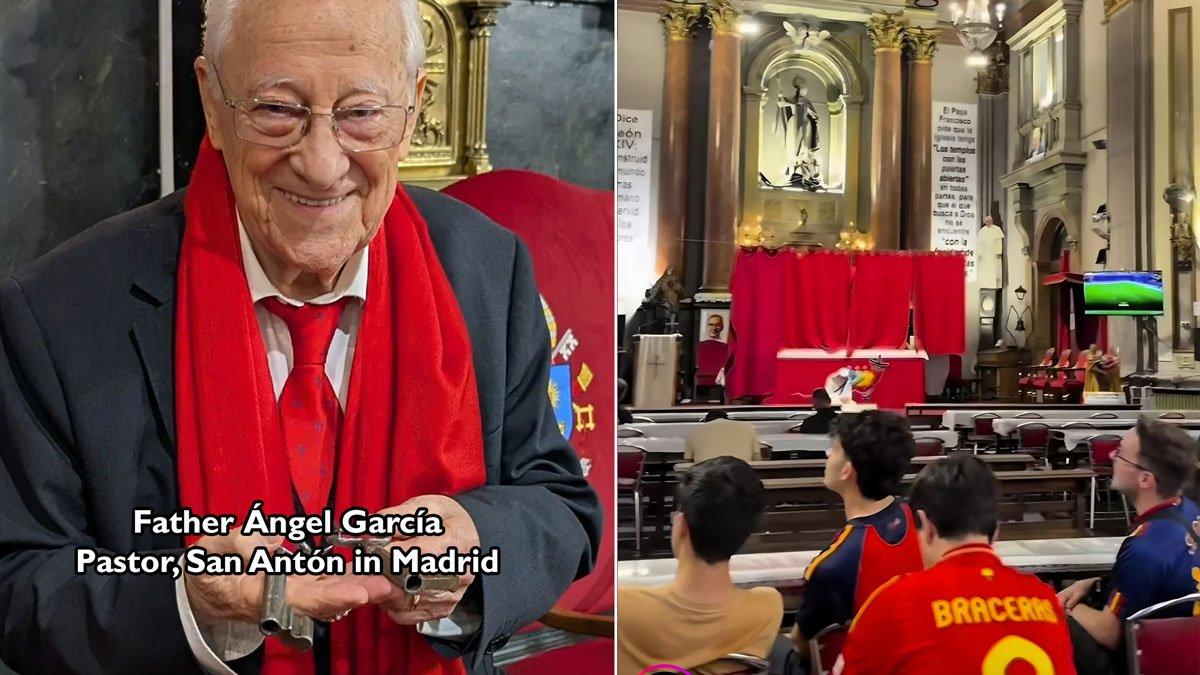
The church of San Antón in Madrid has begun showing Spain’s World Cup matches inside the church, with screens set up in the nave and viewers occupying the same pews normally used for the sacred liturgy.
Father Ángel García, known widely as Padre Ángel, promoted the initiative and said the broadcasts will continue as long as Spain remains in the tournament. The explanation was predictably social. Some people need a place to watch the match. Some need shelter from the heat. San Antón is open around the clock and has long functioned as a showcase for Padre Ángel’s model of an always open, socially active, media friendly church.
The scene still has a theological meaning.
A Catholic church trains the body. It teaches the eyes where to look. It forms silence, kneeling, attention, fear of God, and expectation of sacrifice. The nave is directed toward the altar because the altar is the place where the Church’s true action occurs. When television screens are placed among the pews and the crowd turns toward the match, the architecture is made to say something else.
The altar becomes background, the nave becomes seating and the church becomes usable space.
Continue reading at Hiraeth in Exile
Bishop Jean-Louis de Metz-Noblat of Verdun, France, defended in a July 1 video the decision to broadcast the France–Norway football match inside the church of Ligny-en-Barrois. “There were undoubtedly a few cheers, a song of celebration, and some applause, just as happens when a concert is held in a church or when an exhibition takes place in a church. Some people have said to me, ‘But a church is a place for prayer.’ I dare to hope that, because they were in the church, a number of people were able to pray for the success of their favorite team. I also dare to hope that, by entering a church, some of them discovered a place where perhaps they had never set foot before.”