
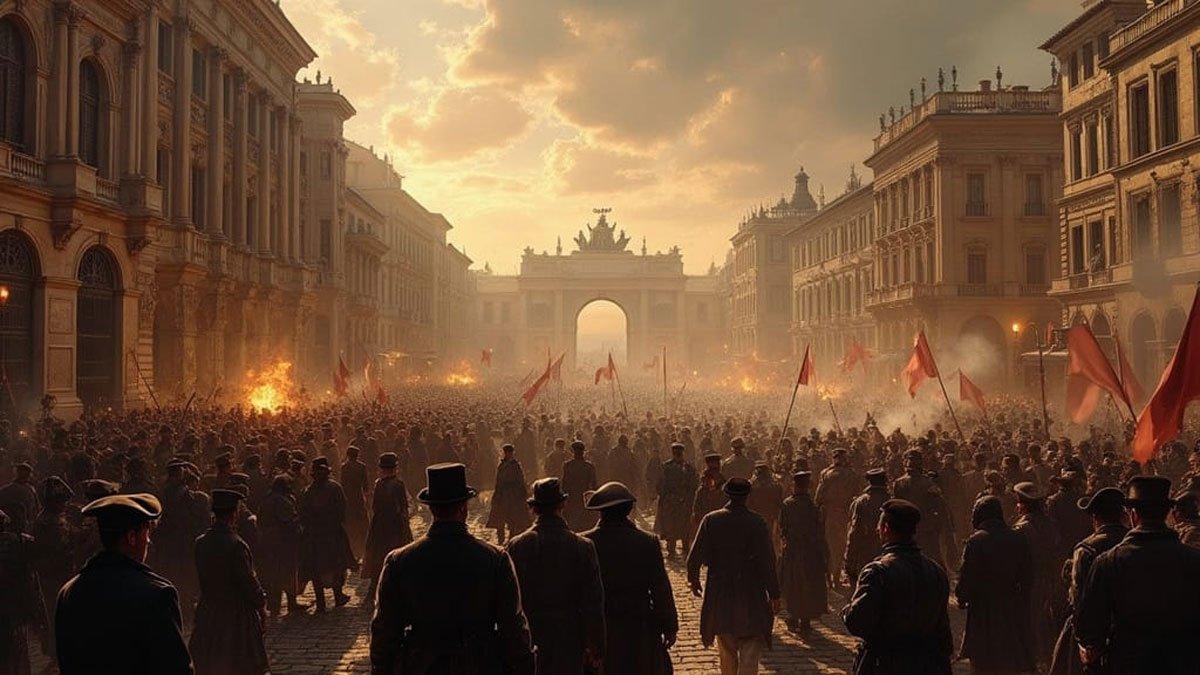
This is a long essay to explain something of the revolutionary political technique of the 20th century, showing how it has mobilised desire without restraint within us all to destroy what we were, and leave us in the State (and Church) we are in today.
It should take you about 15 minutes to read.
CONTENTS
- The means of revolution
- All Change
- For or against? – The Revolution in Church and State
- Why the Church matters to us all
- The “deadly plague” of Liberation
- No Accident
- The Revolutionary Self
- The Root of All Evil (spoiler – it is not “money”)
- Putting Evil into Practice
- The Machine is Breaking Down
The means of revolution are many, and taken together they represent its technique. We have lived through a time which has seen everything in our world changed, and changed utterly, and this new normal has normalised radical change in every aspect of our lives.
In every case, from the changes in the Church to those in our economy, through demographic and social changes, the first people to notice these upheavals are dismissed as cranks, conspiracy theorists – and demonised as extremists.
The canaries in the coalmine are called nasty names, and penalties attached to anyone who fairly names their tune.
This neutralises opposition to the changes taking place, without or even against popular consent, until they have reached a stage when they seem not to be changes at all, but the New Normal. Then men forget what was, and believe, as they are apt to do, in what is put before them to believe in.
This is how the revolution is secured in our time, by a sort of collective suffocation.
Revolutions do not always succeed, and sometimes they fail because the zealots who carry them out mistakenly believe they have succeeded.
These revolutionaries become intoxicated by their success so far, and lose the recognition of any limit to their freedom of action.
Continue reading at Frank Wright Substack