
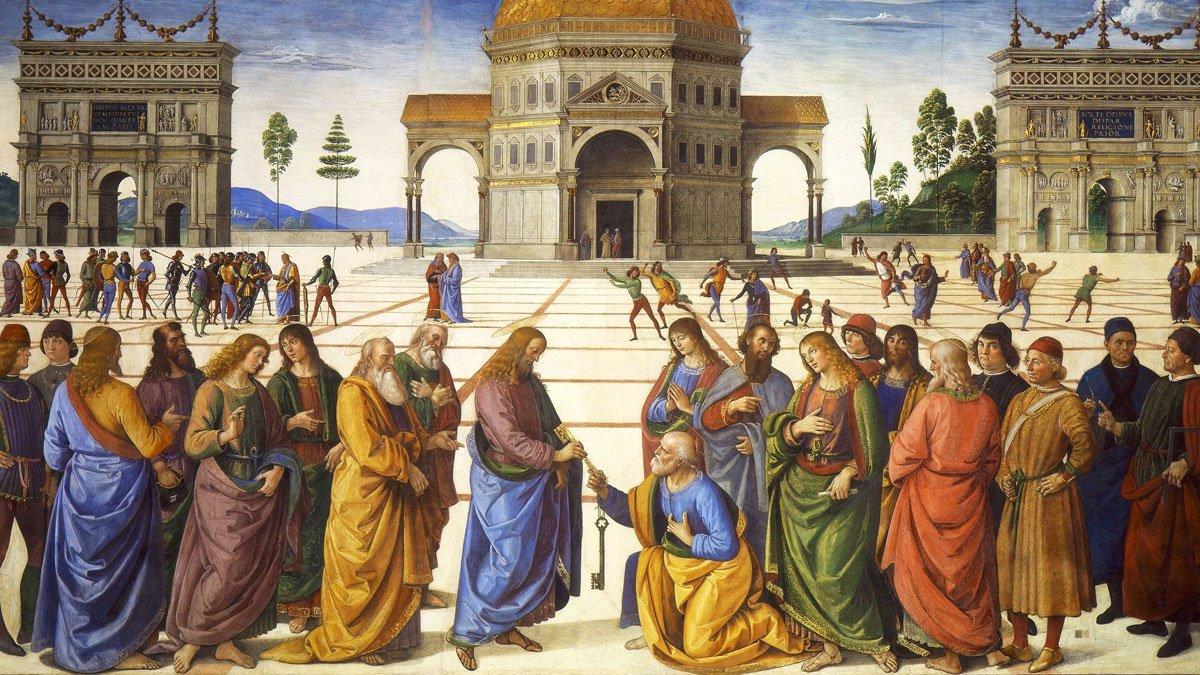
“Stand firm and hold fast to the traditions that you were taught by us, either by word of mouth or by our letter.” 2 Thessalonians 2:15
That verse creates a small problem for the idea that the Christian faith was meant to be preserved only in a book.
What traditions is Paul talking about, and were they ever written down? Answering it requires remembering something modern Christians often forget, that the Church existed before the New Testament did. When Paul wrote to the Thessalonians there was no compiled New Testament sitting on anyone’s shelf. Some apostolic letters were circulating. Some Gospels had not yet been written. The canon itself would not be formally recognized for centuries. But the faith already existed.
Paul had been to Thessalonica. He had preached the Gospel, instructed converts, celebrated the Eucharist, corrected errors, and organized the life of the Church. Christianity arrived there as something taught and lived long before it was something bound between two covers. So when Paul tells them to “hold fast to the traditions,” he is referring to what he had already handed on. And he names two ways that teaching came to them: by word of mouth and by letter.
And this isn’t an isolated line. In 1 Corinthians 11:2, Paul praises Christians for maintaining the traditions “just as I delivered them.” Delivered, not compiled, not published. Handed on. Again in 2 Timothy 2:2: “what you have heard from me… entrust to faithful men who will be able to teach others also.” That’s not a closed loop ending in a book. That’s a living chain that was heard, entrusted, taught, and passed on.
Spoken and written are two different modes of transmission, and the distinction really matters, especially concerning our faith. This isn’t Scripture plus something else. It’s the same apostolic faith, handed on in more than one way. Some of what the Apostles taught was later written down as Scripture, but not everything they taught was reduced to writing. The New Testament itself tells us this. John admits it outright, “Jesus did many other signs… which are not written in this book” (John 20:30). And at the very end of his Gospel, he doubles down by stating that there’s more that wasn’t recorded than was.
Continue reading at How To Be Catholic