
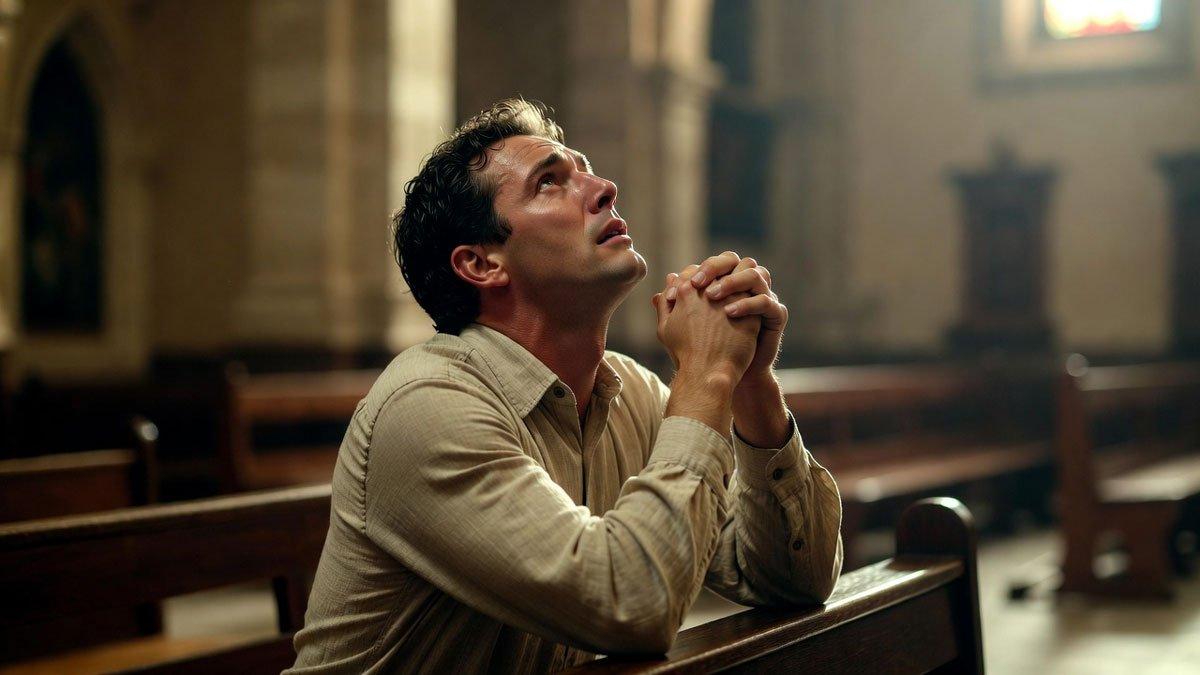
The Third Sunday of Lent teaches the remnant where to look, how to endure, and why Christ still has the final word.
The Church gives us no sentimental entrance into this Mass. She places on our lips the cry of a soul that knows abandonment: “My eyes are ever toward the Lord… look toward me, and have pity on me, for I am alone and afflicted.” That is the language of the faithful soul when the visible scene has become disorienting, when men who ought to defend the truth instead manage decline, decorate corruption, and tell the suffering remnant to calm down.
Many traditional Catholics know this feeling all too well. Not merely irritation or disappointment. A deeper ache than that. The ache of watching men promoted who should have been rebuked, hearing the faith treated as a negotiable inheritance, seeing once-bold voices suddenly discover the virtues of silence the moment the new regime speaks in a gentler tone. There is a particular loneliness in recognizing that the crisis did not end with a change of style. It simply put on cleaner vestments and learned to smile for the camera.
And yet the Church, in her ancient wisdom, does not tell us to deny the loneliness. She teaches us to pray from inside it. I am alone and afflicted. There is no pious lie here. No command to pretend that confusion is clarity or instruction to call poison medicine because the label has changed. Lent begins, here, with candor.
But notice the first half of the verse. My eyes are ever toward the Lord. The afflicted man is not the hopeless man. The isolated Catholic is not abandoned by God because he has been abandoned by men. The soul may be stripped of illusions precisely so that it can learn where help actually comes from.
That is already a consolation. The age of public frauds and ecclesiastical flatterers forces the faithful into a clearer dependence on God than easier times ever did.
Continue reading at Hiraeth In Exile