
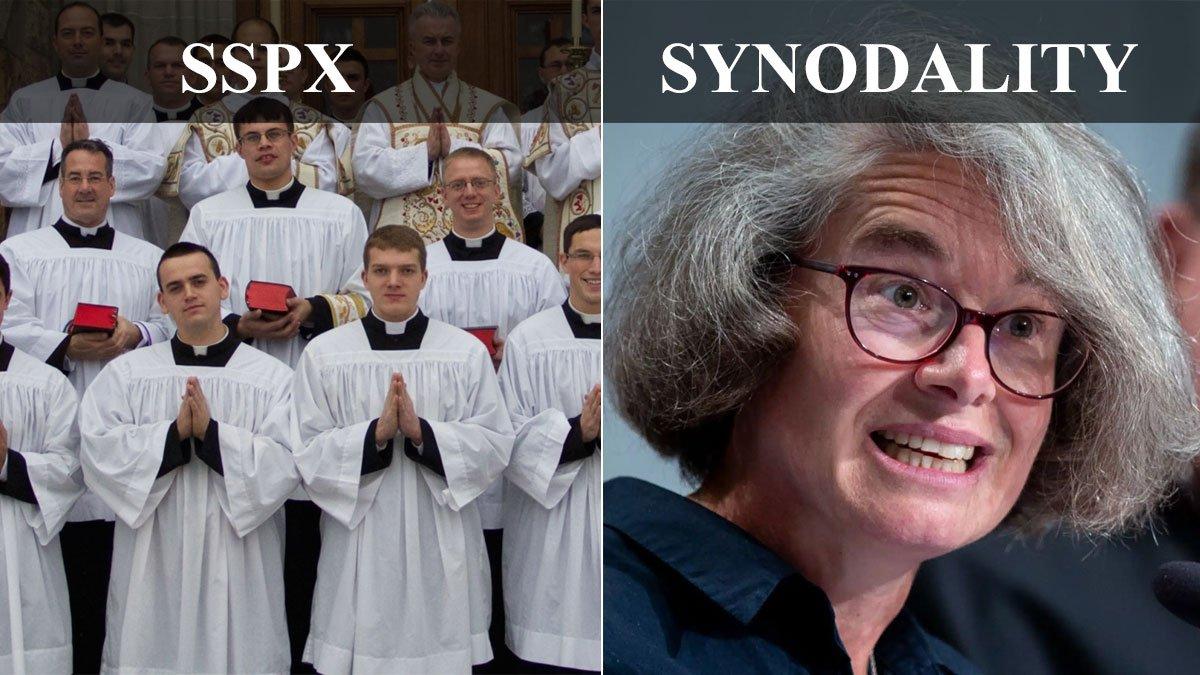
Under the direction of Leo XIV, the “General Secretariat of the Synod” published two reports of Synod on Synodality study groups on March 3rd, one related to “the digital environment” and another related to the formation of priests. The document on the formation of priests — “The revision of the Ratio Fundamentalis Institutionis Sacerdotalis in a missionary synodal perspective” — deserves attention not only because it will potentially impact the formation of priests but also because it stands in such stark contrast with the approach of the Society of St. Pius X (SSPX), which is today threatened with various censures if it consecrates bishops without Rome’s approval. The new Synodal document highlights the fact that the conflict between Rome and the SSPX is based much more on fundamental differences of religious belief than on questions of obedience.
The introduction of the new Synodal document begins with a claim that the Synodal path demands dramatic changes to the methods of priestly formation:
“The path of synodality is precisely the path that God expects from the Church of the third millennium.’ During the ongoing synodal process, there is a growing conviction that this path, indicated to the Church by Pope Francis and taken up by Pope Leo XIV from the very beginning of his Pontificate, would remain without the fruits of real communion and courageous mission if it did not also have an impact on the methods of formation for the ordained ministry. How, in fact, could a Christian community proceed in its missionary work and in a communion capable of synodality, if it were not accompanied, presided over, and instructed by men who are outstanding in their apostolic zeal and synodal spirit? . . . It should be borne in mind that this is not a matter of making minor adjustments or a simple reorganisation, but of a conversion of the heart, mind, relationships and processes, in line with the fundamental request of the Synod on synodality, a conversion that is first and foremost personal, but which must also be communal and structural.”
Because the Synodal Church needs men to “preside over” the Christian community who are “outstanding in their synodal spirit,” a fundamental “recalibration” of the structure of priestly formation is essential. The new Synodal document outlines the necessary transformation as follows:
“The Second Vatican Council’s Decree Presbyterorum Ordinis presents the figure of priests in a decidedly relational and communional key. If the reference to Christ as Head, Servant and Shepherd is essential to the identity of priests, the ecclesial reference is no less essential: (i) united with sincere charity and obedience to the Bishop, who finds in them not only collaborators and counsellors but ‘friends and brothers,’ (ii) priests are united among themselves by a sacramental fraternity that calls them to live in a fraternal spirit and to work in unity with the Bishop and among themselves, (iii) in the service of the lay faithful, recognising and promoting their dignity and their specific role in the mission of the Church, joining with them in their efforts. In light of this essential dual reference, the Synod calls for a strengthening of the ecclesiological dimension of ordained ministry, redefining it ‘in and from’ the People of God. It will therefore be necessary to recalibrate the structure of priestly formation according to this relational identity.”
The somewhat subtle message here is that Vatican II’s decree on the ministry and life of priests, Presbyterorum Ordinis, sought to modify the identity of the priesthood to emphasize the role of priests in relation to the Church rather than primarily in relation to Christ. The Synod document therefore calls for a strengthening of this latter role (which it terms the “ecclesiological dimension”), which makes it “necessary to recalibrate the structure of priestly formation according to this relational identity.”
Continue reading at The Remnant