
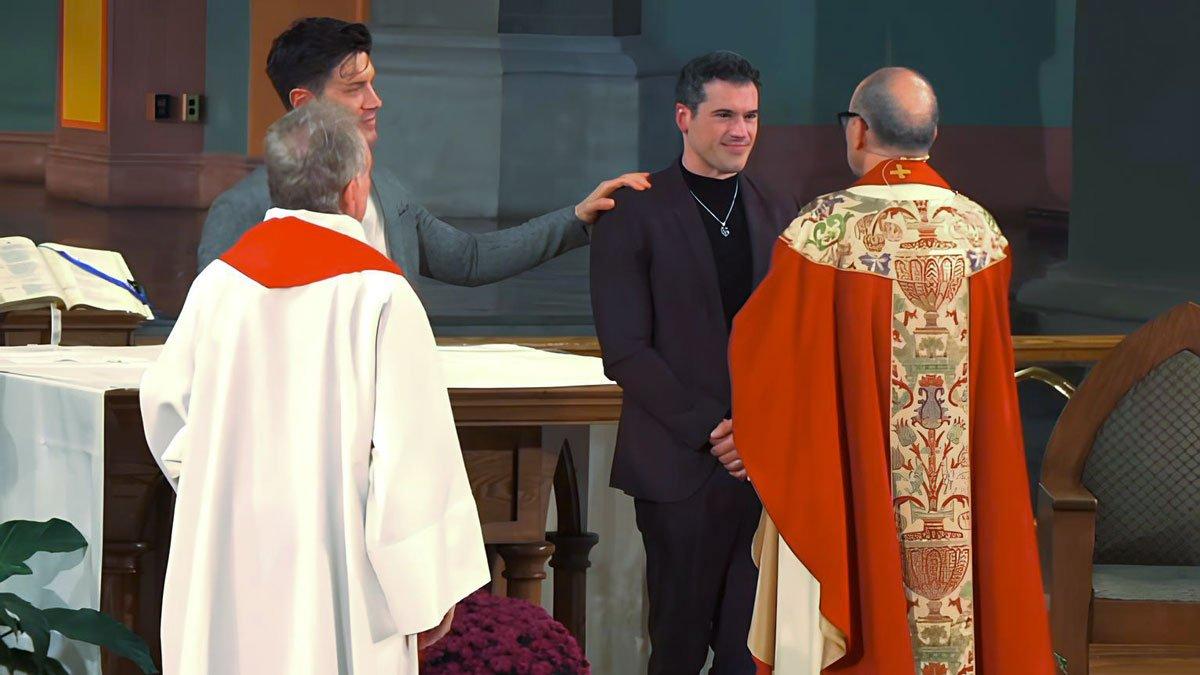
This week the Church of St. Paul the Apostle in Manhattan, the Jesuit-minded parish famous for rainbow banners and Broadway Masses, offered a sacrament that would have baffled every catechism before 1962. ABC News anchor Gio Benitez, openly homosexual and civilly “married” to another man, received the sacrament of confirmation with his husband standing beside him as sponsor. If this same priest had said a Latin Mass without permission he would have been suspended. Instead, cameras rolled. Applause followed. Father James Martin, ever the apostle of affirmation, commented beneath the video with a single word: “Welcome!”
No one in authority objected. No one questioned whether the rite was valid, licit, or simply insane. In the new ecclesiology, publicity is proof of holiness.
Confirmation, by every traditional definition, seals the soul already living in fidelity to the creed it professes. It means renouncing sin and the world, not canonizing them with lighting and applause. Yet the modern liturgy of “inclusion” has turned the sacrament from a weapon of grace into a prop of self-expression. The Spirit no longer descends as fire; it poses for photos.
Benitez marked the occasion online with a caption fit for a meditation app: “I found the Ark of the Covenant in my heart, stored there by the One who created me … exactly as I am.” To a generation catechized by Francis rather than Trent, that line sounded profound. To anyone who remembers that grace perfects nature by correcting it, not indulging it, the statement was pure sentimental heresy.
Benitez thanked the late Francis for inspiring him with “a legacy of inclusivity.” That legacy, amplified now under Leo XIV, has made “inclusion” the eighth sacrament. The old catechism begins with the question, Why did God make you? The new one begins with Why shouldn’t He affirm you?
Continue reading at Hiraeth In Exile