
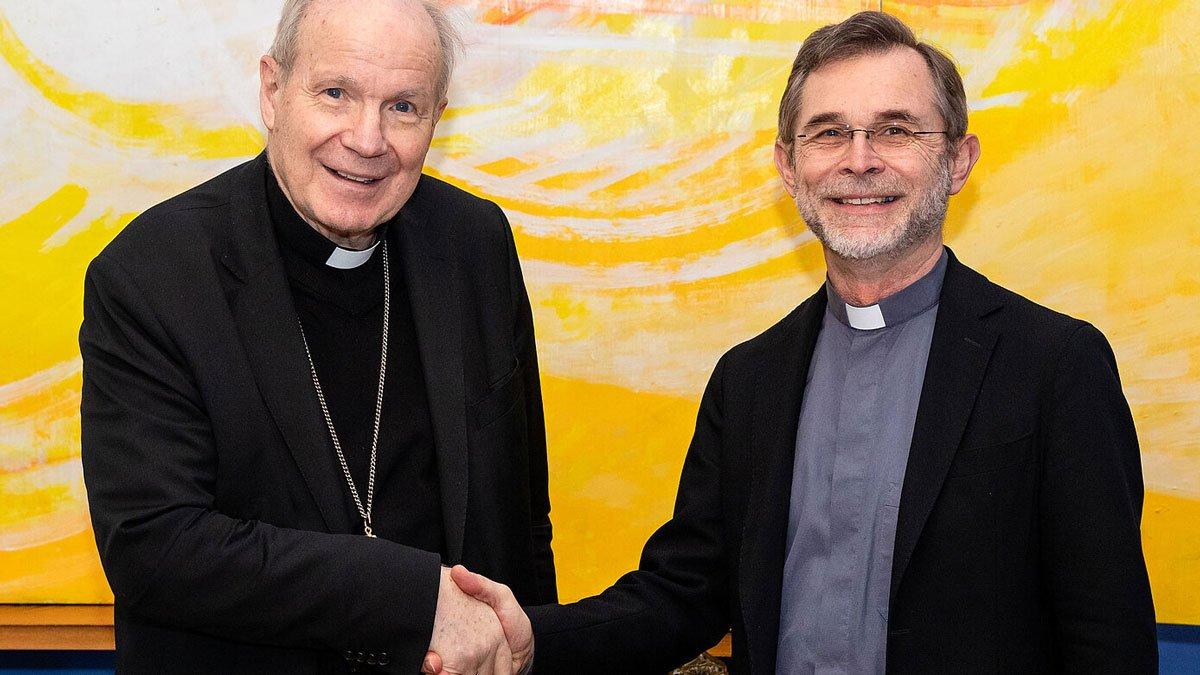
Grünwidl’s appointment as head of the Archdiocese of Vienna is deeply unsettling and concerning—not only for Austrian Catholics, but for Catholics across Europe and indeed around the world.
In October 17th, Pope Leo XIV—or more precisely, the Secretariat of State in concert with the team from the Dicastery for Bishops, led by Bergoglian Secretary Ilson de Jesus Montanari—appointed the new Metropolitan Archbishop of Vienna, following the resignation of Cardinal Christoph Schönborn upon reaching the age limit. Schönborn, a longtime friend of Benedict XVI, was also the editor of the most recent edition of the Catechism of the Catholic Church.
The new bishop is Josef Grünwidl. From 1995 to 1998, he served as the personal secretary to Archbishop Schönborn. On January 22, 2025, Pope Francis appointed him Apostolic Administrator of the same Archdiocese—a move that effectively paved the way for his episcopal appointment. It can be said with a high degree of certainty that Prevost merely confirmed a process already underway, while nonetheless signaling a degree of alignment with its underlying orientation.
The appointment of Grünwidl as head of one of Europe’s most prominent dioceses is far from insignificant. The new archbishop is a leading figure within the global progressive episcopate. Over the years, the Austrian prelate has expressed support for major disciplinary changes within the Catholic Church—including the abolition of priestly celibacy and the introduction of female diaconate.
More importantly, for several years Grünwidl is said to have been part of the group Aufruf zum Ungehorsam (Call to Disobedience), a movement of nearly 350 Austrian priests and deacons who openly urged fellow clergy to defy Vatican directives on sacramental norms—for instance, by admitting divorced and remarried Catholics, members of other faiths, and even excommunicated individuals to Communion. The group also advocated for a more horizontal liturgical reform, emphasizing lay participation in both the celebration of the Mass and preaching (‘self-managed liturgies’). Finally, they called for the introduction of both female and married priesthood.
Grünwidl is said to have recently distanced himself from this group of dissident priests and deacons, and his name no longer appears on the official roster. This likely reflects the incompatibility between such a bold stance and the ecclesiastical career path unfolding before him. It hardly needs reminding that the Vatican has never taken disciplinary action against these rebellious clerics. On the contrary, in recent years, the only priests to face sanctions from Roman authorities have been those most faithful to Tradition and openly critical of Pope Francis’s leadership.
Continue reading at the European Conservative