
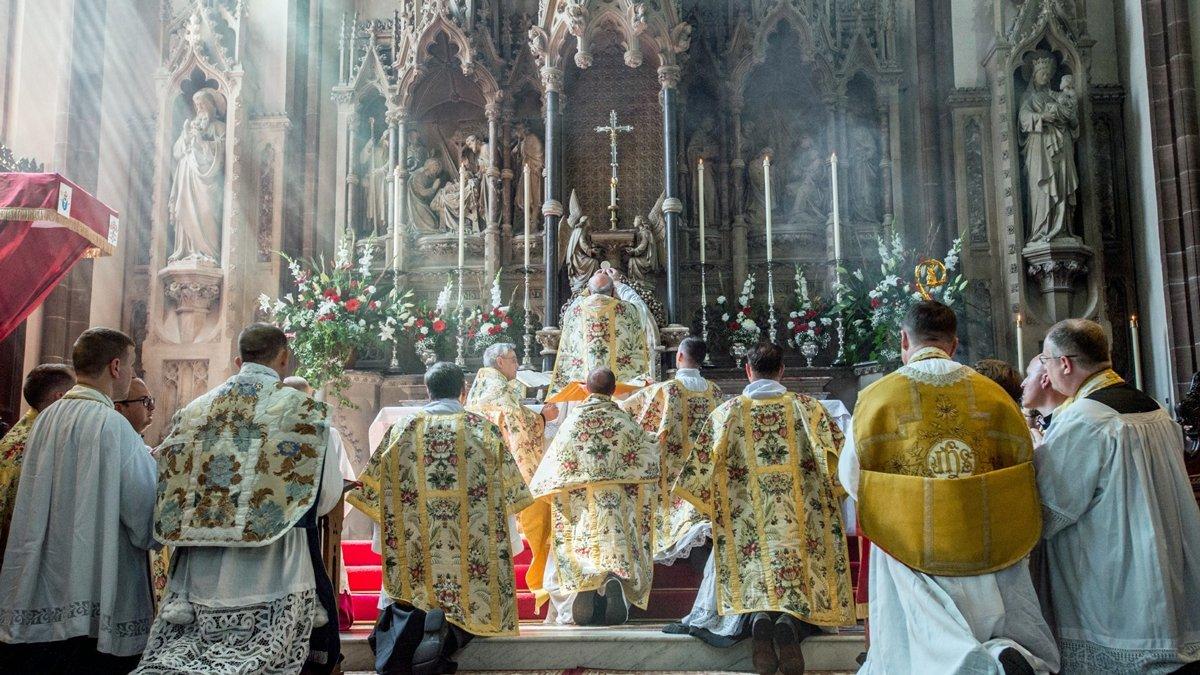
Several options are available to the Holy Father, who has pledged to heal divisions and build bridges within the Church.
A significant early challenge for Pope Leo XIV will be how he chooses to handle the restrictions that Pope Francis placed on the traditional Latin Mass (TLM).
Since Pope Francis issued his apostolic letter Traditionis Custodes (Guardians of Tradition) in July 2021, the freedom to celebrate the pre-1970 Mass has been curtailed — severely in some cases — with the long-term aim of allowing only the new Mass.
Cardinals, bishops, priests and many of the laity, including some who do not attend the TLM, have strenuously opposed the restrictions, seeing the clampdown as callous, unjust and needlessly divisive rather than unifying.
After Pope Benedict XVI’s 2007 apostolic letter Summorum Pontificum (Of the Supreme Pontiffs), any priest with a stable group of faithful attached to the old form of the Roman Rite was free to celebrate it, without requiring special permission from his bishop. But Pope Francis’ 2021 decree changed that radically, abrogating Summorum Pontificum, mandating priests to obtain their bishop’s permission and, since 2023, obliging bishops to obtain express approval from the Vatican to allow the TLM in their dioceses.
Other stipulations of Traditionis Custodes included generally not allowing the old Mass to be celebrated in parish churches, forcing many TLM communities to celebrate their liturgies instead in gyms and social or parish halls. The document also banned new traditional groups being formed, barred newly ordained priests from celebrating the old Mass without Vatican approval, and forbade confirmations and ordinations in the old rite.
Pope Francis said the measures were needed to foster and safeguard the unity of the Church, contending that the proliferation of the TLM was contributing to division, with some communities using the old rite to reject or challenge the Second Vatican Council and its liturgical reforms. He said he made the decision after seeing the findings of a worldwide consultation of bishops, the results of which were later disputed.
Continue reading at the National Catholic Register