
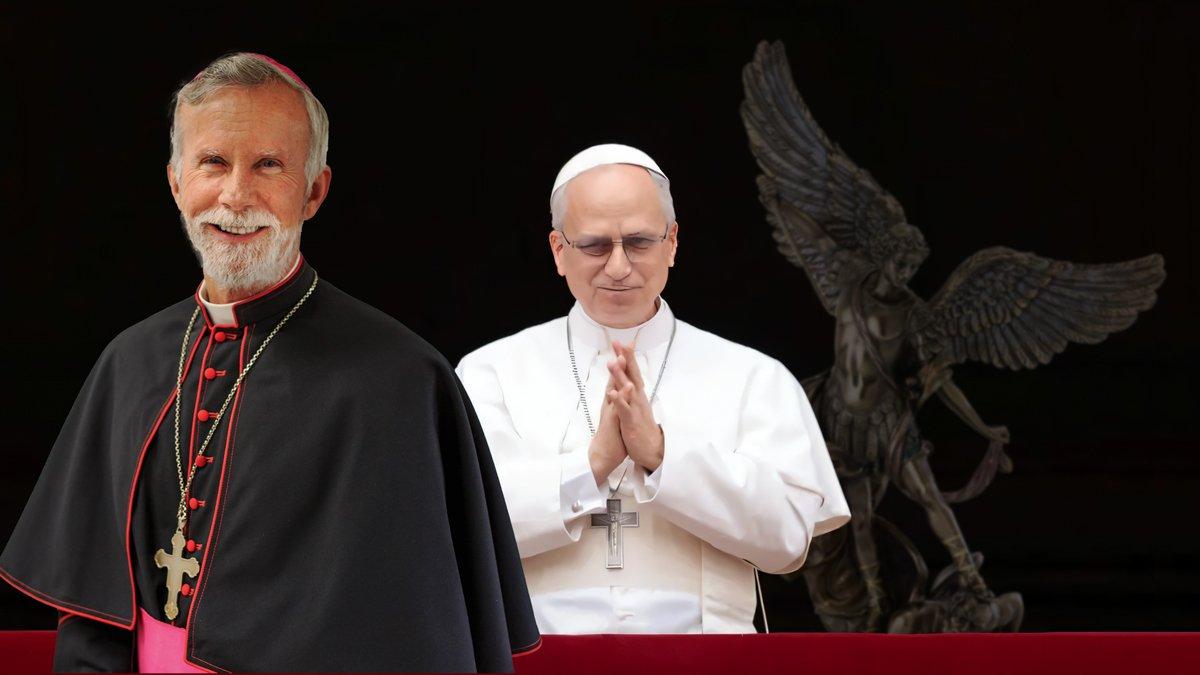
It is no secret that he [Leo XIV] has aligned himself with the progressive path charted by Pope Francis: a path that often places dialogue above doctrine, accompaniment above clarity, and pastoral adaptation above objective truth.
We have come to another moment in the life of the Church that calls for faith, for patience, and for clarity of soul. A new pope has been elected – Leo the Fourteenth – and I know that for many faithful Catholics, especially those who love the Church’s Tradition, this moment brings not only questions, but sorrows, concerns, and fears for the future. And yet, we also remember that every new pontificate begins with the possibility of grace. We do not know what he may yet do. We entrust him to God’s mercy, and we pray that he will be given the strength and courage to defend the faith with clarity and love.
It is no secret that this new Holy Father comes from the heart of a movement in the Church that has, over the last decades, distanced itself from doctrine, loosened its hold on tradition, and often sought to please the world more than to challenge it. These things must be said plainly, but they must be said not in bitterness, not in a spirit of rebellion, but in truth and love. At the same time, we must remember that a man’s past does not always dictate his future. God has worked surprising reversals in the hearts of leaders before, and He can do so again.
Let me begin, then, with a word from Sacred Scripture, one that has been a strength to the Church in every age of suffering:
“God is our refuge and strength: a helper in troubles, which have found us exceedingly” (Psalms 45:2).
We are not orphans. Christ is still with His Church. He reigns. Even in her Passion.
Today I want to share with you a reflection – not a condemnation, not a forecast of doom, but a reflection. And I want to do it by looking at two men who bear the same name: Leo XIII, and now, Leo XIV. Two men. Two moments in history. Two very different paths. And yet one Church. One crown. One crucified King.
Let us go back for a moment to Pope Leo XIII.
He was elected in 1878, after the long pontificate of Blessed Pius IX. The world was changing rapidly. The temporal power of the papacy had fallen. The Church was surrounded by the forces of modernism, socialism, atheism – and many inside the Church were already beginning to adapt themselves to the spirit of the age.
And yet Leo XIII stood firm. He wrote Rerum Novarum, affirming the dignity of labor, but grounding it in divine law, not in revolutionary slogans. He issued more encyclicals on the Rosary than any pope in history. He composed the Prayer to St. Michael the Archangel. And he consecrated the entire world to the Sacred Heart of Jesus.
He knew that modern errors could not be defeated with diplomacy alone. They had to be met with doctrine, with holiness, and with unwavering fidelity to the truth.
Pope Leo XIII was not a man of bombast. He was a man of vision. A man who looked evil in the face and answered with the full force of Catholic teaching. He didn’t dilute it. He didn’t disguise it. He proclaimed it. And in so doing, he gave the Church a sure compass for the century that followed.
Now we have another Leo. He has taken a name that carries great weight, and with it, perhaps, an unconscious prayer to follow in the footsteps of his namesake. We hope and pray that this name will inspire him to rise above the spirit of the age and take up the mantle of true shepherding.
And we do not yet know what he will write, or say, or do. But we do know where he comes from. We know the trajectory he has followed. And it is no secret that he has aligned himself with the progressive path charted by Pope Francis: a path that often places dialogue above doctrine, accompaniment above clarity, and pastoral adaptation above objective truth.
Again, I say this not in a spirit of rebellion, but in a spirit of sorrow – and resolve. Because you, the faithful, deserve to hear the truth plainly, and be reminded that your faith does not rest on the preferences or prudence of any one man. It rests on Jesus Christ. It rests on the Deposit of Faith. It rests on the promises of God, who said:
“Thou art Peter, and upon this rock I will build my church, and the gates of hell shall not prevail against it” (Matthew 16:18).
What does it mean when sometimes there seems to be failure in that promise? What does it mean when a Pope himself seems to lead the Church down a road of confusion?
It means this: that we are walking with Christ in His Passion.
This is not a metaphor. It is the reality of our time.
Just as Our Lord was crowned with thorns, mocked in royal garments, and proclaimed “king” by those who did not believe in His kingship, so too the Church, His Mystical Body, now endures a time when outward honor sometimes masks inward suffering. A time when the crown is not golden, but pierced. This is not the age of triumph. This is the Garden of Gethsemane.
But let us not despair. Let us remember: Christ was not less a King on Good Friday than He was on Easter Sunday. In fact, it was on the Cross that He reigned in the fullness of love. So, too, the Church does not lose her divine constitution when she is humiliated or misunderstood. She is being purified. She is being crucified with her Lord.
This is not the first time.
In the 4th century, when St. Athanasius stood almost alone against the tide of Arianism – even when most of the bishops had fallen into error – he held fast to the Deposit of Faith. And it was said of him: “Athanasius contra mundum” – Athanasius against the world.
And he prevailed. Not by compromise. Not by silence. But by fidelity.
Continue reading at Bishop Strickland Substack