
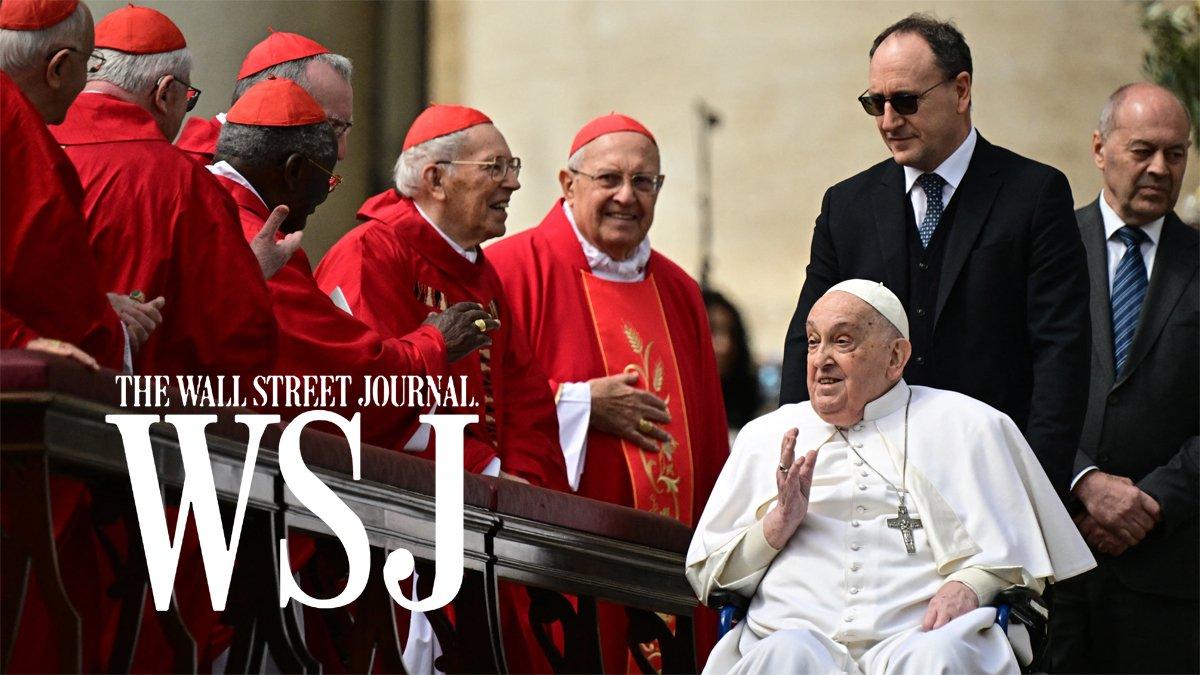
The ailing pope was short of breath, sitting beneath a cherished painting of Mary, Untier of Knots, as he worked through a last-ditch plan to disentangle the finances of one of the world’s most opaque bureaucracies.
For over a decade, Francis had struggled to bring some transparency to the Vatican’s shadowy balance sheet. Now, in the final weeks of his life, advisers were filtering in and out of his austere reception room, presenting the details of a microstate awash in priceless treasures but tumbling deeper into debt. The budget deficit had tripled since the Argentine took office, and the pension fund faced up to 2 billion euros in liabilities it wouldn’t be able to fund.
The first Jesuit Pope was exhorting clergy to live frugally—but pinching pennies alone would not relieve the financial crisis facing the seat of the Church. The Vatican was increasingly relying on museum ticket sales to fund its civil service, its worldwide network of embassies and the Papal Swiss Guard, a small army paid in Swiss francs. The city-state serves seven million visitors a year and a global flock, without collecting taxes.
After more than a month of discussion, Francis settled on one solution: Ask the faithful for more money.
On Feb. 11, he signed a chirografo, or papal directive, to boost donations. Three days later, he was hospitalized with double pneumonia. On April 21, he died, leaving his soon-to-be-chosen successor with a similar economic puzzle to the one Francis himself had inherited.
“Those of us who live and work here are obviously all too aware,” said a cardinal who oversaw the Vatican’s humanitarian outreach under Francis, Michael Czerny. Cardinals gathering to elect a pope were given what he described as a “thorough report” on the Vatican’s finances: “I am concerned because of the effects on our mission, our staff, our programs.”
Twelve years ago, the new Bishop of Rome was Francis, a pontiff elected with a mandate to fix the Vatican’s finances. But the first pope from the New World wasn’t prepared for the degree of resistance at the Curia, as the Vatican bureaucracy is known, his close advisers and allies said. He hired a professional auditor to modernize the finances—leading clergy to move Vatican funds to an account under a cardinal’s name and stockpile cash in a shopping bag. The auditor was mystified that nuns kept account ledgers in pencil and paper. At one point intruders broke into his office and tampered with his computer. Eventually the Gendarmerie Corps of Vatican City State—its police service—got involved.
Professional accountants, encouraged by Francis, ran training workshops for clergy who balked at the rules like obtaining multiple signoffs for expenses. Prelates tried to hide funds from scrutiny, citing national security concerns for the secret ledgers of funding missionaries in countries where proselytizing is a crime. Other departments shrugged off the modern-day challenge of balancing the budget of a papal state whose origins stretch back more than a millennium. The pope himself shifted focus to other topics. Meanwhile, the pension fund kept falling farther behind. Scandals over a $400 million real-estate investment ended with a cardinal being convicted of embezzlement and fraud in 2023.
The problems will now fall to Francis’ successor, who will be elected by cardinals from 70 different countries and territories in the Sistine Chapel starting Wednesday. Cardinals from the U.S. and Germany—the countries with the biggest donor bases—have given lengthy presentations to their brethren on the fragile state of the Vatican’s finances and efforts to repair them. Others view the financial strains as earthly concerns that are secondary to the Church’s main mission of saving souls.
Continue reading at the Wall Street Journal