
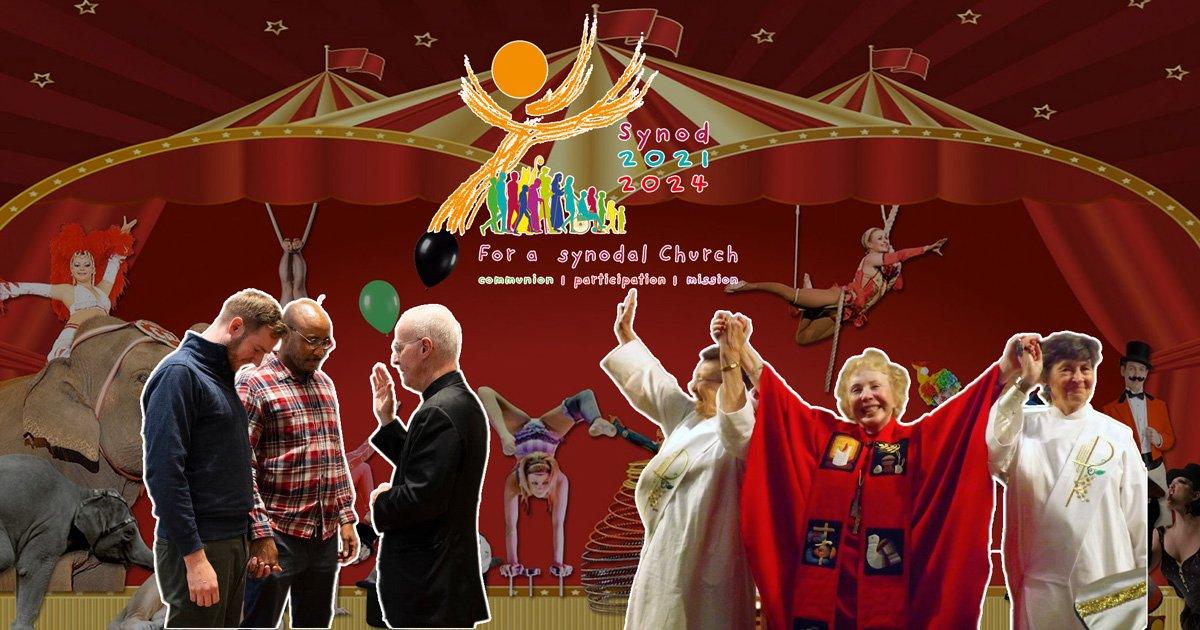
In the next day or two, don’t be surprised to see a fresh round of news stories about support for ordaining women at the Synod on Synodality.
It’s a reasonable prediction, given that, earlier today, an advocacy group blasted out an email, obtained by the Register, inviting synod delegates to join them tomorrow at an event promoting the cause.
Hosted by AmerIndia, a network of progressive Latin American Catholics, and entitled “Called to Be a Woman Deacon,” the Oct. 15 pizza luncheon will feature a handful of women sharing why they’re convinced they’re being called to sacramentally ordained ministry (which the Church teaches is not possible).
Sympathetic journalists are likely to amplify the event, making sure to note that the presenters come from multiple continents, possibly even implying that this undercuts the criticism that women’s ordination is a “niche issue” pushed by rich Westerners. They’re also likely to point out the number of synod delegates who are in attendance — that is, if the total is favorable.
In so doing, they’ll be following a familiar script that’s being used to influence the Synod on Synodality — or at least perceptions of it.
Other similar events that have been held on the synod’s sidelines have served as a sort of catalyst for news articles and social media content amplifying a set of progressive goals, giving the impression that they are dominant themes at the synod.
For instance, on Oct. 8 Jesuit Father James Martin’s LGBTQ advocacy group Outreach held an event on the sidelines of the synod. It included a number of LGBTQ-identifying Catholics urging the Church to be more inclusive, including a man civilly married to another man who said that Catholics must “allow love to be expressed.”
Like Tuesday’s AmerIndia event, Outreach’s was closed to the press. But the group released its own report on it, which was subsequently amplified in a story by the National Catholic Reporter. Additionally, Father Martin used his notable social media influence to boost the visibility of the event, which he described as “historic.”
(Interestingly, the Reporter stated that there were more than 70 synod delegates present, despite Outreach not including any information about total attendees in their description of the closed-to-the-press event. For what it’s worth, the theologian and German Synodal Way organizer Thomas Söding, an expert at the synod, wrote of the event in his daily blog that “not many people are making it, but some are.”)
Continue reading at National Catholic Register