
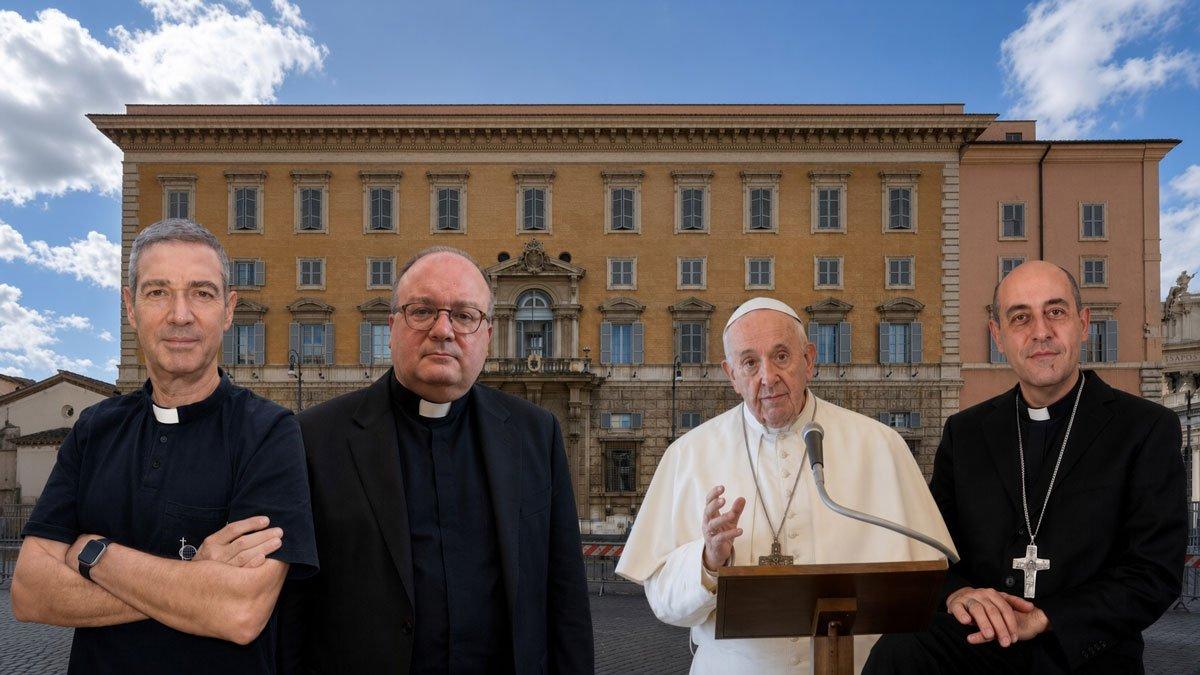
There exists in the Church a way of ending procedures for abuse of minors that does not involve a sentence, does not establish facts, does not hear the victim and leaves no public trace. In my brief period providing legal defense for some victims of sexual abuse by clerics, I have come up against a practice unthinkable in any other sphere. The investigated cleric requests from the Pope the dispensation from clerical obligations; if granted, the criminal process stops there. According to internal data from the Dicastery for the Doctrine of the Faith itself, 1,058 of the 6,236 cases registered between 2012 and 2020 ended this way—one in six. Behind each of these files is one or more persons who reported having been abused in their childhood and to whom the Church never said whether it believed them. Investigating this absurd and scandalous practice in depth, I discovered that it is not a bureaucratic anomaly or an improvisation by overwhelmed dioceses. It has a written doctrinal justification, published in a top-tier academic journal and signed by one of the men who apply it: Monsignor Jordi Bertomeu Farnós, an official of the Disciplinary Section of the Dicastery, Pope Francis’s envoy to Chile and Peru, pontifical commissioner of the Sodalicio, and one of the main promoters of this catastrophic legal concept that, to this day, is being applied (I will explain why I believe irregularly) by the Dicastery of Cardinal Victor Manuel Fernández. His 2021 article is today the theoretical support for a practice that causes scandal even among high-ranking Vatican judicial authorities.
The text is titled “The CDF’s praxis on the dispensation from clerical obligations: n. 157 of the Vademécum” and was published in Ius Canonicum, the canon law journal of the University of Navarra (vol. 61, no. 122, 2021, pp. 733-765; DOI 10.15581/016.122.004). It is open access and continues earlier work by the same author in the same journal. Who writes it matters: an official of the body that decides, with access to figures no one else knows, who describes the practice of his own office and concludes that it is legitimate. That turns the article, more than a study, into the unofficial defense of a system of silence and impunity.
The point of support is n. 157 of the Vademécum of 2020, which recognizes the accused, “from the moment notitia de delicto is received,” the right to ask the Holy Father for dispensation from all clerical obligations, including celibacy. The Vademécum stops there: it recognizes a right to request, and says nothing about what happens to the ongoing criminal process. It is Bertomeu who takes the next step, and he takes it in the very summary of his article:
“Although it interrupts the investigative proceedings or the ongoing process without reaching a conclusion regarding the guilt or innocence of the accused, the processing before the Holy Father of this grace is legitimate because of the protection of various legal goods in the delicta graviora from the prevalence of the principle of the bonum commune in the Church” (p. 733).
He reiterates it in the body of the text with the same clarity: the CDF allows the accused to request the grace “at any moment of the investigative or procedural proceedings,” and “the acceptance of said request, moreover, entails the interruption of the ongoing penal procedure” (p. 749). The thesis, therefore, is that the accused can stop his own process by asking to cease being a priest, and that the Church does well to allow it for the “good” of the Church itself.
Continue reading at Infovaticana