
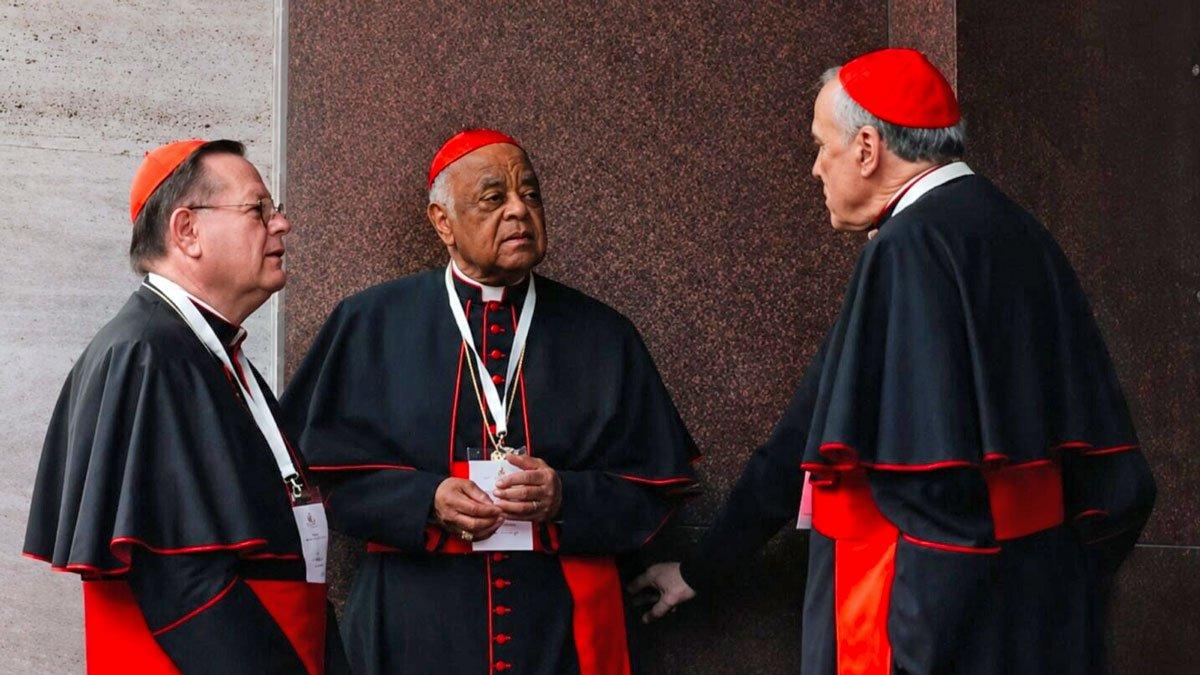
More than two-thirds of cardinals would now barely master Latin. What at first glance sounds like a marginal note for classical philologists could, in reality, reveal one of the deepest crises in the Catholic Church. For whoever loses the language in which faith, liturgy, and canon law were formulated for centuries ultimately also loses immediate access to their own tradition.
Italian Vatican correspondent Francesco Capozza of the newspaper Il Tempo has concluded, after months of investigation, that more than 65 percent of the current College of Cardinals lack appreciable knowledge of Latin. Those who know Capozza know that he does not usually make sensational claims lightly. For many years he has been considered one of Italy’s best-informed Vatican observers, whose assessments are often confirmed. His diagnosis points to a problem that has been brewing in the Church for decades and whose consequences are now difficult to ignore.
This is not at all about romantic nostalgia for a supposedly glorious past, nor about the preference of lovers of classical liturgy. It is a much more fundamental question: can a Church preserve its unity when its highest representatives no longer master the language in which its theology, its canon law, and its magisterium were formulated for centuries?
Latin has never been for the Catholic Church a mere historical relic. It is, properly speaking, its official language. For nearly two thousand years, papal legislative texts, canon law, and numerous magisterial documents have been promulgated in their binding form in Latin. And for good reason: a language that no longer changes preserves the precision of theological concepts better than any modern vehicular language. Its words are not subject to the ideological and social shifts to which living languages are constantly exposed. Precisely for this reason, Latin is especially suited to expressing truths with precision and durability.
Pope John XXIII formulated this with remarkable clarity in his Apostolic Constitution Veterum Sapientia. Latin, he said, is a language that by its dignity, stability, and universality is particularly suited to making visible the unity of the Church. It belongs, so to speak, to the very essence of a universal Church, because it does not privilege any nation and is equally open to all the faithful. It is also notable that this conviction was not at all overturned by the Second Vatican Council. On the contrary. In the constitution on the liturgy, Sacrosanctum Concilium, it is expressly stated that the use of the Latin language must be preserved in the Latin rites. At the same time, the Council required that clerics be trained to understand Latin texts well and to use them appropriately. The conciliar fathers, therefore, did not intend to banish Latin from the life of the Church. Rather, they took for granted that every priest and every bishop would master this language.
Continue reading at Infovaticana