
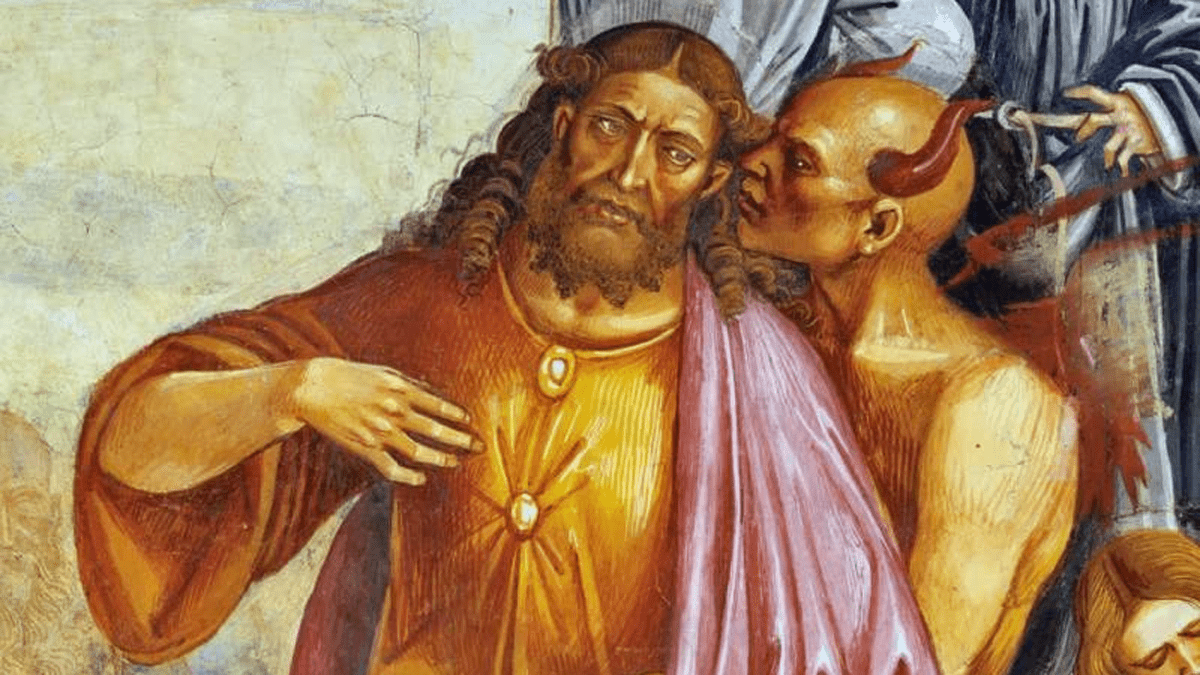
I recently lectured in Rome on the topic of the Antichrist. The Antichrist interests me for several reasons, mostly because nobody else is talking about it—which, for most of Christian history, would have seemed a clear sign of his impending arrival (2 Pet. 3:3–4). I expected that the Church would ignore my talks. I am not Catholic, I was not speaking publicly, and the topic seemed to me to lie far, far outside the Overton Window.
My expectation went unfulfilled. The gaggle of paparazzi outside the (notionally secret) lecture venue suggested that my talks might not be as private as I had hoped. After the first of them, my staff informed me that the Italian press was taking considerable interest. One priest who had not attended the talk wondered publicly whether I should be burned at the stake for heresy (albeit a political “heresy against the liberal consensus”).
I say this not as an exercise in self-aggrandizement or self-pity, but because it made me feel greater sympathy for Pope Benedict XVI. Allow me to explain. I did not come to Rome to try to be more Catholic than the pope, but I did hope, even as a Protestant, to be more Catholic than the average Catholic. To clear this bar, as I explained in my lectures, one need simply listen to Pope Benedict not only when he spoke ex cathedra, but when he spoke sotto voce. One will hear him whisper, and then shout: The world is ending.
Benedict believed he was living in the end times. This claim shocks us, because Benedict chose not to speak openly on this topic until the final years of his life, at which point he had resigned the papacy, his allies had been purged from Vatican leadership, and almost nobody was listening. We will never know why he waited. He may have feared jeopardizing his authority, which rested on his academic brilliance, and nothing sounds less academically respectable than doomsday preaching. More generously, Benedict may have believed that his apocalyptic predictions would be self-fulfilling prophecies, deranging his flock and driving them away from the Church.
Ironically, an honest discussion of our apocalyptic moment would have resonated most powerfully with young people. They understand and fear the existential dangers of climate change, artificial intelligence, demographic collapse, and nuclear weapons. Benedict could have taught the young the particularities of the biblical apocalypse, including the totalitarian peace and safety that precede it. Such a discussion would have revealed reasons for hope, as we seek the bravery to “be not troubled” (Matt. 24:6). One cannot imagine a more qualified person than Benedict to lead such a conversation. Now we must make do without him.
Continue reading at First Things