
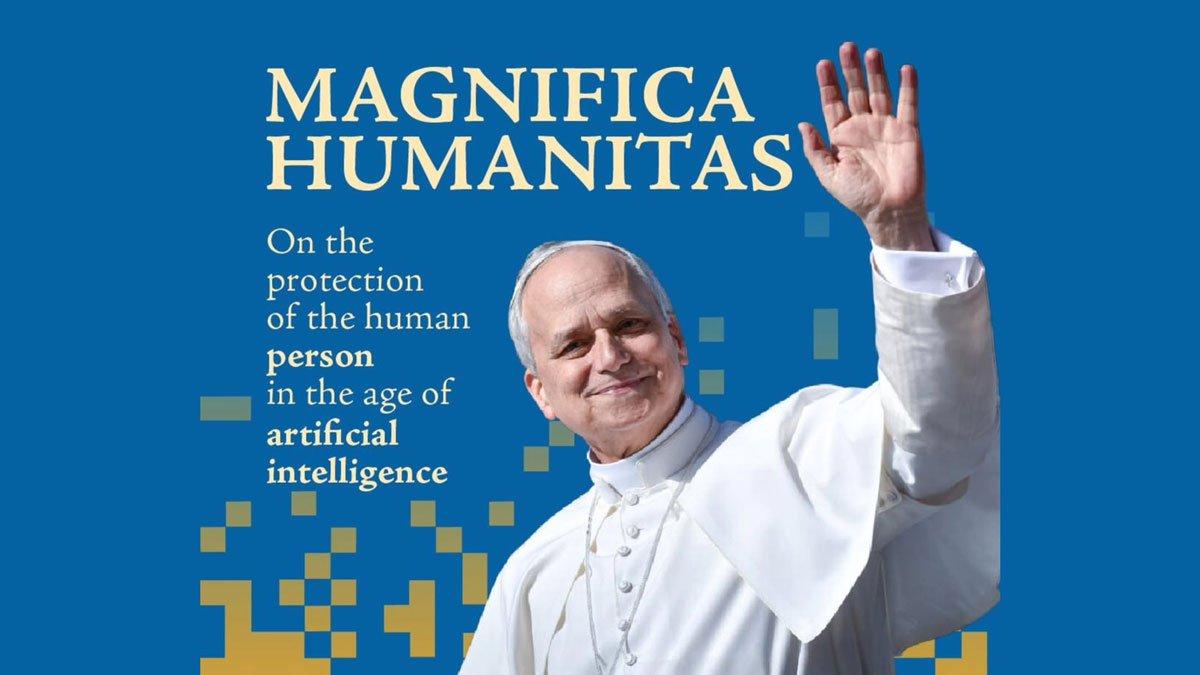
On May 15, 2026, Pope Leo XIV published his first encyclical, Magnifica Humanitas—On the Safeguarding of the Human Person in the Age of Artificial Intelligence (hereinafter MH).
This lengthy document includes 244 paragraphs, about 42,000 words, and 224 footnotes, nearly all referencing Vatican II and the post-conciliar popes.
Abandoning Thomistic Metaphysics
MH is not just a lengthy document but also confusing and hard to read, a confusion worsened by the neglect of St. Thomas Aquinas’s philosophy and metaphysics.
Prof. Roberto de Mattei draws attention to this point:
“The Pope is right to raise the problem [of AI], but his answer does not clarify why equating human and artificial intelligence is impossible. For Thomistic philosophy, the reason does not consist mainly in the fact that AI does not feel emotions, has no relationships, or does not possess embodied memory, but in the fact that it lacks a rational spiritual soul, the intrinsic principle of intellectual operations . The encyclical, on the other hand, formulates the distinction between man and AI in purely phenomenological terms, on the level of experience, affectivity, and relationality, forgetting or ignoring that the decisive distinction is ontological .”1
Prof. Stefano Fontana adds that “[t]he use of existential, experiential, and narrative language rather than metaphysical and definitional language derives from the great influence of existentialist philosophy in Catholic theology.”2
Continue reading at Luiz’s Substack
Related Posts
- BAD NEWS: Leo Adopts Concept of “Gender” in His New Encyclical
- AI, Papal Encyclicals, and Eternal Hubris: Why Magnifica Humanitas Misses the Mark
- Viganò: Highly Likely Leo’s Encyclical Made Use Of AI
- Imago Verbi: The Encyclical That Needed to Be Written
- Vatican II’s Religion of Man on Full Display in Leo’s AI Encyclical
- Bishop Strickland: A Catholic Discussion of the Encyclical Letter, “Magnifica Humanitas”
- Magnifica Humanitas: Leo Blames the Church for Slavery and Just War; Claims Catholicism Has No Monopoly on Truth