
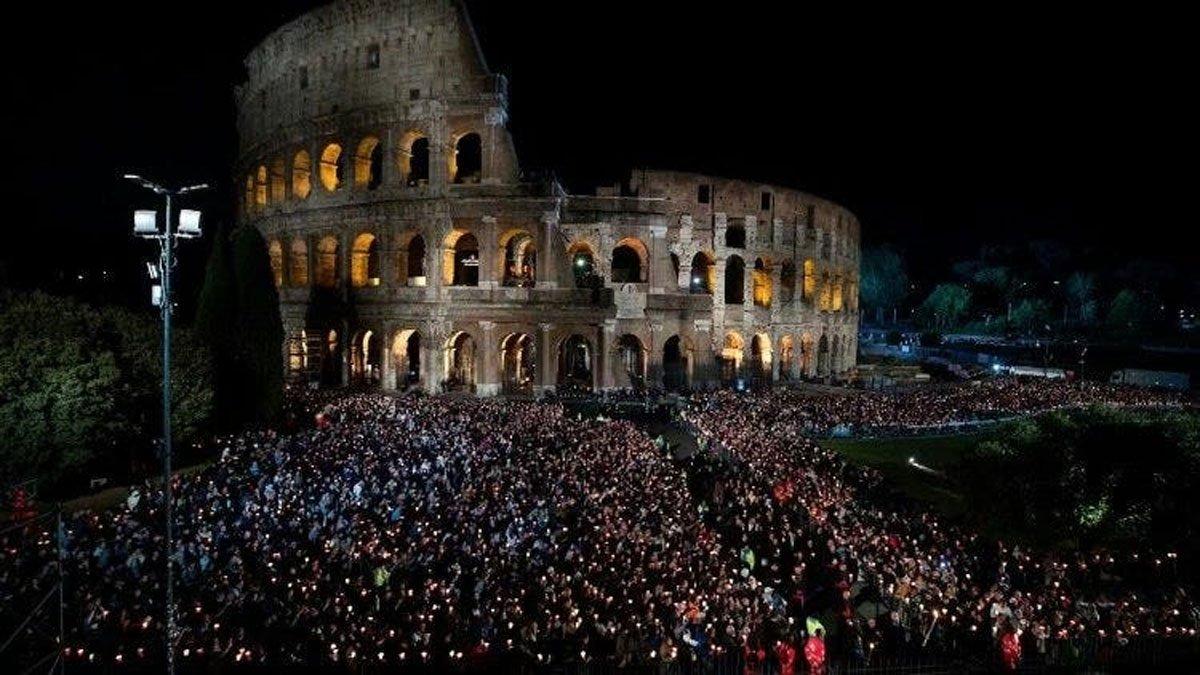
Leo XIV’s Good Friday Via Crucis was entrusted to Father Francesco Patton, and Vatican News openly framed the meditations as an effort to bring faith, hope, and charity into “the real world.” Patton himself said the reflections were drawn from “current reality” and were meant to provoke reflection and, if necessary, “change.” That tells the reader at once what kind of text this is. Not chiefly a meditation on sin, propitiation, judgment, and redemption, but a Passion narrative filtered through the social vocabulary of the modern Vatican.
And the problem is not abstract. The stations themselves make it plain. In the first station, where Christ stands before Pilate, the meditation pivots almost immediately into a discourse about worldly power: the power to start or end wars, to use the economy either to oppress or relieve misery, to trample dignity or defend it. Those aren’t illegitimate concerns in themselves. But when the first station of the Cross begins to sound like a global policy forum, the accent has shifted. Pilate is no longer primarily the unjust judge before whom Innocence stands condemned. He becomes a springboard for commentary on war, economics, and governance.
The fourth and fifth stations are even more revealing. In the fourth, after invoking the sorrow of Our Lady, the prayer intention suddenly includes “migrants, the displaced and refugees.” In the fifth, Simon of Cyrene becomes the template for humanitarian workers and volunteers, and the text goes so far as to say that many of them “do not even believe in you,” yet still help Christ carry the Cross. That smuggles the old postconciliar instinct of the “anonymous Christian” into Good Friday itself. The old lesson of Simon was discipleship, conversion, and participation in Christ’s sufferings. The new lesson is that unbelieving aid workers are, in effect, already carrying the Cross anyway.
Continue reading at Hiraeth in Exile