
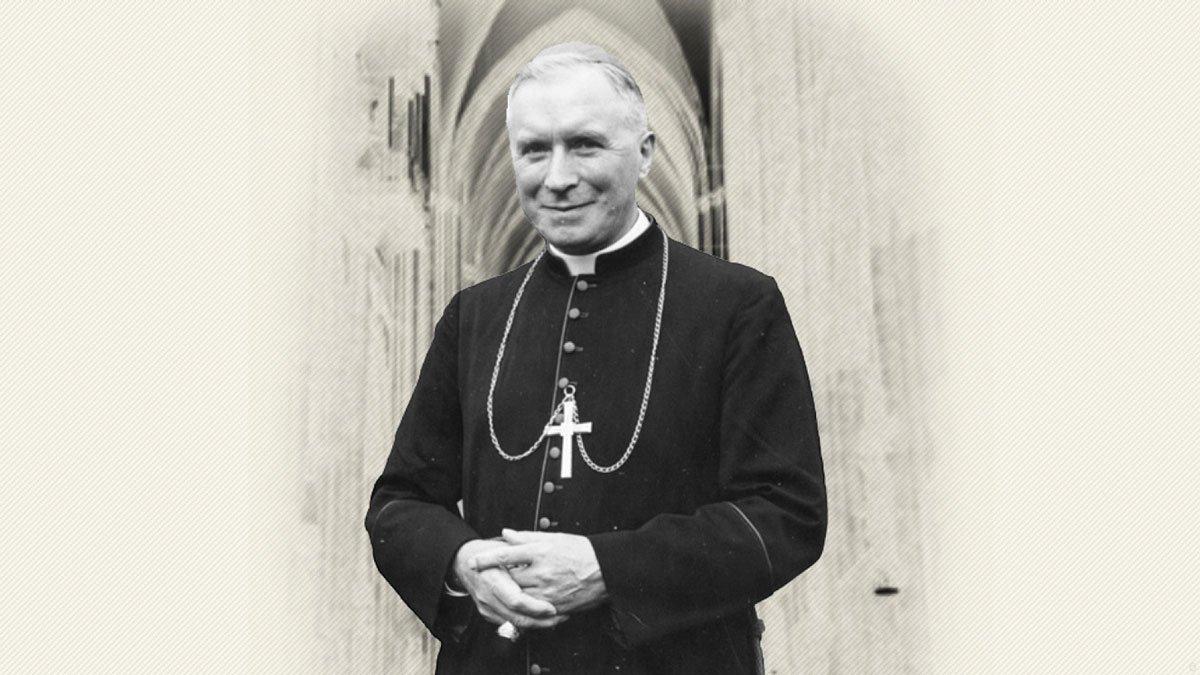
Archbishop Lefebvre didn’t innovate anything, he didn’t invent anything, he didn’t overturn anything; he has simply preserved and transmitted the deposit which he received.
In his classic This Tremendous Lover from 1946, Dom Eugene Boylan emphasized the unbreakable connection between union with God and keeping His commandments:
“When asked by the disciples for instruction on prayer, Our Lord gave them a model prayer which, however, contains no other appeal for their sanctification than ‘Thy will be done on earth as it is in heaven.’ (Matt. 6:10). And He tells them: ‘He that doth the will of My Father who is in heaven, he shall enter into the kingdom of heaven.’ (Matt. 7:21). ‘If anyone love Me, he will keep My word and My Father will love him, and We will come to him, and make Our abode with him.’ (John 14:23). The whole tenor of His doctrine insists on the close connection between true love of God expressed by doing the will of God, and the consequent entering into life and abiding union with Him. St. John had learned the lesson so well that he writes: ‘He that keepeth His word, in him in very deed the charity of God is perfected; and by this we know that we are in Him.’ (1 John 2:5). ‘He that keepeth His commandments, abideth in Him, and He in him. And in this we know that He abideth in us, by the Spirit which He hath given us.’ (1 John 3:24).” (pp. 74-75)
If we want to please God and save our souls, we must cooperate with His grace to keep His commandments. The entire purpose of the Catholic Church relates directly to helping souls to learn and follow God’s law.
Archbishop Marcel Lefebvre’s September 1965 intervention read at Vatican II highlighted his understanding of God’s law in connection with conscience, human dignity, and religious liberty:
“Liberty is given to us for the spontaneous observance of divine law. Conscience is natural divine law inscribed in the heart and, after the grace of baptism, is supernatural divine law. The dignity of the human person is acquired by observing the divine law. He who despises the divine law thereby loses his dignity. . . . It is impossible to speak with veracity of liberty, of conscience, of the dignity of the human person except by reference to divine law. This observance of divine law is the criterion of human dignity. Man, the family, civil society, possess dignity in the measure in which they respect the divine law. Divine law itself indicates to us the rules for the right use of our liberty. . . . Divine law itself gives the measure of religious liberty.” (Archbishop Marcel Lefebvre, I Accuse the Council!, p. 64)
Continue reading at The Remnant