
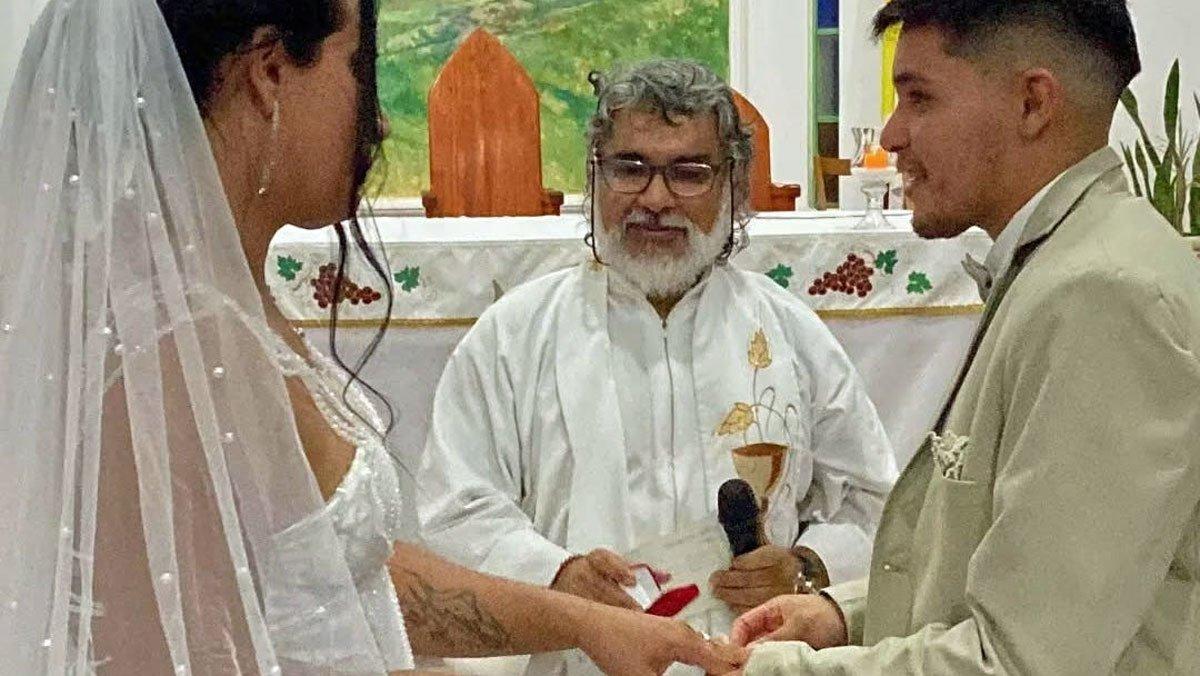
In late January 2026 a shockwave rippled through Argentina’s Catholic community. At the Our Lady of Pompeii parish in Corrientes, a local priest (after consulting Archbishop José Adolfo Larregain) publicly blessed a couple who both identify as transgender. Solange Ayala, a biologically male LGBT activist “presenting as a woman,” and his partner Isaías (a biologically female homosexual presenting as a man) completed a standard Catholic marriage preparation, the priest asserts. The ceremony was celebrated using the names by which they are publicly known, and photographs and videos went viral across media.
This was no private blessing. It was treated as a valid sacrament of marriage. The archbishop’s judgment was blunt: biologically, one is male, the other female, so “there was no canonical impediment” to the marriage. In other words, the bishop certified that because the couple are opposite in body, the Church’s formal requirements were met, even though both publicly present as the opposite sex. Unsurprisingly, Catholics worldwide felt scandalized. The local archdiocese immediately launched a canonical investigation, noting that “essential conditions for the proper celebration” were omitted and had “distorted its profound meaning,” causing confusion among the faithful. In its official statement the archdiocese reiterated that true Christian marriage requires a “true consent… as the Church understands and teaches” it; namely, a covenant of one man and one woman open to life.
The Corrientes incident reveals a crisis in the post-Vatican II Church: pastors are sanctioning “marriages” that defy nature, then scrambling to explain it away. The Catechism and Canon Law plainly teach marriage as a covenant between a man and a woman, ordered to procreation. Yet here the outward signs of the sacrament (pronouncing vows, giving Communion) were witnessed to an audience under false pretenses, since both spouses were known public activists promoting gender ideology.
Continue reading at Hiraeth In Exile
Related Posts
- Pope Leo Appoints Bishop Who Backed Same-Sex Blessings
- Cardinal Marx Reconfirmed in the Curia, Despite Challenging Rome with Homosexual Blessings
- Algiers Cardinal: Blessing Same-Gender Couples ‘Changes Everything’
- German Priests To Cardinal Marx: Homosexual Blessing Guidance Creates A Loyalty Conflict
- Parolin Avoids Speaking About Sanctions Against German Bishops for Homosexual Blessings
- Vatican I and Gay Blessings Are Negotiable for the Schismatic Orthodox
- Rome’s Complicity In Blessing of Homosexual Couples
- Woman Heading German Catholic Committee Defends Homosexual Blessings
- DIALOGUE for Sodomite Supporters – EXCOMMUNICATION for Traditionalists
- SSPX Responds To Rome’s Surrender On Homosexual Blessings
- Leo Affirms Francis’ Blessing Of Gay Couples
- Asked About Homosexual Blessings, Leo Says Other Issues Will Take Priority
- Leo’s Evasive Response to Marx’s Homosexual Blessings
- Cardinal Marx Expands Gay Blessings, Defying Vatican Line
- Timothy Radcliffe Annoyed by Those Who Label Him a Progressive
- There Is Absolutely NOTHING Good In Fiducia Supplicans
- Two Years After Fiducia Supplicans
- The REAL Driving Force Behind Fiducia Supplicans
- Cardinal Sarah: Fiducia Supplicans ‘Threatens Unity Of The Church,’ Should Be ‘Forgotten’
- Bishop Bätzing Claims German Bishops Not On ‘Confrontational Course With Rome’